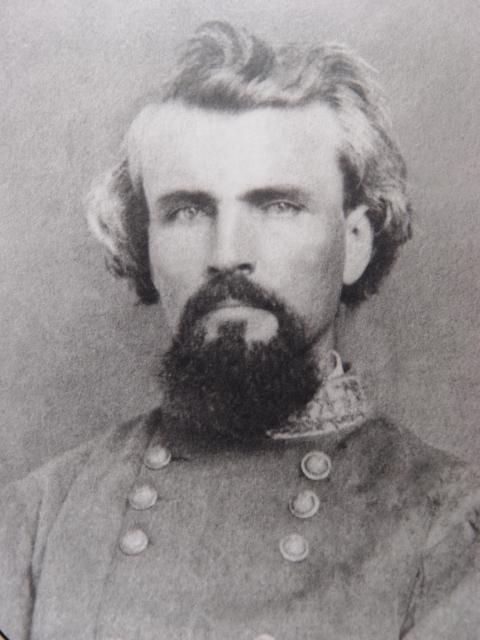
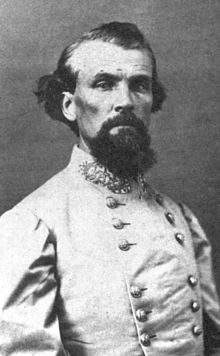
Military Figure. He gained notoriety as an American Civil War Confederate Army officer and, later, a national leader of the Ku Klux Klan. Born into poverty as the son of an uneducated blacksmith, he was a sixteen-year-old when his father died, leaving him to support his widowed mother and seven younger siblings. A typhoid epidemic, from which he recuperated, took three of his siblings, including his twin sister Frances. From this humble beginning, he became a wealthy man, a slave trader, owned two Mississippi cotton plantations that had slave labor, traded horses and cattle, and acted as a real estate broker. In April of 1861, at the onset of the American Civil War, he enlisted as a private in a Tennessee regiment before quickly rising through the ranks, even without having any formal military training. In February of 1865, he was promoted to lieutenant general. He served in the 7th Tennessee Cavalry, White's Company E, as Mounted Rifles before having his own battalion of 650 mounted riflemen in the Third Tennessee Cavalry. In June of 1862, he was wounded in battle and later captured at Murfreesboro for a time, and allegedly, thirty horses were shot from under him in battle. He supported the Confederate Army monetarily by supplying his men with rifles and horses. Losing the war would greatly impact his way of life. One of his most controversial actions was on April 4, 1864, at the Battle of Fort Pillow. Apparently, a group of about 500 Federal soldiers and Union loyalist civilians, some without guns, were housed in an abandoned fort. After negotiations of surrender failed, Forrest's 2,500 men were ordered to charge and overtook the fort. Various sources document that the Union soldiers, who had discarded their weapons in surrender, were shot dead by Forrest's troops. Many of the slaughtered Union soldiers were Black men who had been former slaves. History has recorded this as the "Fort Pillow Massacre." After the end of the war in 1867, Forrest, who was a Freemason, joined the Ku Klux Klan and was elected the first Grand Wizard, which is the senior national leadership position. The Ku Klux Klan was a group of mainly Confederate veterans who wore white-hooded robes covering their faces as they rode into the night, spreading terror and fear. One of the first main goals of this group was to stop the recently freed enslaved people from voting. At their will, the Klan hung dozens of people, who were mostly Blacks, without due process of the law given to citizens under the United States Constitution. By 1869, the Klan had basically disbanded. In 1871, he was called before a Joint Congressional Committee and questioned about his participation in the Klan's activities. Forrest remained a productive businessman selling lumber, being a planter, and being president of the Selma, Marion, Memphis Railroad until it failed in 1874. In his last years, he sold all his property to pay debts and worked as an overseer at a prison camp. At age 56, he died of acute complications of being a diabetic at his brother Jesse's home in Memphis. His funeral service was held at Court Avenue Presbyterian Church before interred in Elmwood Cemetery, with his wife joining him at the site in 1893. In 1904, the couple were reinterred at Forrest Park, where a bronze equestrian monument by sculptor Charles H. Niehaus was erected in 1905 as a headstone in honor of Forrest. By 2013, after Forrest eventually fell out of popularity, Forrest Park was renamed Health Science Park. Following desecration and vandalism of the burial site along with protests and lawsuits, the couple's remains were moved for a third time in June of 2021 at the request of his descendants to the National Confederate Museum in Columbia, which is owned by the Sons of the Confederacy. This was done with a great ceremony with a Confederate color guard, and ladies donned 1865-era black mourning dresses. Niehaus' equestrian statue of Forrest was relocated near Nashville off I-65 on private property until the statue was vandalized and removed. For his activity in the Ku Klux Klan, Nathan B. Forrest High School in Jacksonville, Florida, which was built in 1958, was renamed Westside High School in 2014. His childhood home, a log cabin, is owned by the Sons of the Confederacy and was placed on the National Register of Historic Places on July 13, 1977. On September 25, 1845, after only knowing her for six weeks, he married Mary Ann Montgomery, the niece of a Presbyterian minister and her legal guardian. The couple had a son, William Montgomery Bedford Forrest, and a daughter, Frances, who died at age five.
Military Figure. He gained notoriety as an American Civil War Confederate Army officer and, later, a national leader of the Ku Klux Klan. Born into poverty as the son of an uneducated blacksmith, he was a sixteen-year-old when his father died, leaving him to support his widowed mother and seven younger siblings. A typhoid epidemic, from which he recuperated, took three of his siblings, including his twin sister Frances. From this humble beginning, he became a wealthy man, a slave trader, owned two Mississippi cotton plantations that had slave labor, traded horses and cattle, and acted as a real estate broker. In April of 1861, at the onset of the American Civil War, he enlisted as a private in a Tennessee regiment before quickly rising through the ranks, even without having any formal military training. In February of 1865, he was promoted to lieutenant general. He served in the 7th Tennessee Cavalry, White's Company E, as Mounted Rifles before having his own battalion of 650 mounted riflemen in the Third Tennessee Cavalry. In June of 1862, he was wounded in battle and later captured at Murfreesboro for a time, and allegedly, thirty horses were shot from under him in battle. He supported the Confederate Army monetarily by supplying his men with rifles and horses. Losing the war would greatly impact his way of life. One of his most controversial actions was on April 4, 1864, at the Battle of Fort Pillow. Apparently, a group of about 500 Federal soldiers and Union loyalist civilians, some without guns, were housed in an abandoned fort. After negotiations of surrender failed, Forrest's 2,500 men were ordered to charge and overtook the fort. Various sources document that the Union soldiers, who had discarded their weapons in surrender, were shot dead by Forrest's troops. Many of the slaughtered Union soldiers were Black men who had been former slaves. History has recorded this as the "Fort Pillow Massacre." After the end of the war in 1867, Forrest, who was a Freemason, joined the Ku Klux Klan and was elected the first Grand Wizard, which is the senior national leadership position. The Ku Klux Klan was a group of mainly Confederate veterans who wore white-hooded robes covering their faces as they rode into the night, spreading terror and fear. One of the first main goals of this group was to stop the recently freed enslaved people from voting. At their will, the Klan hung dozens of people, who were mostly Blacks, without due process of the law given to citizens under the United States Constitution. By 1869, the Klan had basically disbanded. In 1871, he was called before a Joint Congressional Committee and questioned about his participation in the Klan's activities. Forrest remained a productive businessman selling lumber, being a planter, and being president of the Selma, Marion, Memphis Railroad until it failed in 1874. In his last years, he sold all his property to pay debts and worked as an overseer at a prison camp. At age 56, he died of acute complications of being a diabetic at his brother Jesse's home in Memphis. His funeral service was held at Court Avenue Presbyterian Church before interred in Elmwood Cemetery, with his wife joining him at the site in 1893. In 1904, the couple were reinterred at Forrest Park, where a bronze equestrian monument by sculptor Charles H. Niehaus was erected in 1905 as a headstone in honor of Forrest. By 2013, after Forrest eventually fell out of popularity, Forrest Park was renamed Health Science Park. Following desecration and vandalism of the burial site along with protests and lawsuits, the couple's remains were moved for a third time in June of 2021 at the request of his descendants to the National Confederate Museum in Columbia, which is owned by the Sons of the Confederacy. This was done with a great ceremony with a Confederate color guard, and ladies donned 1865-era black mourning dresses. Niehaus' equestrian statue of Forrest was relocated near Nashville off I-65 on private property until the statue was vandalized and removed. For his activity in the Ku Klux Klan, Nathan B. Forrest High School in Jacksonville, Florida, which was built in 1958, was renamed Westside High School in 2014. His childhood home, a log cabin, is owned by the Sons of the Confederacy and was placed on the National Register of Historic Places on July 13, 1977. On September 25, 1845, after only knowing her for six weeks, he married Mary Ann Montgomery, the niece of a Presbyterian minister and her legal guardian. The couple had a son, William Montgomery Bedford Forrest, and a daughter, Frances, who died at age five.
Bio by: Linda Davis
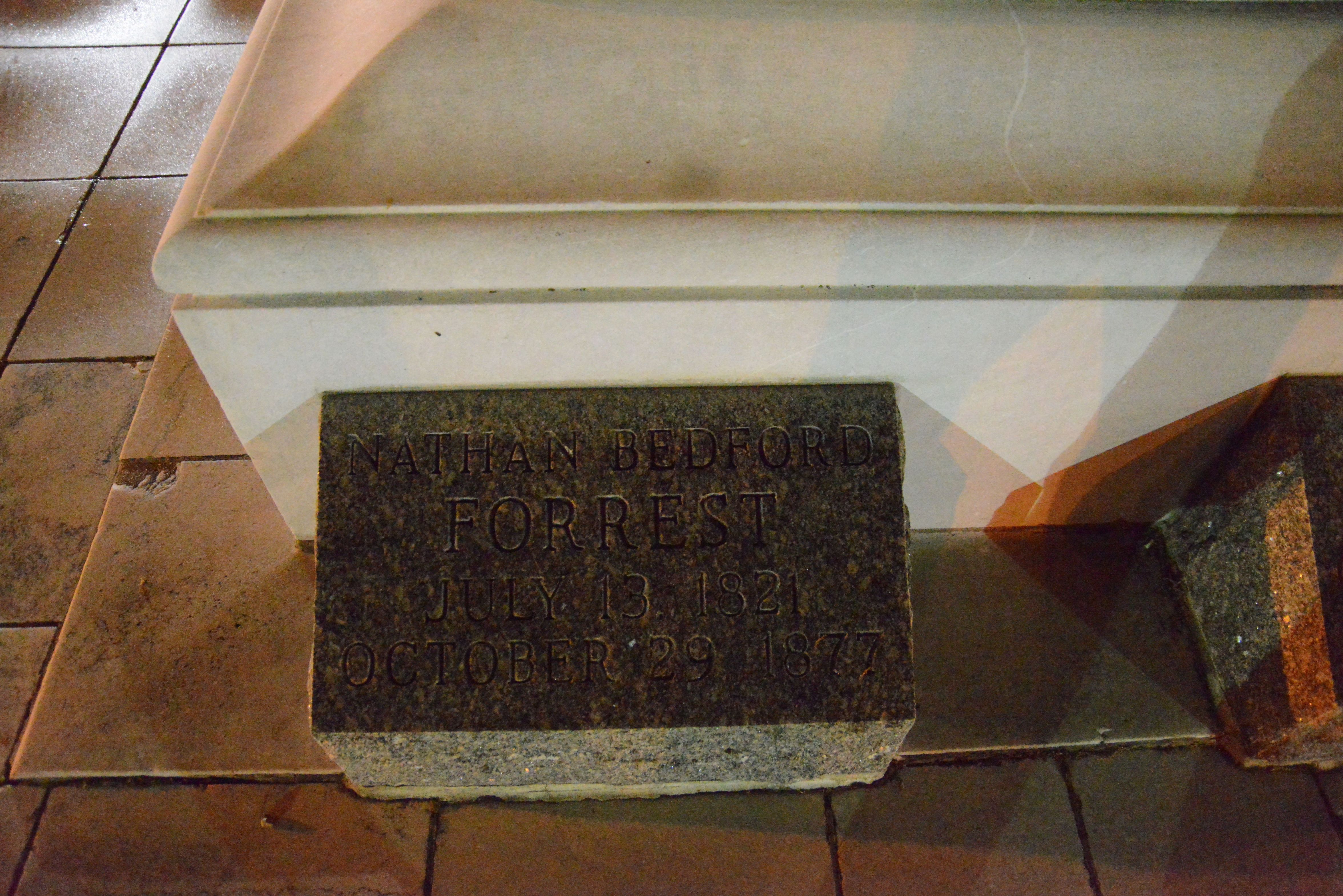
Inscription
NATHAN BEDFORD
FORREST
JULY 13, 1821
OCTOBER 29, 1877
Gravesite Details
Remains reburied at the National Confederate Museum in June 2021.
Family Members


-
![]()
Frances "Fanny" Forrest
1821–1841
-
Mary Forrest
1826–1841
-
![]()
LTC Aaron H. Forrest
1828–1864
-
![]()
Pvt John Nathaniel Forrest
1829–1867
-
![]()
Maj William Hezekiah Forrest
1831–1875
-
![]()
Mildred "Milly" Forrest
1831–1841
-
![]()
COL Jesse Anderson Forrest
1833–1889
-
![]()
LTC Aaron H. Forrest
1833–1864
-
Isaac Forrest
1835–1841
-
![]()
Col Jeffrey Edward Forrest
1837–1864