

Find a post
Communicating Research

As the world of academic publishing continues to expand, authors must be savvy about where they submit their work. With bad actors attempting to leverage systemic vulnerabilities, special care must be taken to identify high-quality publishing outlets.

The Sage Research Methods editorial team is pleased to announce that we are now accepting proposals for our next collection, Using AI for Research.
This collection will provide social and behavioural science researchers and students with urgently needed clear, critical, practical guidance for using AI across the research lifecycle.
In the next few weeks and months, students will be completing final year research projects as part of their degree programme. For many, this is a highly weighted assessment and the longest piece of academic writing they have undertaken to date. These projects are not only substantial in length; they are also deeply personal. As a result, the final stages of the research process are often accompanied by a mix of anticipation, relief and anxiety about “letting go” of something they have worked on for so long. What does this mean for supervisors, and how can you best support students in overcoming this final hurdle?

To mark International Mentorship Month, Audrey J. Murrell, Ph.D. — lead advisor of the Epigeum’s upcoming ‘Mastering Mentoring’ program — explores the impact of mentoring and how intentional, well‑supported approaches can be beneficial for learning.

In this guest post, Kyra van Weenen, Commissioning Editor for Sage Research Methods explores the unique concept behind Sage’s flagship Research Methods Case Studies, and how they support researchers and students in conducting their own research.
You’ve probably heard it before: “Never cite Wikipedia in your research paper.” And it’s good advice. But maybe you haven’t heard about how using Wikipedia (especially its citations) actually strengthens your work and even helps others discover it later. And this post is all about that!
Jump to

Start your research journey
Find resources to answer your research methods and statistics questions
Methods Minute Newsletter
Research Skills

Research methods and skills can make all the difference to student success, yet they are not always taught explicitly in the classroom. Sage Campus helps close that gap with scaffolded learning that builds confidence step by step, equipping learners with the practical skills they need to thrive in their studies and beyond.
This blog is the seventh, and penultimate post, in a follow-on to our 2021 “The future of computational social science is Black” series, about a Summer Institute in Computational Social Science organized by Howard University and Mathematica. It continues to bring the power of computational social science to the issues of systemic racism and inequality in America. This marks the third iteration of the successful SICSS model being hosted by a Historically Black College or University.
This blog post is the sixth of eight in a follow-on to our 2021 “The future of computational social science is Black” series, about a Summer Institute in Computational Social Science organized by Howard University and Mathematica. It continues to bring the power of computational social science to the issues of systemic racism and inequality in America. This marks the third iteration of the successful SICSS model being hosted by a Historically Black College or University.
Latanya Sweeney, scholar of technology science, Daniel Paul Professor of the Practice of Government and Technology at the Harvard Kennedy School and in the Harvard Faculty of Arts and Sciences, and director and founder of the Public Interest Tech Lab, delivered the keynote address for SICSS-Howard/Mathematica 2023.
This blog post is the fifth of eight in a follow-on to our 2021 “The future of computational social science is Black” series, about a Summer Institute in Computational Social Science organized by Howard University and Mathematica. It continues to bring the power of computational social science to the issues of systemic racism and inequality in America. This marks the third iteration of the successful SICSS model being hosted by a Historically Black College or University.
This blog post is the fourth of eight in a follow-on to our 2021 “The future of computational social science is Black” series, about a Summer Institute in Computational Social Science organized by Howard University and Mathematica. It continues to bring the power of computational social science to the issues of systemic racism and inequality in America. This marks the third iteration of the successful SICSS model being hosted by a Historically Black College or University.
This blog post is the third of eight in a follow-on to our 2021 “The future of computational social science is Black” series, about a Summer Institute in Computational Social Science organized by Howard University and Mathematica. It continues to bring the power of computational social science to the issues of systemic racism and inequality in America. This marks the third iteration of the successful SICSS model being hosted by a Historically Black College or University.
This blog post is the second of eight in a follow-on to our 2021 “The future of computational social science is Black” series, about a Summer Institute in Computational Social Science organized by Howard University and Mathematica. It continues to bring the power of computational social science to the issues of systemic racism and inequality in America. This marks the third iteration of the successful SICSS model being hosted by a Historically Black College or University.
This blog post is the first of eight in a follow-on to our “The future of computational social science is Black” series, about a Summer Institute in Computational Social Science organized by Howard University and Mathematica. It continues to bring the power of computational social science to the issues of systemic racism and inequality in America. This marks the third iteration of the successful SICSS model being hosted by a Historically Black College or University.
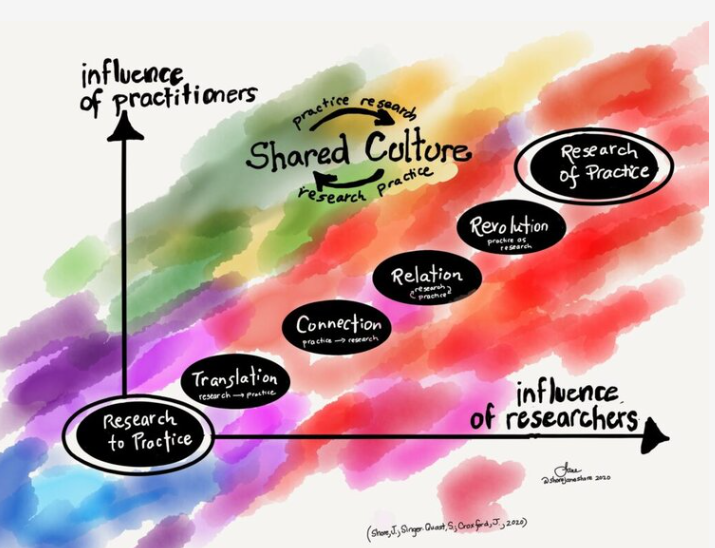
In this guest post Jane Shore and Sarah Singer Quast remind us of the importance of bridging research and practice, and give specific recommendations.

You asked about how to develop your academic identity and build your career at a recent webinar. Find responses here.

Thinking about new beginnings in a new year? Perhaps it is a time to think abut what makes work meaningful to you, and how those priorities influence career choices. Reflect on these open-access readings about meaningful work.

How are the rhythms of academic life changing, and what does arrhythmia mean in the context of our careers?
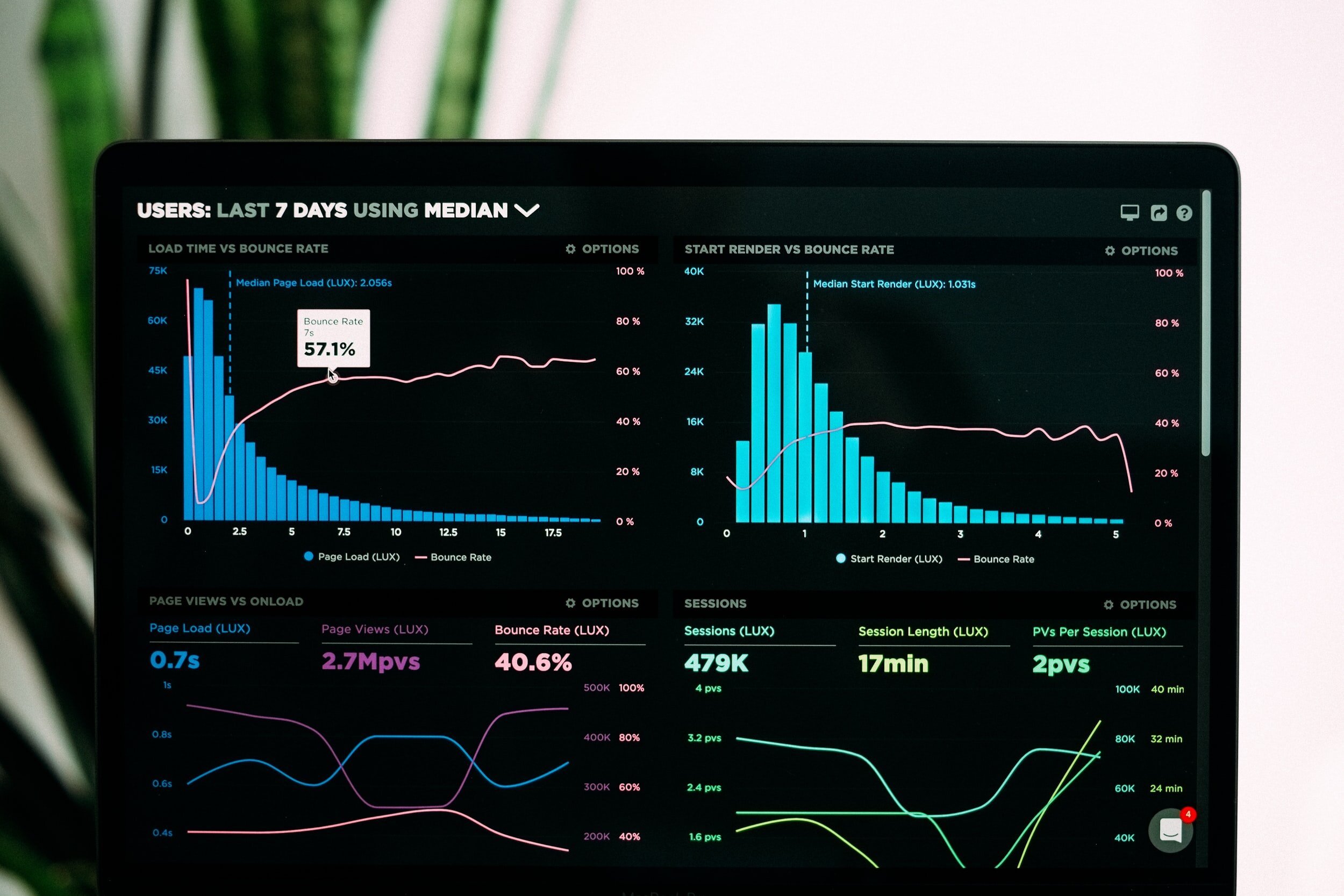
Find tips to help you share your research and numerical findings.

In this post Dr. Mazak discusses how to manage the writing process for a large project such as a dissertation, thesis, or book and offers resources to help new or experienced writers.

Watch the recording from the lively, informative, How to Create a Research Agenda and Personal Academic Brand webinar.

Jessica Lester and Trena Paulus co-edited a December 2023 special issue for the Sage journal, Qualitative Inquiry, “Qualitative inquiry in the 20/20s: Exploring methodological consequences of digital research workflows.” Read the articles and watch a roundtable with contributors. This is the second of two discussions of the special issue.

Jessica Lester and Trena Paulus co-edited a December 2023 special issue for the Sage journal, Qualitative Inquiry, “Qualitative inquiry in the 20/20s: Exploring methodological consequences of digital research workflows.” Read the articles and watch a roundtable with contributors. This is the first of two discussions of the special issue.

Thinking about research careers and calling: finding the right fit.

Dr. Stephen Gorard defines and explains randomness in a research context.

How can you use Excel in your data analysis? Charlotte Brookfield explains!

Have you seen Dr. Gorard use card tricks to teach research methods? Watch this video!

Learn some important steps about using Quirkos software for qualitative data analysis.

Want to learn more about research with datasets? This curated collection of open-access articles can help you understand defining characteristics, and develop data literacy skills needed to work with large datasets and machine learning tools for managing Big Data sources.

Researchers need to dig deeply, think broadly, and use what they learn to create new paths for understanding and addressing problems. Find a variety of perspectives and open-access resources in this collection.

Learn about math skills that are essential for researchers.
Academic Writing Month

If you’ve spent any time in the world of qualitative research, you know it is gloriously, wonderfully messy. You’re usually swimming in a sea of interview transcripts, half-annotated PDFs, and those "aha!" moments scribbled on sticky notes that inevitably fall behind your desk. For a long time, it felt like our quantitative colleagues had all the flashy tools while we were left with highlighters and hope. That’s exactly why I’m so excited about the 4th edition of Qualitative Data Analysis with NVivo.
Research methods and skills can make all the difference to student success, yet they are not always taught explicitly in the classroom. Sage Campus helps close that gap with scaffolded learning that builds confidence step by step, equipping learners with the practical skills they need to thrive in their studies and beyond.
In this engaging guest post, Gary Thomas, author of the How to do Your Research Project (5th edition) provides students with accessible guidance on key points to consider when starting a dissertation.
Following up from the launch of Inclusive Research Methodologies, this week Sage Research Methods expands its resources with another timely launch - Sage Research Methods Video: Doing Survey Research, a new video collection supporting learners through every stage of one of the most widely used research methods.

As research methods continue to evolve, one thing is clear: researchers and students need practical support they can trust to conduct research responsibly. This month, Sage Research Methods expands its collection with two closely timed launches, each addressing a different but equally important aspect of the research process
As the world of academic publishing continues to expand, authors must be savvy about where they submit their work. With bad actors attempting to leverage systemic vulnerabilities, special care must be taken to identify high-quality publishing outlets.

Beatriz Figueroa, author of Avoiding Plagiarism, explores how plagiarism has evolved - from copy-and-paste to misrepresentation across text and GenAI. The new edition reflects this shift, with a modern rethink focused on ownership, attribution and trust.

A persistent challenge in qualitative research is synthesis. When you are working with large volumes of text (interviews, field reports, narrative accounts) across multiple countries and time periods, how do you move systematically from individual accounts to broader patterns? And how do you do so without flattening the complexity that makes qualitative data valuable in the first place?
This piece describes how causal mapping, combined with an AI-assisted coding workflow, helped address that challenge in a large, multi-country research and evaluation project and what researchers working with similarly complex qualitative datasets might take from the experience.

Two defining directions shaping emerging trends in research methods are the rapid incorporation of digital research methods and the growing emphasis on inclusive research methodologies. The first accelerated during the COVID-19 pandemic, and the second reflects a longstanding effort to diversify perspectives, challenge dominant paradigms, and enable participation from marginalised communities.
The Sage Research Methods editorial team is pleased to announce that we are now accepting proposals for our next collection, Using AI for Research.
This collection will provide social and behavioural science researchers and students with urgently needed clear, critical, practical guidance for using AI across the research lifecycle.
In the next few weeks and months, students will be completing final year research projects as part of their degree programme. For many, this is a highly weighted assessment and the longest piece of academic writing they have undertaken to date. These projects are not only substantial in length; they are also deeply personal. As a result, the final stages of the research process are often accompanied by a mix of anticipation, relief and anxiety about “letting go” of something they have worked on for so long. What does this mean for supervisors, and how can you best support students in overcoming this final hurdle?

We are proud to announce that the Research Integrity Collection is now complete! In our recent webinar, we explored the value, purpose practical implementation of the collection to serve your entire research community.
Sage Research Methods continues to evolve to meet the changing needs of researchers, educators, and students worldwide. We’re pleased to share that our latest updates are now live, bringing fresh resources, new perspectives, and expanded methodological coverage across the resource. These updates are designed to help users stay current, work more inclusively and ethically, and confidently navigate research at every stage — from foundational learning to advanced, real‑world application.

You are teaching a methods course in Politics and International Relations. Perhaps it is a course that has ‘research methods’ in the title. Perhaps the final assignment for your course is a research project. Perhaps you are convening a dissertation module. What challenges do you expect?

Looking for fresh ways to enrich your methods curriculum? Dive into Sage’s new Research Methods Resources Hub for free resources that harness insights from our leading authors, and introduce strategies to improve research teaching, learning and practice.

Professor Matthew Campbell explores how research integrity is shaped through everyday leadership decisions and highlights three key leadership levers that strengthen and influence research culture.
To mark International Mentorship Month, Audrey J. Murrell, Ph.D. — lead advisor of the Epigeum’s upcoming ‘Mastering Mentoring’ program — explores the impact of mentoring and how intentional, well‑supported approaches can be beneficial for learning.
In this guest post, Kyra van Weenen, Commissioning Editor for Sage Research Methods explores the unique concept behind Sage’s flagship Research Methods Case Studies, and how they support researchers and students in conducting their own research.
You’ve probably heard it before: “Never cite Wikipedia in your research paper.” And it’s good advice. But maybe you haven’t heard about how using Wikipedia (especially its citations) actually strengthens your work and even helps others discover it later. And this post is all about that!

With 2025 ending, you may be thinking about reviewing your research progress and preparing for the upcoming year. If you don’t know where to start, here are some suggestions on organizing your work and planning for 2026.

Whether you’re tackling a systematic review for your own research project, or supporting students, this recent Sage Campus webinar is an essential watch.
Dr Gemma Cherry and Dr Michelle Maden, co-authors of Doing a Systematic Review: A Student’s Guide, break down the rigorous process into 10 clear, manageable steps. You’ll learn the difference between systematic and scoping reviews, the critical need for a registered protocol, and how to craft a focused question using frameworks like PICO.

Rapid advancements in Artificial Intelligence have instigated introspection across the data visualisation field. Though swathes of AI discourse are characterised by hype and gimmickry, if you cut through the noise, it’s clear we are facing a significant new era of technological progress. It’s time to evolve, or die, as the saying goes. But what should our relationship with AI be, particularly with generative AI? To what extent could our authentic craft be usefully augmented by an artificial one?

Publishing your research Open Access (OA) ensures that it reaches the widest possible audience — freely and immediately. This guide walks you through what OA means, its key benefits, and how Sage’s flexible publishing options help researchers share their work responsibly, increase visibility, and meet funder or institutional requirements.
We’re excited to share that Research Methods - part of the 'Research Skills Toolkit' - has been updated to reflect today’s research landscape. Discover brand new content on Gen AI, Data Literacy and more – designed to support researchers with the skills they need in their careers.
Data Visualization
Rapid advancements in Artificial Intelligence have instigated introspection across the data visualisation field. Though swathes of AI discourse are characterised by hype and gimmickry, if you cut through the noise, it’s clear we are facing a significant new era of technological progress. It’s time to evolve, or die, as the saying goes. But what should our relationship with AI be, particularly with generative AI? To what extent could our authentic craft be usefully augmented by an artificial one?

Dr James Abdey discusses the importance of statistical literacy and applications of methodologies to assist researchers in understanding their data and presenting their results clearly, objectively, and with confidence.

How can you communicate research findings visually?

To try and cut through the tangles of complexity wrought by a global pandemic, I’ve been working with Peter Evans (and his multi-talented daughter, Hamsi Evans) to put together some picture ‘explainers’ to help frame thinking. These are helping communicate around the complex problems we’re all facing and how to use social science research to tackle these.

Mass media routinely portray information about COVID-19 deaths on logarithmic graphs. But do their readers understand them?

We will emerge from this pandemic with a better understanding of the world and an improved ability to teach others about it. For now, we need to be continuously analyzing the data and thinking about the lessons we can learn and apply. Here’s how you can join in!
At SAGE, we have been working with academics around improving and sharing teaching resources, especially for quantitative and computational methods in social sciences. Besides the mass remote and emergency teaching experiment happening right now, one of the positive things we can already identify and reuse to improve learning in methods courses is the glut of data visualizations. The absolute advantage here is that all these visualizations are produced (almost always) with the same raw input, telling a variety of different stories. What better way to explain the different uses and impact of visualizations and the use of different tools to students than examples based on the same data?


Research communities across the globe are tirelessly collecting, analyzing and sharing data to help us understand and tackle the coronavirus pandemic. Here’s a collection of resources that visualize, map and demystify COVID-19 data.


Simple but powerful, bar graphs are one of the most common charts used to compare categorical data, which are data that can be grouped into categories like race and sex. Here Diana gives some tips for making the perfect Bar graph.
Conference & Event Roundups

An online conference offers a time to meet and learn from each other.

Continuing our series on the Summer Insitute in Computational Social Science, Joshua Becker traces his SICSS journey.
Before I get into this, you should know I’m a network researcher. So even though this is ostensibly about a summer program, it’s also about networking. I almost didn’t participate in the Summer Institute in Computational Social Science, or SICSS as I now know it fondly. At the time, I thought it was just about learning the skills — and I felt I had a solid methods foundation — and mainly just applied because it seemed like the kind of thing I was supposed to do as a grad student. Having never previously seen the gorgeous Princeton campus, I imagined the trip itself as little more than spending two weeks in suburban New Jersey rather than at home with my wife. Luckily, I applied. And luckily, I was accepted. Mileage may vary, but I made out well on the deal.

At the start of 2020 we welcomed Data Justice Lab Co-Founder/Director Lina Dencik to the SAGE Ocean Speaker Series. Dencik is reader at Cardiff University’s School of Journalism, Media and Culture. The Data Justice Lab ‘carry out research that engages with data analytics from a social justice perspective. This includes research that examines the implications of institutional and organizational uses of data as well as research that provides critical responses to potential data harms and misuses’. Watch the talk below to discover past and ongoing projects from the Data Justice Lab.

And talking about gender equality in social data science means talking about the representation of women in tech and attitudes towards women in tech. It means confronting the stubborn prejudices and perceptions that women can’t code or can’t do stats. It means having a discussion about how as this new community of thought and practice is forming, we have a chance to make it look different than the communities that came before. And in particular, it seems vital to challenge ourselves to do so because of the questions social data scientists are asking and the methods they are using - because of the danger of biased algorithms, of reinforcing inequality through policies based on big but dirty data.

The 2nd-4th September 2019 marked the third in a series of symposia on Societal Challenges in Computational Social Science (Euro CSS). Computer scientists, political scientists, sociologists, physicists, mathematicians and psychologists from 24 countries gathered in Zurich for a day of workshops and tutorials followed by a two-day one track conference.
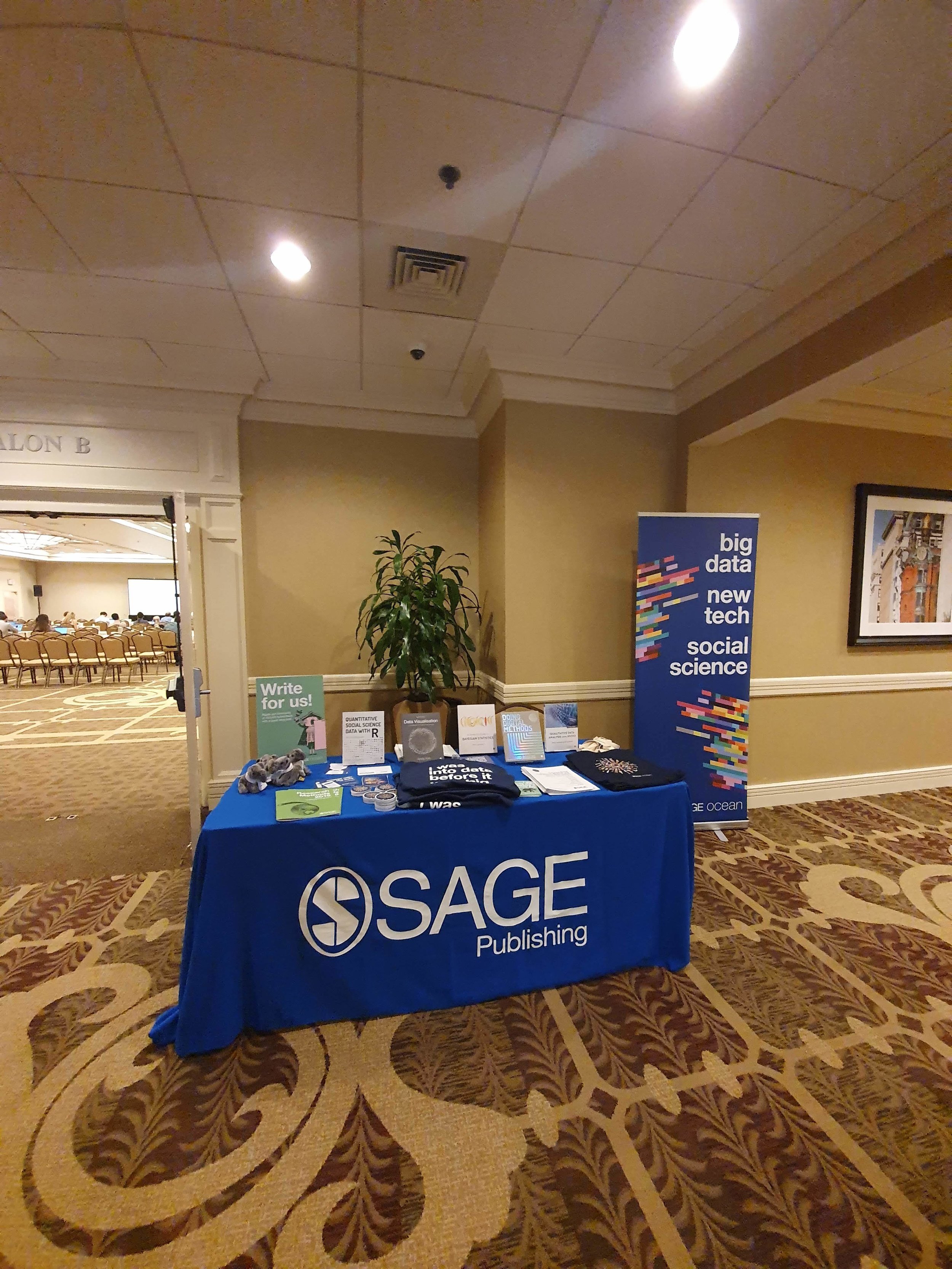
On the 28th of August, we visited sunny Georgetown University to discuss all things politics and Computational Social Science for the second annual PaCSS conference. Here are our highlights.

The baton was passed to the University of Amsterdam for the fifth addition of IC2S2 with the core conference taking place between 18-20 July.

At the end of February we ran a most enthralling event experience. Three panelists, two hosts and about 20 attendees all put their headsets on from their labs, offices and homes to join a virtual classroom decorated with trees, a castle, a slightly scary tiger and a hippo, to talk about the future of VR in social science research.

‘From text to data - new ways of reading’ was a 2-day event organised by the National Library of Sweden, the National Archives and Swe-Clarin. The conference brought together librarians, digital collection curators, and scholars in digital humanities and computational social science to talk about the tools and challenges involved in large scale text collection and analysis.

The second annual Social Science Foo Camp took place at Facebook’s headquarters in Menlo Park at the start of this month, convening an eclectic mix of more than 200 social scientists, technologists, funders, policy makers, businesspeople and writers.

Last week, a mix of PhD students, early career and tenured researchers met in Cologne to discuss their latest projects around bias and discrimination on social media, and the algorithms underpinning many of the most pervasive services we use today.
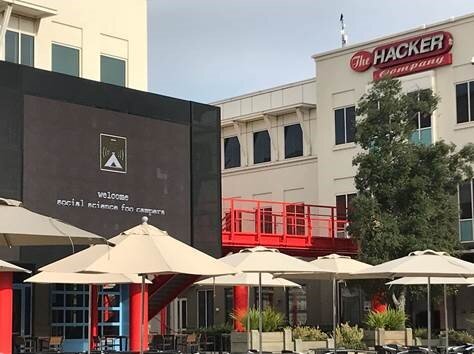
Watch these short videos as leading academics present at this year’s inaugural Social Science Foo Camp discuss the opportunities and challenges presented by big data and the move to more computational methods.

Explore our round-up of the recent event on collective intelligence hosted by Nesta and SAGE Publishing

Mirsad Hadžikadić, President of the Computational Social Science Society of the Americas (CSSSA) kicked off this year’s annual conference in Santa Fe.

In June, I attended the second iteration of the Summer Institute for Computational Social Science (SICSS), an intensive two-week program held at Duke that was intended to bring together researchers from across the social science and data science disciplines to learn and discuss topics in computational social science (CSS). Each day, the organizers Chris Bail and Matt Salganik taught mini-lectures on different CSS topics, we split into groups to work on activities together, and a speaker came in to present their research.

Ahead of this year’s APSA general meeting, we attended the Politics and Computational Social Science (PaCSS) pre-conference, hosted at Northeastern University. The event brought together political scientists working with large-scale data sets and emerging computational methods.

The final day of IC2S2 kicked off with SAGE Ocean's Katie Metzler introducing the Ethics in Computational Social Science Panel, featuring Dr. Jake Metcalf, Dr. Laura Noren and Dr. Michelle Meyer.

Saturday started off with a fascinating keynote from Damon Centola on How Behavior Spreads. He talked about how weak and strong ties affect the spread of both simple and complex

The SAGE Ocean team are currently at IC2S2 - the 4th Annual International Conference on Computational Social Science, which is taking place at the Kellogg School of Management at Northwestern University.
Here's a round up of the action on Friday.

The Economic and Social Research Center hosted the biennial Research Methods Festival at the University of Bath last week.

A good academic conference poster serves a dual purpose: it is both an effective networking tool and a means by which to articulately communicate your research. But many academics fail to produce a truly visually arresting conference poster and so opportunities to garner interest and make connections are lost. Tullio Rossi offers guidance on how to produce an outstanding conference poster, considering the scripting, concept, design, and logistics.
Going to an academic conference is an exciting opportunity to connect with like-minded individuals and exchange stimulating ideas. However, to make the most of a conference requires a lot of hard work before, during, and after the meeting itself. Marta Teperek provides a checklist of things to do at each of these stages.

We were extremely lucky to kick off the first edition of the SAGE Ocean Speaker Series last week with a talk from tech attorney and social media law professor, Kimberly A. Houser.

The first ever Social Science Foo Camp took place earlier this month, co-hosted by SAGE, O’Reilly Media and Facebook.

This blog post is the eighth, and final, post in a follow-on to our 2021 “The future of computational social science is Black” series, about a Summer Institute in Computational Social Science organized by Howard University and Mathematica. It continues to bring the power of computational social science to the issues of systemic racism and inequality in America. This marks the third iteration of the successful SICSS model being hosted by a Historically Black College or University.