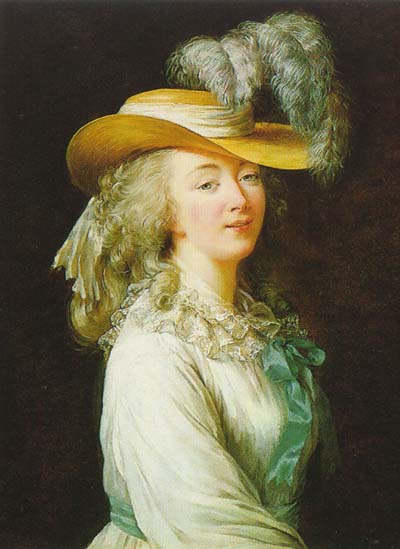
Royal Mistress. Comtesse du Barry. Born Marie-Jeanne Bécu at Vaucouleurs, Lorraine, France, the illegitimate daughter of Anne Bécu. Her father was probably Jean-Baptiste Gormand of Vaubernier, a friar, who was later dismissed from his post. She was educated at the Convent School of Saint-Aure in Paris until about age 15 when she left. Under the names Jeanne Rancon, Jeanne Vaubernier, or Jeanne Beauvarnier she worked as a milliner's assistant, was apprenticed to a hairdresser - who may or may not have fathered a daughter on her - and served as companion to a wealthy widow. She then attracted the attention of notorious rake, Jean-Baptiste du Barry, a Gascon nobleman, and he made her his mistress. He introduced her into Parisian high society, as Mademoiselle Lange. When she attracted Louis XV's attention by 1768; du Barry saw the attraction as an astute political move for him, and as he knew she could not qualify as official royal mistress unless she was married to a noble, he arranged a marriage between her and his brother, Guillaume, in April 1769 so that she might join the court. Guillaume was then sent off with a 5,000 livre pension. On April 22, 1769, she was presented at court as Comtesse du Barry, and Louis said of her "...she is the only woman in France who makes me forget that I soon will be sixty." The king's chief minister, the Duc de Choiseul had hoped his sister would have the position, and became Jeanne's implacable enemy, and did his best to ridicule her in public. Neither did she get on with the dauphine, Marie Antoinette, who objected to the woman's low birth, and her dislike was fueled by the king's three unmarried daughters who also despised the upstart mistress, and made a bad situation worse. She became a personal friend of Voltaire, and patronized architects Gabriel and Ledoux; sculptors Feullet, Metivier, Gois, and Pajou; painters Drouais, Vernet, Vien, Boucher, Greuze, Fragonard ; jewelers Aubert, Demay, Gaillard, Drais, and Rouën; goldsmiths Roettiers & August; and furniture-makers Delanois, Guichard, and Carlin. She had very little political influence upon the king, but appeared to care for him and never spoke an ill word of him, she made his last few years happy for him. The extravagance of her upkeep, however, lent to her general unpopularity. She received a monthly income of 200,000 livre which eventually elevated to 300,000. Her jewelry was valued at over 2 million livre; she received about 15 million livre between 1769 to 1774, plus gifts of jewels and art from the king, yet at his death, she was over one million livre in debt. Upon the death of Louis XV and the accession of Louis XVI, she was exiled to the Abbey of Pontaux-Dames. Within two years, however, she moved to her estates at Louvenciennes, which had been given to her, along with a small pension, by Louis XV. There she became the mistress of Louis-Hercule-Timoléon de Cossé, Duc de Brissac, the longest affair of her career, and perhaps her only love match. She also earned a reputation as a generous patron of the arts. As unrest in France grew, she sold 133,000 livre in diamonds in Amsterdam via her Paris bankers, and in 1790, she sold more jewelry abroad, possibly for a fund in case she had to flee. After the outbreak of the French Revolution she made several trips to London, in pursuit of jewelry stolen from her chateau in 1791, as well as to aid French émigrés. In September of 1792, Cossé-Brissac and 52 other prisoners were murdered by a mob in Versailles on their way to Paris; the mob then marched to Louveciennes, broke in, and rolled his severed head across the floor. On March 19, 1793 she returned from her last trip to London when she was accused of being a counter-revolutionary and arrested. She was tried by the Tribunal of Paris and condemned to death. Unlike most victims of the guillotine she did not meet he fate stoically. Reportedly she became hysterical, she struggled and cried out to people to save her, she had to be wrestled up the steps of the scaffold, where she screamed hysterically until the end, affecting the crowd so that the executioner had to hasten to complete his task. After she was guillotined, she was buried in a pit that also held the bodies of the late king and queen. Her story has been recorded numerous times including Mistress of Versailles: The Life of Madame du Barry by Agnes Stoeckl (1966) and Madame Du Barry: The Wages of Beauty by Joan Haslip (2005).
Bio by: Iola
Royal Mistress. Comtesse du Barry. Born Marie-Jeanne Bécu at Vaucouleurs, Lorraine, France, the illegitimate daughter of Anne Bécu. Her father was probably Jean-Baptiste Gormand of Vaubernier, a friar, who was later dismissed from his post. She was educated at the Convent School of Saint-Aure in Paris until about age 15 when she left. Under the names Jeanne Rancon, Jeanne Vaubernier, or Jeanne Beauvarnier she worked as a milliner's assistant, was apprenticed to a hairdresser - who may or may not have fathered a daughter on her - and served as companion to a wealthy widow. She then attracted the attention of notorious rake, Jean-Baptiste du Barry, a Gascon nobleman, and he made her his mistress. He introduced her into Parisian high society, as Mademoiselle Lange. When she attracted Louis XV's attention by 1768; du Barry saw the attraction as an astute political move for him, and as he knew she could not qualify as official royal mistress unless she was married to a noble, he arranged a marriage between her and his brother, Guillaume, in April 1769 so that she might join the court. Guillaume was then sent off with a 5,000 livre pension. On April 22, 1769, she was presented at court as Comtesse du Barry, and Louis said of her "...she is the only woman in France who makes me forget that I soon will be sixty." The king's chief minister, the Duc de Choiseul had hoped his sister would have the position, and became Jeanne's implacable enemy, and did his best to ridicule her in public. Neither did she get on with the dauphine, Marie Antoinette, who objected to the woman's low birth, and her dislike was fueled by the king's three unmarried daughters who also despised the upstart mistress, and made a bad situation worse. She became a personal friend of Voltaire, and patronized architects Gabriel and Ledoux; sculptors Feullet, Metivier, Gois, and Pajou; painters Drouais, Vernet, Vien, Boucher, Greuze, Fragonard ; jewelers Aubert, Demay, Gaillard, Drais, and Rouën; goldsmiths Roettiers & August; and furniture-makers Delanois, Guichard, and Carlin. She had very little political influence upon the king, but appeared to care for him and never spoke an ill word of him, she made his last few years happy for him. The extravagance of her upkeep, however, lent to her general unpopularity. She received a monthly income of 200,000 livre which eventually elevated to 300,000. Her jewelry was valued at over 2 million livre; she received about 15 million livre between 1769 to 1774, plus gifts of jewels and art from the king, yet at his death, she was over one million livre in debt. Upon the death of Louis XV and the accession of Louis XVI, she was exiled to the Abbey of Pontaux-Dames. Within two years, however, she moved to her estates at Louvenciennes, which had been given to her, along with a small pension, by Louis XV. There she became the mistress of Louis-Hercule-Timoléon de Cossé, Duc de Brissac, the longest affair of her career, and perhaps her only love match. She also earned a reputation as a generous patron of the arts. As unrest in France grew, she sold 133,000 livre in diamonds in Amsterdam via her Paris bankers, and in 1790, she sold more jewelry abroad, possibly for a fund in case she had to flee. After the outbreak of the French Revolution she made several trips to London, in pursuit of jewelry stolen from her chateau in 1791, as well as to aid French émigrés. In September of 1792, Cossé-Brissac and 52 other prisoners were murdered by a mob in Versailles on their way to Paris; the mob then marched to Louveciennes, broke in, and rolled his severed head across the floor. On March 19, 1793 she returned from her last trip to London when she was accused of being a counter-revolutionary and arrested. She was tried by the Tribunal of Paris and condemned to death. Unlike most victims of the guillotine she did not meet he fate stoically. Reportedly she became hysterical, she struggled and cried out to people to save her, she had to be wrestled up the steps of the scaffold, where she screamed hysterically until the end, affecting the crowd so that the executioner had to hasten to complete his task. After she was guillotined, she was buried in a pit that also held the bodies of the late king and queen. Her story has been recorded numerous times including Mistress of Versailles: The Life of Madame du Barry by Agnes Stoeckl (1966) and Madame Du Barry: The Wages of Beauty by Joan Haslip (2005).
Bio by: Iola
Bio by: Iola