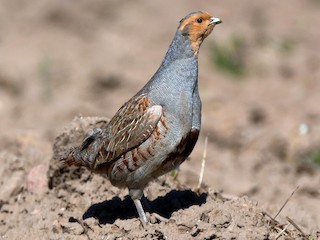

Gray Partridge Perdix perdix Scientific name definitions
- LC Least Concern
- Names (48)
- Subspecies (7)
Sign in to see your badges
Species names in eBird-supported languages
| Language | Common name |
|---|---|
| Afrikaans | Gryspatrys |
| Albanian | Thëllëza e fushës |
| Armenian | Մոխրագույն կաքավ |
| Asturian | Perdiz parda |
| Azerbaijani | Boz kəklik |
| Basque | Eper grisa |
| Bulgarian | Полска яребица |
| Catalan | perdiu xerra |
| Chinese (SIM) | 灰山鹑 |
| Croatian | trčka |
| Czech | koroptev polní |
| Danish | Agerhøne |
| Dutch | Patrijs |
| English | Gray Partridge |
| English (AVI) | Grey Partridge |
| English (United States) | Gray Partridge |
| Estonian | nurmkana |
| Faroese | Akurhøna |
| Finnish | peltopyy |
| French | Perdrix grise |
| Galician | Charrela cinsenta |
| Georgian | გნოლი |
| German | Rebhuhn |
| Greek | Καμπίσια Πέρδικα |
| Hebrew | חוגלית אפורה |
| Hungarian | Fogoly |
| Icelandic | Akurhæna |
| Italian | Starna |
| Japanese | ヨーロッパヤマウズラ |
| Kazakh | Сұр шіл |
| Kyrgyz | Боз чил |
| Latvian | Laukirbe |
| Lithuanian | Kurapka |
| Norwegian | rapphøne |
| Persian | کبک چیل |
| Polish | kuropatwa |
| Portuguese (Portugal) | Charrela |
| Romanian | Potârniche |
| Russian | Серая куропатка |
| Serbian | Jarebica |
| Slovak | jarabica poľná |
| Slovenian | Jerebica |
| Spanish | Perdiz Pardilla |
| Spanish (Spain) | Perdiz pardilla |
| Swedish | rapphöna |
| Turkish | Çilkeklik |
| Ukrainian | Куріпка сіра |
| Welsh | petrisen |
Perdix perdix (Linnaeus, 1758)
Definitions
- PERDIX
- perdix
The Key to Scientific Names
Legend Overview
Originally Appeared in
Content Partner

Full content is available exclusively to Birds of the World subscribers. Sign in Learn more
Introduction
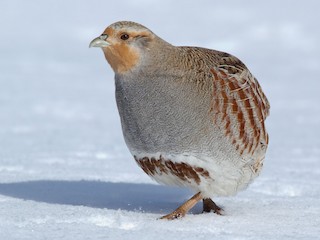
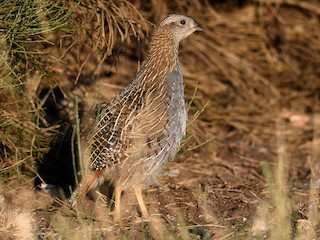
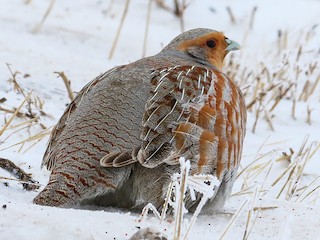
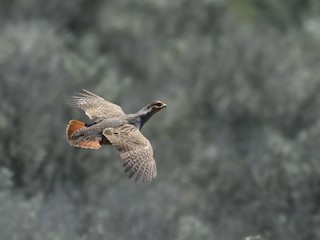
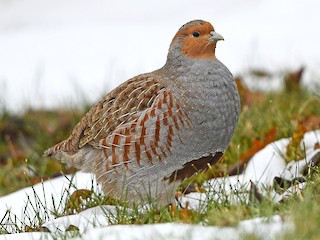
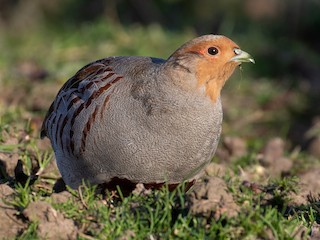
The Gray Partridge, introduced into North America in the early 1900s, is native to much of Europe and Asia. It has 8 recognized subspecies and 2 color phases, tending to be browner in the west and paler and grayer in the east. Little information on the subspecific taxonomy of North American populations is available, but most populations are likely to be derived from the European race, P. p. perdix . Because of its economic importance as a gamebird, especially in parts of Europe, this is one of the most widely studied species of Galliformes.
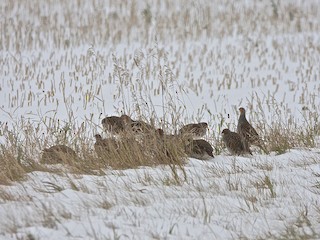
This partridge has a high mortality rate, short lifespan, and high reproductive capability. It produces among the largest single hen clutches of any bird species. Its preferred habitats are grasslands and grainfields, and its densest populations are found in the wheat-belts of northern European and North America. Gray Partridge benefit most from traditional agricultural practices, where hedgerows are maintained and the use of pesticides is limited. Populations are declining in areas with intensive agriculture. Although hunted in many areas of Europe and North America, predation and weather appear to have the greatest impact on its numbers. In North America, populations are concentrated in the northern prairie states and southern prairie provinces, although this bird is expanding southward into Nebraska and Missouri.
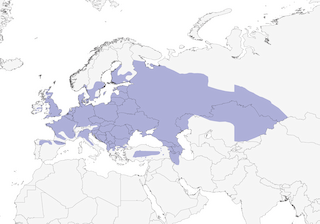
- Year-round
- Migration
- Breeding
- Non-Breeding