Pakistan opposes India’s demand for UNSC seat


 157
157


UNITED NATIONS: Pakistan on Saturday rejected India’s demand for a permanent seat on the UN Security Council, saying there’s no place for a fasicst state in a sensitive decision-making body.
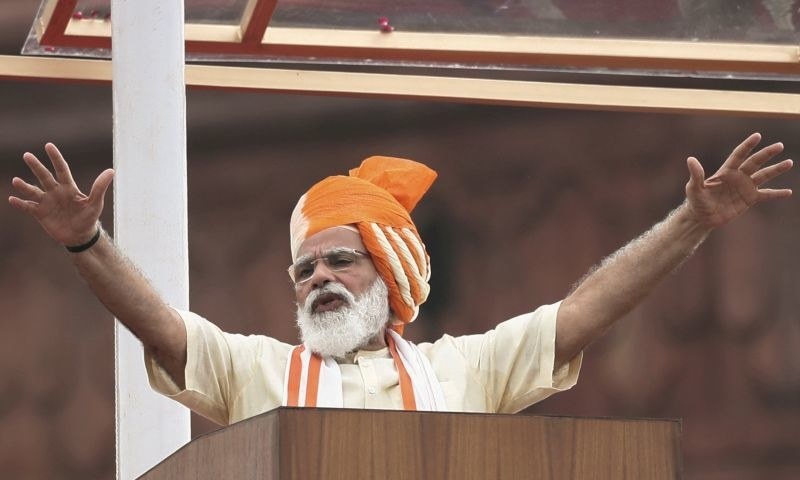
Earlier in the day, Indian Prime Minister Narendra Modi made a strong pitch for a more prominent role in the UN Security Council, asking: “Till when do we have to wait? Till when will India be kept away from the UN’s decision-making process?”
Last week, the Indian government announced that it was according “highest priority” to getting a permanent seat on the UNSC.
“It’s a pipe dream,” said Pakistan’s permanent representative to the UN, Ambassador Munir Akram, while responding to the demand. “The world does not want a fascist state as a permanent member of the Security Council.”
The Pakistani envoy said that Islamabad too wanted UN reforms but not by adding another state to the existing list of five permanent UNSC members.
Islamabad seeks increase in number of non-permanent members
“We want expansion of the non-permanent members in the Security Council, from the present 10 to 20-21 to ensure equitable representation of the UN’s 193 member states,” he said.
There are at least 30 UN members that support expansion only in the non-permanent category.
China, one of the five permanent members with veto power, also backs this proposal. The other permanent members include the US, Britain, Russia and France.
Brazil, Germany, India and Japan, however, want to be added to the permanent category. On Wednesday, Brazil and South Africa urged the UN to expedite the reforms.
Ambassador Akram, however, said that Pakistan backs increasing non-permanent members because it would allow all large, medium and smaller states— especially from Africa, Asia and Latin America — to have a say in the United Nations decision-making process. All these states were underrepresented and complain of having no say in key international issues.
“This will also enhance the balance between the existing five permanent members and non-permanent members,” Mr Akram said.
He said Pakistan opposed the Indian proposal because additional permanent seats would reduce opportunities for the representation of the wider UN membership. “This will also create new centers of privilege compounding the difficulties of securing expeditious and equitable decisions in the Security Council,” he added.
But the Indian prime minister appeared desperate to join the elite club, which will also allow it thwart any international move to resolve the Kashmir dispute.
“Till when do we have to wait?” he asked the UN General Assembly. “Reform is needed at the United Nations and India is waiting for that reform to happen.”
He reminded the UN that it needed to adapt and change to stay relevant in current times.
The Security Council is the UN’s highest-decision making forum and the only one that can make legally-binding decisions, such as the one demanding a plebiscite in Kashmir. India, however, refuses to implement this legally-binding decision.
India, which has previously served seven terms as a non-permanent, was re-elected for a two-year term in June along with Ireland, Mexico and Norway.
In February, US President Donald Trump said he was committed to working with India to strengthen and reform the UN but made no specific reference to New Delhi’s demand for a permanent seat.
On Friday, Prime Minister Imran Khan used his address to the UNGA to highlight the atrocities India had committed in occupied Kashmir. He urged the world leaders to persuade India to reverse its Aug. 5, 2019 decision to illegally annex the occupied territories. He also drew their attention to the plight of Indian Muslims and other minorities.
Mr Modi ignored most of these issues while highlighting India’s priorities. Instead, he pushed for strengthening global action against terrorism.
“India will not hesitate in raising its voice against the enemies of humanity, human race and human values — these include terrorism, smuggling of illegal weapons, drugs and money-laundering,” he said.
Published in Dawn, September 27th, 2020