
Recent interviews

Metal Covenant sat down with Zinny Zan, frontman of recently started constellation Zan/Cody, to talk about the duo’s first album, Beautiful ‘N Damned.
How did you first come up with this idea to go back to working with Harry Cody again, and start a new thing called Zan/Cody?
Well, we’ve been back and forth for a couple of years, checking each other out. You know, “How are you doing? Merry Christmas. Happy Birthday.”. Stuff like that. So we’ve been in talks just to see how we are. We did a cool thing many years back, and that stays with you because there weren’t so many bands doing the things that we did back then. I think Europe, Roxette, and us were the three bands that really hit America at that time. We hit the Billboard charts, and so on and so forth. Harry complimented on something I did with the Zinny Zan album (Lullabies For The Masses) that I did with Stefan Bergström from Skintrade. He said, “Well, you’re not screaming that much anymore. It’s a mature voice.”. It was nicely put. And then I said something like, “If you ever wanna come by and do some guitar stuff…”, and he said, “I’m open to that.”, and that made me think, and I go like, “If Harry is open to that…”. I would never invite him to do a thing with me, a Zinny Zan thing. Hey, we had a band together, equal grounds, so I said, “Harry. I will not do this that way, but how would you feel about if we just threw some ideas back and forth, and if it sticks, we do like Zan/Cody, whatever?”. And that’s what it ended up being. So that’s what we did. He threw one or two songs at me, and I did the same, and then he reworked a little bit of mine, put his things into it, and I did the same with his things. And then we said, “We already have a four-track mini thing here, so should we aim for an album?”. And then it became six tracks, and on and on it went, and then we were like, “We got an album.”, and then he goes, “Zinny. Do you know people?”. ‘Cause America is dead when it comes to hard rock, you know. So I said, “Well, let me take this a spin around Europe and the record companies.”. And that’s what I did, and in the end we ended up with Frontiers. So that’s how we started it. At first it was like, “Is the spark that we used to have still there?”. And it absolutely was. And it was easy, because we both felt like, “Wow! It’s so easy to write this music together.”. And we absolutely understood and had respect for each other. He’d go like, “I understand if you don’t want to sing it like that.”. So there was no plan at all, and just seeing like, “Can we write together? What comes out? Is it good enough?”. And we loved it. So there was no plan like, “Okay, let’s do an album like this.”. So we threw in pretty much everything but the kitchen sink. You know, some songs are a little heavier, some are a little softer, and so on. And that’s just what came out of our hearts when we started playing together again. So no master plan, and no strategic thing here or there, or, “Let’s sound a little bit like Shotgun Messiah.”. Well, that’s inevitable, of course. We both played in that band, and Harry is a very specific guitar player, so he has his signature all over it. And same with my voice. You know, I’m not a traditional hard rock singer. I don’t have that voice. I can’t sing pretty and fantastically like Sebastian Bach or other people. I have more like an attitude in my voice, so, you know, that’s what you get.

And I understand, of course, that you have the integrity too as experienced musicians to come up with something that’s good enough to put down on an album because you don’t wanna be ashamed of yourselves.
No, no. And I’ve seen it. You know, there’s always people. You can never please everyone. And I’ve seen that some people are saying, “Oh, pathetic cash grab.”, and I go like, “Well, if it was a cash grab, we probably would have played the first album on tour and trying to make as much money as possible.”. We put a lot of effort into this one. And we don’t know if people want Zan/Cody. People probably will say, “Oh, it isn’t Shotgun Messiah.”, and, “Well, you’re right. It isn’t. It’s just two of the four people there.”. But you know, you can never please everyone. We threw something at the wall and, “Let’s see what sticks.”, you know.
If you guys would have tried to really copy the first Shotgun Messiah record today, would you have really pulled that thing off with good songs, or would it just have been impossible?
Harry might disagree, but I would say that that would have been impossible, because let’s not forget that what we did back then, what we had inside us, was what made it a nerve. What we have inside us today, we show on this album. We don’t have exactly that, and to copy something that doesn’t really come from the heart, and you just start feel like, “We should do what we did before.”, never comes out good. Can we sing those songs? Yeah, I can still scream and do those songs, but that’s not where I am today, really. Recently we did a festival, Sweden Rock Festival, and you have this amount of time, but when we go out playing later in the fall, we will do some clubs in Sweden around the biggest cities, we will probably play more Shotgun Messiah songs as well, and put them in there, and do the things that people wanna hear as well. And that was never in our interest either, not from Harry or me. Of course you wanna see what’s in you today, and what we can achieve today, and not go back and see, like, “Oh, what did we do?”. Both Harry and I, we’re not that nostalgic. Of course we’re proud of our heritage. We know what we did, and we thought that was good back then, but let’s see what we can do now. So going back was never a thought.
Did you at some point think that this thing was kind of a now-or-never situation to you?
I would say yes. Especially when it comes to me and Harry, yes. Because, maybe 10 years back, there were talks about a Shotgun Messiah reunion with the original, with me on vocals and also with Tim (Skold) on vocals. So it would have been both because Shotgun Messiah, you know, has done two fine albums without me. But if it was gonna be a reunion, it would have been like, you know, start with me and then end up with Tim on vocals during the concert. There were talks, but it didn’t go through for different reasons. And since that passed… Hey, I’m 62, you know. You never know. You might drop dead tomorrow, or get run over by a truck, and Harry lives in the US and I live in Sweden. So I would say that this was probably the final thing, and go like, “Either we do it or we don’t.”. And we just signed up for a three-album deal, so this is not a one-off album just like, “Hey, buddy. Let’s do a rock album together.”. It’s nothing like that. We’re very serious about it, absolutely.
Before you just said a three-album deal, I was really thinking about, “Convince me now, Zinny, that this is not a one-thing shot.”.
There you go. You just got it. (Laughs) And honestly, I think that’s a signum for both me and Harry. Well, I hadn’t seen Harry in many, many years. He has been very determined with Shotgun Messiah. He still has Shotgun Messiah with Tim. They have an album that they have written. It’s not out because Tim is now back with Marilyn Manson again, earning some Marilyn money, and rightfully so. So Harry sticks to his guns. I kind of do as well. I had my time when I did some Swedish albums because I needed to get that out of my chest, and I thought, “Why haven’t I even tried?”. And I love trying. I’m never afraid of things. I know that the record company back then was like, “Hey. You’re singing in Swedish, it’s not hard rock, and you’re changing your name to your real name, Stagman. What the hell else can you do for not making this easy for us to sell?”, and I thought, “Well, it’s my artistic integrity. I would love to try to do this, and if you let me, I will show you that I can do this shit as well.”. So whenever I do a project, I’m absolutely all in. I never fool around. It’s very seldom. And same here. I never go out and do a lot of cover things, or cover gigs, or anything. I go every year with King’s Call because I’m a huge (Thin) Lizzy fan. I always go there. Pro bono, no money, nothing. I pay for it all myself going there. Just having a great time. You know, it’s more like a class reunion of rockers. (Laughs) It’s quite fun.
Could you in any way compare Beautiful ‘N Damned to anything you’ve done before, really?
No, I wouldn’t say. You know, you have a special thing with the people you write with. Back in the Shotgun Messiah days, there were a lot of Tim and Harry, and I came in at the last minute, and we changed some things to suit me. So it’s always a chemistry of things that you do. And that was the fun part with me and Harry now, because we wrote back then, and now when we wrote, “This is something new and different.”, but still we looked at each other and were like, “Hey, we do understand each other.”. And, at least for us, I don’t know if the listener might have another view of it, but we still think that we have a nerve to it. We have something interesting. It’s not a sandcastle. It is something there. And neither of us can say what it is, but it happens. So, I would say that I’ve never done an album like this before, no.

Tell me about the artwork of the album with a clock, a dagger, and a rose.
I’m always throwing things up here and there to find titles and stuff like that, and Harry was like, “Ah, mm, ah, maybe, maybe not.”, and then he goes, “Hey, Zinny. With all the effort you’re making into it, look and see if any of the song titles could work.”, and I wrote Beautiful ‘N Damned, and I go, “Well, Beautiful ‘N Damned.” – “Well, use that then.”, he said. He was all cool about it. I said like, “We have a couple of titles, and Beautiful ‘N Damned is very good.”. It’s a little dramatic, and, you know, it paints you a picture. It’s a deeper thing. The clock, of course, it’s the time. And the time is not always on your side when you’re 62 years old. (Laughs) And as you see, it’s like 2 to 12. So it’s a lot of thoughts that I had there. And then, of course, life can throw you roses and some knives. It was my artistic side that made that one.
I’m thinking about Bad Bad Man and She Walks With Violence. Those two songs are kind of different from the rest of the songs, and I would say that those two songs stick out the most. What purpose do they have on this album?
Just to broaden the album, I would say. The Bad Bad Man thing: Harry and I wrote a song called Shoot The World Away or Shot The World Away back in ‘89 while we were remixing the first Shotgun Messiah album. And it was in the vein of Bad Bad Man, and everyone at the record company was like, “Hey. Let’s not put that on here. We got a perfectly fine album.”. So we have always been flirting with that thing. And the blues thing, you know, sell your soul to the devil, whatever. And we thought like, “We need something that is a little more…”. Otherwise, it would be the same, the riff and this and that. She Walks With Violence is something that Harry had from the start, and showed me, and it was so wildly out there in my box of music, and I thought like, “Wow! All right. How do we approach this one?”. And Harry told me about it a little bit. Harry loves movies. He’s very cinemalistic like that. He loves cinema, loves the feelings, and so on and so forth. He had that thing, like a movie thing with this woman that you shouldn’t really go near, but she’s so darn beautiful that you have to anyway. And you know you’re heading for disaster, but it doesn’t matter. And I thought, “All right. Here we go.”. So that was a Harry thing that he came in with. Yeah, both really stand out, and in very different ways as well. Of course we had talks, like it’s the two of us, “It’s us. This is what we are.”. And we like it, so. There were other songs where people said like, ”That’s a more red thread. You should have that song instead.”, and we said, “Well, let’s save it for album number two then.”.
And you have thrown in a little ballad there too, Suffer City. Perhaps it could have been a hit back in the day.
It’s funny that you say that because that was the first song I sent to Harry. It was way back. When we started talking about it, he said like, “Okay, what do you have?”. I lost the woman (Karen) of my two children in 2023. She decided to take her own life. I never had that thought, ever. And going through that was extremely hard, and especially when you have to take care of two kids at the same time, and you don’t have your own time to grieve, or be angry or sad, or whatever, and you just try to make days go, and, you know, everything. The world keeps going and rolling, and you need to see, “Are your kids okay? How are we handling this?”. So that was a mad, sad, and extremely honest song about how I felt. Harry liked it, and I was in that zone when we spoke, and I said like, “How about this?”, and I knew that he has had ballads before that I refused to do with Shotgun Messiah, ‘cause I was the one back then saying, “No ballad on this album.”. And that was probably the worst decision in my life because ballads were the ones that were making it. So that’s me to blame. So, “Okay, let’s see what he can do with this.”, and he came out with this beautiful solo and the things around it. That was the first song I threw to him, I believe. The first or the second. And it came out so damn good. Harry says the same. “It’s one of my favorites on the album.”, he says. And I love to hear that. It’s nothing that anyone heard us do before. They never heard a ballad with me and Harry. I’ve read some stuff from people who have heard the album, that they love that song in many ways, and some people said that they liked it very much when we did it at Sweden Rock as well. Emotional and so on. And of course it is, because it’s extremely close to your feelings and your heart, and it’s written in a lovely and in an angry way at the same time.
In the second song, I Am The Shit, you sing Shotgun Messiah. Is that like a must, or is it really serious, or is it just a fun thing to do?
I listen to criticism, of course, but most of the time, I ain’t got nothing to prove. So I don’t fucking care. I can do whatever I want. You know, I’ve got nothing left to prove. I’m just having fun. That’s where I am in life now. Same with other things that happen in life. And I take it quite easily. It won’t kill you. There’s nothing that can’t be fucking fixed. It can be fixed. Take it easy, calm down, don’t be upset. And that’s the kind of life I’m trying to live. And, of course, things are put in perspective when someone close to you for 23 years disappears and so on, and in the middle of all that fucking chaos, later on, another woman walks into my life and I go, “No, this is way too early.”, but you can’t stop it because it’s love. And sometimes you go, “Oh, what is happening?, and all that. I Am The Shit is like that. I am the shit, it’s my life, I do what I want, I fucking love Shotgun Messiah, and it was great to have Harry back and so on. I like Shotgun Messiah with me in it, and I love Shotgun Messiah without me in it. You know, I have my companion Harry on my side whatever I’m singing there, and it’s just, let’s say, an easy reflection on my life, a little bit.
Did you and Harry at some point drop an idea that the band name was gonna be closer to something with Shotgun Messiah than Zan/Cody is? Obviously, like you said, Tim and Harry still have Shotgun Messiah, but you and Harry could be Shotgun Messiah as well. It’s two members either way.
Yeah, we absolutely could be. No, we both were very keen about these things, and I said, since Harry and Tim still have Shotgun Messiah, “Let’s not even go near it.”. Of course, we have the songs on the first album that I was on, and we will play them live, but other than that, don’t have too many assumptions or things around the Shotgun Messiah name as such because it still does exist. But at the same time, we’re saluting our past. I believe it’s Damn, the first single, a part of the solo there is a part from Nervous on the first album that he just redoes for homage and for the fans to see, like, “Oh shit, they still do that shit.”. You know, just a blink. No, we would never think that we’re gonna try to cash in on the Shotgun Messiah name in any way because that’s what he and Tim still work with.
When you and Harry talk about the debut album from Shotgun Messiah, do you look at the Shotgun Messiah version, or do you look at the Kingpin version sometimes?
Since it has been so broadly with Shotgun Messiah, we always talk about the Shotgun Messiah album. I can honestly say I haven’t heard the album for an extremely long time, but from what I recall, I like the Kingpin mix better than the Shotgun Messiah mix. I used to anyway. I can’t say today because it’s been many years since I heard it. But I know that I used to like the Kingpin version better. Not particularly the cover (Laughs), ‘cause that was quite hard to get away from. But the mixing and everything, that’s done by Tim, Harry, and Mats Olausson, that used to play with Yngwie (Malmsteen) and who produced it, I think I like that one a little bit better than the American version.

And a friend of yours, Chris Laney, is also part of this album. To what extent did he contribute to the songwriting and stuff like that?
To the songwriting, nothing at all. Arrangements, a few things, yes. He came in very late, my bad. Chris Laney and I have been friends for 25 years or something like that. We have had a band, Zan Clan, together. We wrote the music together and so on. I also know that he’s probably one of the biggest Shotgun Messiah fans ever. So when this came along, first of all, we were very hush-hush, Harry and I. So Harry and I knew about it, and my drummer Björn Höglund, who played a little bit with Easy Action, and played on the Stagman albums, and produced it with me, and co-wrote some stuff with me as well. There were the three of us, and then every now and then we threw in Nalle Påhlsson, who plays the bass on this, and he was like, “What’s going on here?”, and then I had to tell him, and I said, “Don’t say anything.”. And of course Chris Laney heard about it, and he goes like, “Zinny. For God’s sake, who’s gonna produce this?”, and I said, “Well, I’m gonna produce it with Harry.”, and, “Well, who’s gonna mix it then?”, and I said, “Well, we don’t know yet, ‘cause it’s very hush-hush.”, and he goes, “I want it.”, and I said, “Chris, no.”, and he goes like, “Why? Come on now. You know I’m the biggest fan.”, and I said, “Yeah, and that is exactly why you will not get that job.”. He couldn’t believe it, and he goes like, “What have I done?”, and I said, “You know I like you, you’re my dear friend, I admire your work. Some work I think pretty much sound the same, and it has become a Laney sound, and I don’t want to have a Laney sound as such. There’s nothing wrong with it, but I want Zan/Cody to stand out somewhat.”, and he said, “You have to give me one fucking shot at this, so you can say, ‘fuck off’, or whatever. But you have to give me a shot.”, and I said, “All right. Two songs, but don’t go down that memory lane to Shotgun Messiah, whatever you do, ‘cause that will not give you this job.”. It came back, and Harry’s like, “This is fucking amazing. Who’s this?”, and I go, “It’s Chris Laney.”, and he’s like, “I thought so, but you didn’t say anything.”, and I said, “No, I didn’t want anyone to have any prejudice.”, because I was too prejudiced myself anyway. And then I said, “Well, Chris, you improved yourself. You were right, I was wrong. You’re in.”. And he did an amazing job with this. Really good. Like I said, he did nothing in the songwriting, but he was in there with some of the arrangements here and there, and very good to have on board. You know, I love the guy. He’s like this little brother to me, and full of ideas, full of energy, always brings something to the table. Yeah, he’s a trooper.
As you said, you guys played your first gig at Sweden Rock in June. Tell me about that thing.
Amazing to do Sweden Rock. Thanks to Sweden Rock for having us on the bill, even though we didn’t have a new album out, or anything like that. Very nice of them. Very cool to see the supporters liking what we were doing. We had a talk within the band, and Harry was cool about it, and I had a thought like, “I don’t wanna go down memory lane.”. Everyone knows what we’ve done. No one knows what Harry and I have done these last 36 years, “Here we are with a new album.”. I wanna give the audience the opportunity to hear some of the songs on the album before it comes out, and then give them some nice pearls from the early days. I don’t wanna come out like, “Hey, here’s our back catalog.”, and do that thing. Nostalgia, that’s nothing. That has never been a Shotgun Messiah thinking. It’s never been a Harry or Zinny thinking at all. So I want to show people, “This is what we are today.”. Did it backfire? No, I don’t think so. But of course, when people hear Squeezin’ Teazin’, Nervous, Nowhere Fast, and Don’t Care ‘Bout Nothin’, the cheers will be bigger than for the new ones. But we were cocky enough to go out and start with three new songs before the first Shotgun Messiah song. But it was to promote the album, and to promote, “This is where we are now.”. If they haven’t seen Harry play for 35 some years, well, then they should see him in his prime, what he’s doing now, and then, of course, we will throw back some good memories for them as well. And that’s what we did. And I think that the audience took it very well. I think some journalists didn’t. (Laughs) But then again, you can’t win them all, and if you don’t know me or Harry, then you probably would have expected that we should do the whole safe thing and be nostalgic. And that’s not what we are about at all. We praise and love our past, but hey, we’re in the here and now. But it was great to see the supporters. The supporters are still there. And some are just as old as me. Some are younger than the first Shotgun Messiah album, which is kind of surprising. (Laughs) Maybe that album has aged with style. I don’t know. But it’s good to see the whole span of people from 20-year-olds up to people in their 60s like myself. It was a great gig. Sweden Rock Festival, I haven’t played there for many years now, and it’s always nice to come back. Very cool.
And you also celebrated the first Shotgun Messiah album as Shotgun several years ago. It must have been like 12 years ago or something. So I would say that you’ve already done that, and with one of these musicians as well.
As well, yeah. Chris Laney was there. It was the 25th anniversary of that album. And the reason was that when the real Shotgun Messiah reunion didn’t happen, it had already sparked a fire in me. When we did that album, and when we toured America, and lived in America, it was do or die for us. You know, we were competing with bands like Skid Row, Mötley Crüe, Whitesnake, Ratt, Poison, and all those. It was do or die. And I thought, “What would it be like to go out there and just fucking enjoy the songs?”. So that’s what we did back then. And of course, I enjoy them even more now when I play with Harry. It’s a fantastic thing to do, absolutely. But just like you say, the nostalgia thing we already did once, because when I saw that the original Shotgun Messiah thing fell apart, then I thought like, “Well, they should be able to hear the songs.”. And so then we brought in Stixx, who was the original drummer for Shotgun Messiah, and then we found a guitar player that could be close to Harry because Rob Marcello is a fantastic guitar player. And Harry would say the same thing. Harry advised Rob Marcello to do the work that Harry did for Shotgun Messiah because he knows how hard it is to pull off some shit that he’s doing, and he said that Rob really did a good job. Kudos to Marcello, and kudos to Harry for saying that as well. But yeah, the nostalgia thing I’ve already done.

When you were on stage, what was is like for you personally to sing the four old tracks in comparison to singing the new tracks? You obviously told me about the crowd’s reaction, but inside of you, like deep in your heart?
Well, of course the new ones hit me harder, because that’s where I am at today, so to speak. The old ones, they’re good and I understand them, and, you know, that kid isn’t dead inside. I still know that kid. You know, he’s far behind somewhere. But of course the new ones are the ones that you really want to be good. The other part is that with the Shotgun Messiah stuff, I know exactly what to do because I have it in my backbone. When we opened up with Sever, like we did, that was probably the first time I was nervous in years upon the stage. I’m too stupid to be nervous. I just love to go out there and do my shit. I’m like Pluto, the dog. You know, “Get me out there. I love it.”. And people go like, “You’re never nervous?”, and I say, “Why should I be?”. But I was a little bit nervous because it meant so much to me. And I had never played it live, and then you go out, and the first gig you have is Sweden Rock Festival so it’s like, “You better not fuck up now.”. (Laughs)
And the musicians you bring with you, was it easy to get them to be in the band live as well?
It was. And that’s because they’re all friends of mine, and that we respect each other musically. I think Nalle is probably one of the best bass players there is on this planet. He’s absolutely fantastic. I absolutely love to play with Chris Laney as well. He’s a good friend, he’s a good pal, he is a professional, and he’s fun to be around. Björn: he has that groove. It was easy, and they know how to work with me. Chris Laney and I have done albums together. Björn and I did this trilogy for, like, three years. You know, like one album a year. Writing, producing, mixing, and all that. It was very intense. So he knows how it is. And Nalle was on that road with us as well because he played bass on all those three Stagman things, and he also played bass with Zan Clan for a while. So we all know each other. And Harry really liked that as well. Because he didn’t know what he walked into. You know, he hadn’t seen me for 36 years. And the Shotgun Messiah thing, that didn’t end well. We weren’t buddies when we left. We really weren’t. So, “How is it now to see each other?”. You know, we’ve been friends on the phone. And of course we wrote music together and so on, but that’s been files back and forth, and phone calls. You know, “What do you say if I do this?”, and, “Listen to this.”, or whatever. And along the way on the album, he said the same thing, that, “These guys you have picked here, Zinny, are fantastic.”. And I didn’t pick them; I presented them to him. He heard it, and he loved it. Just as much as I love Björn, and Nalle, and Chris Laney, he feels the same thing. So it really worked out well, and they were really into doing this thing with us, which is very nice.
And besides a few shows in Sweden this fall, what else can we expect from Zan/Cody in terms of live performances?
Live performances, just as you said, we have this fall thing here, October and onwards. We haven’t seen a stop to it. It’s still bookings coming in. But that’s mainly right now Sweden. It might be some Finland as well. Then, of course, we want to be on as many festivals as possible for 2027, and that’s probably gonna be set sometimes in August, September, or something like that. We are in talks in the US, which is very fun, very great to hear. And I was very surprised, to be honest, because one dropped in first, and then I thought, “Wow! How is that gonna be?”. You know, you can’t go over for one gig. And it keeps dropping in. And now we’re gonna see how we can manage to do that in a good way. We would absolutely love to. And honestly, America was our turf. We only did one gig in Sweden, ever, with Kingpin, with me as the original vocalist, so America was the place for us. Of course, we’d love to be here in Europe, and, you know, I ain’t moving to the US even if I have an American girlfriend. I kind of like it here, especially now. (Laughs)
If it wouldn’t have been for the weather, Sweden would be, I think, one of the greatest countries on earth.
I absolutely agree with you. I’ve been lucky enough to visit, I think, 46 countries in the world. I lived in Brazil, I lived in Panama, I lived in London, I lived in Los Angeles, and New York, and so on, and spent a lot of time in Italy, and I’m gonna buy a place there for winter around Lake Garda. So we’re looking at that right now. Carol is from Florida, and she said that Sweden is the most beautiful place in the summer. We will not go anywhere during the summer. But, you know, October, November… Well, now I’m gonna be in Sweden in October ‘cause I’m gonna be touring, but November, December, and all that, aah, I can be without it. I love go skiing for a week, but that’s about it. (Laughs)
About Florida, and touring, or playing live shows. There are some rock cruises that depart from Florida every year. Would that be of great interest to you to go on a cruise like that?
Yes. We are in talks with one of the cruise things right now.
I would say Monsters Of Rock, but you don’t have to name it.
But that is absolutely correct. We are in talks with them. I’ve never been on the Monsters Of Rock Cruise, but I’ve been on two Kiss cruises. It’s absolutely fantastic. I love it. I reached out. I said, “Hey, come on now.”, you know. The man in charge said, “Good, very nice. Let me see what I can do with this.”, and I said, “Yeah, I’m waiting.”. So we will see. I know that pretty much everything is set already. I know that. He seems like he’s keen to do it as well.
Could they try to force you into doing two different kinds of sets? One more like an old Shotgun Messiah. What do those people say to you regarding sets?
Regarding sets, they have said nothing so far. But we understand that as well, and we’ve seen that also at Sweden Rock, of course. And we, of course, would play Shotgun Messiah songs. Whatever they come up with, of course we will listen. If they say, “Can you do more Shotgun Messiah songs?”, I guess we could, yeah.

Now when you’ve done one album, and let’s say the Shotgun Messiah album too, then you have two albums to play from. So when you put out album number two and album number three, will you have to ditch the Shotgun Messiah songs then?
No. You know, it’s in our DNA, and it’s where it all began, so a few will still be there, I would say. Now I picked these four songs that we did this time together with Harry. Those four will probably always still be there. I know that people said, “Why didn’t you do Shout It Out?”. No, but that was a typical rap thing that was done, and Tim has a big part in that, and I don’t want to step on Tim’s toes. That was a Tim and Harry thing more than it was me. I was only in the choruses. And that’s the reason we don’t play Shout It Out. Will we do it in the future? I don’t know. But I would say even if we do three albums now with Zan/Cody, there will always be a place for Shotgun Messiah songs. It will, because that’s where it all started. So we would be pretty stupid if we don’t play Don’t Care ‘Bout Nothin’, or Nervous, or even Bop City, or whatever.
Well, there’s nothing wrong with that. Look at my old heroes, like Ronnie James Dio and Ozzy Osbourne. They always played songs from the ‘70s, from their past bands.
That’s where you started, and that’s where your audience first found you. Without the supporters, you’re nothing. You have to understand that. It doesn’t matter how fucking great songs you think you write, or whatever, and how good you think you are, or the songs are, or the band is, and so on and so forth, if people out there don’t like it, they just don’t fucking like it, and if the supporters wanna hear Don’t Care ‘Bout Nothin’ of course they should, you know. And it’s the reason why we’re here. You know, if that first album wouldn’t have been, a lot of people like you wouldn’t even have talked to me. So that’s why we’re here. So yeah, we will absolutely always play some Shotgun Messiah songs.
What besides Zan/Cody are you up to nowadays?
I’m constantly writing music. I have a whole solo album ready. I thought like, “All right. When should I put that one out?”. But I came to the conclusion that I will not do anything to disturb the Zan/Cody thing. So, if that takes four or five years, then I probably will reconsider a few songs, most likely. (Laughs) But I’m continuously writing, and some of these songs might even end up on the next Zan/Cody album, with a few twitches here and there, and Harry doing his shit. So constantly writing music. Other than that, I’m just trying to enjoy life, to be honest.
About a few twitches here and there. Just look at Bad Bad Man. What else could end up on the album? It’s like whatever song is possible.
Yes. Whatever we feel like, whatever state of mind you’re in in that moment, and what you feel about it. And again, when you’re 62 you know. I’m privileged to have a three-album deal at 62 years old. Not too many people get that, and I’m very privileged with that. And, you know, why be like, “Oh, we should do this. They expect this from us. Let’s do this formula.”? Fuck no. You know, like I said, I don’t care anymore. So it’s like show what’s inside you, what you got there, and it could be Bad Bad Man, could be She Walks With Violence, could be I Am The Shit, or whatever. Whatever comes out, comes out, and if you think that it has the nerve, and it has the thing that has the sign Zan/Cody on it, we will stamp it with a Zan/Cody stamp. Absolutely, no matter what. It could be a reggae song. I doubt it, but you should never say never. (Laughs)
By Tobbe – Published July 23rd, 2026

För en dryg månad sedan intervjuade Metal Covenant metallarna i Evergrey om deras nya album och passade då samtidigt på att prata lite kort med basisten Johan Niemann om bland annat hans medverkan på EP:n Cathedral Of Chaos från melodiska dödsmetallprojektet Burying Angels.
Den första maj släpptes EP:n Cathedral Of Chaos. Kan du berätta om den?
Mark (Palangio), som är låtskrivare och spelar kompgitarr på skivan, kontaktade mig på Facebook. Jag erbjuder mina bastjänster till folk som spelar in musik, ”Behöver ni bas, hör av er.”. Han gillar ju Evergrey och då frågade han ”Jag håller på med en EP. Jag skulle vilja göra en riktig platta av det senare. Jag skulle behöva lite bas och älskar ditt spel. Skulle du kunna tänka dig att spela? De här snubbarna kommer vara med.” – ”Självklart. Det är bara att skicka låtarna.”. Och vi var på turné då med Katatonia, men du vet, dagens teknik är så fantastisk så jag kunde ju sitta med en laptop och ett litet ljudkort. Du vet, karva ut ett par timmar här och där liksom på turnén och spela in. Så att han skickade låtarna, jag dammade in det där och skickade tillbaka. Han var jättenöjd. Och sedan hörde jag inte så mycket mer förrän han hörde av sig igen, ”Ja, nu är det klart.” och så kom det en CD och en tisha i brevlådan. Jättekul, jätteroligt.
Det är ju egentligen bara tre riktiga låtar och så ett intro på en och en halv minut. Pratade ni om varför det inte blev en lite längre EP?
Nä. Alltså, det han sa var att det var det här han hade färdigt. Sedan har han flera låtar, som jag förstår det, och han vill spela in mer och göra en riktig fullängdare. Men han är väl, som han säger själv, inte musiker egentligen, utan det här är ju ett drömprojekt liksom. Han hörde av sig till sina idoler, eller till de som han gillar liksom, och ”Jag vill att ni ska spela på min platta, för det här är min dröm.”.
När jag läser vilka som spelar sologitarr på den här plattan, så är det ändå ganska imponerande att han lyckas få ihop dessa 10 personer, för många av namnen är ju faktiskt välkända inom heavy metal.
Jamen, precis. Andy LaRocque, IA (Eklundh) från Freak Kitchen, Chris Amott, Peter Wichers. Grymt, skitkul, jätteroligt. Och så Fredman, Fredrik Nordström, han mixar skivan. Det låter ju hur bra som helst, tycker jag.
Är det viktigt för dig att göra olika sorters musik?
Ja, det är viktigt. Jag tycker det är kul. Jag gillar att göra olika saker. Det har jag alltid gjort. Jag gillar hela den kreativa processen att sätta sig in i någon annans musikaliska verkstad, så att säga, och så här ”Okej, vad vill han ha här?”. Sedan får man ju såklart vara lyhörd och ha lite stilkänsla och man får ju ha lite kommunikation, så jag menar, det vore ju kanske inte rätt att spela in slap-bas på hans låtar. Då är man ju slut liksom. Såvida han inte frågar efter det då. (Skrattar) ”Fan, kan inte du spela slap-bas?” – ”Nä, du har ringt fel snubbe då.”

När man tittar på din lista av både gästframträdanden och band eller projekt du har varit med på så är det ju en hel del faktiskt. Det är ju hårdrock i alla dess former. Har du spelat på några grejer egentligen som inte är hårdrock?
Ja, alltså, som av en händelse så spelar jag på fem låtar, hittills, det blir väl fler, det kommer väl en fullängdare där också, med Linda Varg. Hon ska släppa något nytt. Där spelar jag bas. Det är ju lite rockigare. Det är det ju. Sedan vet jag inte om jag skulle kalla det för hårdrock. Det är så här modern, rockig pop. Skitbra. Svinbra låtar. Det var också riktigt, riktigt kul att göra, och du vet, försöka hålla det så enkelt som möjligt och bara backa upp sången, för det är ju det viktigaste i sådan radioinriktad rock liksom. Men annars så har jag inte gjort så mycket. Jag har ju inte spelat in en reggae-skiva liksom. Det har jag inte gjort. Och det vet jag inte om jag ens kan. Men jag skulle ju absolut försöka om det är någon som hör av sig och vill att jag ska spela reggae. Jag gillar så pass mycket olika musik så att jag är öppen för allt, för jag tycker det är roligt.
Det är väl egentligen så, om man säljer sina tjänster, att du är en form av konsult, så egentligen så gör väl du bara vad uppdragsgivaren vill ha av dig. Varför skulle man inte kunna göra det som musiker när man kan göra det som kontorist eller vad som helst liksom?
Eller hur? Nä, jag ser absolut inga konstigheter med det liksom. Jag tycker det är jättekul. Jag är väldigt tacksam för att jag kan göra det och att folk hör av sig och vill ha mig spela bas på deras grejer och litar på mig med deras musik. Så jag är ödmjuk inför det faktumet förstås.
Så inom vilken musikstil skulle du säga att du spelar ditt bästa basspel?
Jamen, det är ju ändå någon sorts rock. Bästa? Fan, det är ju skitsvårt ju. Alltså, om jag tycker att en låt är bra, då är det ju mycket lättare för mig att spela bra, så att säga, för att låten tilltalar mig och låten säger vad jag ska göra liksom. Låten ger mig idéer. Medan om jag får en låt som inte är någonting, med bara ett ackord liksom, då är det så här ”Ja, jag vet inte. Vad ska jag göra?”. Jag kan inte göra någonting då. Men om det är det som de vill ha, ja, då ska de ju få det. Men om de säger ”Vi vill gärna att du gör någonting mer här.”, då får man ju ta på sig pannlampan och liksom gå ner i gruvan och jobba. Men det är också kul. Det är en utmaning.
När du har lagt din bas, du är klar med inspelningen och har skickat det du har gjort, sätter sig musiken i dig då, eller blir det så att du kanske släpper det eftersom det är lite mer av ett eventuellt engångsjobb?
Det händer absolut att det dyker upp någon melodi eller något riff som man tyckte var så jävla fett. Och speciellt om man då precis har spelat in det. Då sitter det gärna kvar i huvudet. Det är som efter en konsert. Man går av scenen, går in i omklädningsrummet, och sista låten som man spelade är ju den som går i huvudet liksom. Så är det ju, absolut.
Kommer det här alltid vara ett studioprojekt?
Det vet jag inte. Det får Mark bestämma. Jag menar, har jag tid och han har möjlighet och vill ha mig spela bas, javisst, självklart, jag ser inga hinder. Så att det får ju tiden utvisa då vad som händer med det liksom.
Av Tobbe – Publicerad 9:e juli 2026

All four members of Crashdïet talk with Metal Covenant about the new album Art Of Chaos.

Do you guys see some kind of new form here of Crashdïet with the new album?
Martin: Yeah, there’s a lot of new vibes. We have a few new members since the last album. We have a new singer since two years, and we have Chris Young, the new bass player, since about seven months. And we have a new album out that we’ve done together, which we’re very proud of.
And it’s been four years since the last album. In what perspective would you look at that time span between two albums?
Martin: A lot of anxiety. (Laughs) Well, that’s where pretty much all the changes have occurred since the last album. It’s been a pandemic, and we’ve had some internal issues which have led us to this. So I guess the universe has a plan.
Every band I ask when there’s a time span of four, five or six years between albums says it won’t take four years ‘til the next album. So, will it take four years ‘til the next album?
Martin: I always say that too, like, “We have so much music. Two years at most.”. And it’s always like three or four years.
Chris: We got a good pace going on right now. And we talked the other day about writing new songs. Yeah, I think it’s gonna come faster, for sure.
Martin: If we get in charge. (Laughs)
So why aren’t you guys in real charge of the situation?
Martin: Oh, it’s too complicated. (Laughs) It’s like you’re in a different place at certain times. When we wanted to make a new album, we didn’t have a label. And we didn’t want one either.
John: The plan was to release this album on our own. The original plan.
Martin: But then we kind of came in contact with an old producer and friend of mine (Patrik Frisk). He produced our second album, The Unattractive Revolution. And we started talking, and we started to write songs together. It was a great relationship, and we ended up signing on his own label (Ninetone). So now we are signed again. I mean, ah, we can’t talk too much about it. I mean, we have an album out, and it’s pretty fresh right now. But we have a lot of ideas, and we know a lot about the industry, so. We’re not an easy band to work with. But it’s a two-way street, you know. But yeah, we’re really happy that the album is out.
When I listen to the new album, I don’t hear it as much as a sleaze band or a glam band as I did when the first albums came out. Listen to a song like Chaos Magnetic. It’s more heavy metal than sleaze to me.
Martin: Some songs, yeah. But I think we have actually re-entered the sleaze on a lot of other songs. Like Satizfaction and Sick Enough For Me. Those are, like, really sleazy songs. A song like Chaos Magnetic… I mean, it’s all about which song is the best in the end. For our whole career, we’ve written too many songs, and it’s always about the best song. The best 10 songs. Sometimes it’s a heavy metal song, sometimes it’s a ballad, sometimes it’s a punk song. We have Quitter, which is almost a Ramones song. But it’s catchy and it lifts you up, and that’s why it makes the album, you know. So we don’t really plan on what direction we wanna go until we have all these songs. And, obviously, John has more of a raspy approach, like a rougher voice than the previous singer, so that also affects the songwriting. We can do more punky, and sleazy stuff, and heavy metal stuff, and it just fits the concept.
John: I think the cool thing about Crashdïet, looking from outside, is that there isn’t like a standard formula. Even looking back at Generation Wild, where it’s a big difference between Chemical and the song Generation Wild, and so forth. I think it’s cool to paint with a different brush songwriting-wise.
Chris: This is what makes this band really unique. There are so many different influences from glam, and heavy metal, and punk, and we’re not afraid to show that in the songs.
John: I think the sleaze label comes more from the aesthetic of the band.
Michael: The aesthetic and the attitude.
Martin: And all the fuck-ups.
What’s the hardest part with trying to develop the band into new stuff, but still remain as Crashdïet?
Martin: We don’t really think of it that way. We just, “It’s time to make new music.”, and we do it. We’re not thinking that we have to develop, or de-develop. (Laughs)
Michael: This time it was more production-wise. We wanted it rougher, more laid back, like, “We only need one guitar, we need a bass, we need some drums. We don’t wanna quantize everything.”.
Martin: We didn’t wanna cheat. On the last album we had, like, 18 guitars, and it’s hard to deliver that on stage.
Michael: I think that was the main part we discussed. Still heavy, but without cheating.
Martin: We wanted to make it still badass. In the ‘80s you didn’t have 18 guitar overdubs, you know.
John: Except for Def Leppard.
Martin: But they are Def Leppard. And they had two guitarists.

Tell me about the artwork of the album.
Martin: It was Michael’s idea, actually.
Michael: I don’t know how I thought of that.
John: We kind of used AI in the band, just to come up with ideas. There’s like an in-house department on our record label, and they have a graphic designer there, and he got our sketches. AI sketches, I guess. And he turned it into a real illustration. It’s not an AI picture. It was illustrated by him. Yeah, we wanted something that looked chaotic.
Martin: I think we had the concept pretty early in the process, ‘cause we had the song Chaos Magnetic.
John: And it was supposed to be the first single.
Martin: Yeah, Satizfaction wasn’t even written. And we were testing all these cover things, and Michael came up with this blindfolded statue of justice.
John: I think the statue image was pretty early. We had many different versions of that. One time we actually had an idea of us being statues with blindfolds on. But it was too much work.
Martin: It’s kind of resembling our past history of the band, which has been pretty chaotic, and it still is to this day. Not maybe that we’re crazy individuals. But stuff happens, you know.
Michael: Like chaos surrounds us, even though we don’t want that.
Martin: Even though we’re kind of calm these days, it’s like everything is a mess.
Chris: Sometimes I’m rehearsing the song that we’re gonna play, and because I have it on repeat, and playing it five times in a row, I pay more attention to the lyrics, and I start to feel a little bit more how it is related to the entire history of the band. So this entire album, if you start paying close attention to the lyrics, it is showing, like, all the stages from this band from the beginning. And I think the artwork is the best representation of that. Like it shows everything that we were talking about in the lyrics. Also, because of the colors and all, it’s also a throwback to the first album in a way. And it’s a beautiful artwork. I love it.
Martin: I think the artwork is the best we’ve had. It’s so beautiful. It’s good on vinyl. The thing is that we’ve had a lot of chaos, and we’re kind of like, “Why complain? Let’s just embrace it.”. So that’s the idea of this album. Just embrace the chaos. Let’s go forward and take the chaos with us and make something great.
John: Maybe the album should have been called Embrace The Chaos. I didn’t realize this.
Chris: Can we do like a reprint or something?
Martin: Well, that could be the follow up.
Now with a lot of albums out, is it any different to release an album today than it was 20 years ago?
Martin: It’s a whole different ballgame. I don’t know where to begin. When we released our first album, it was still a lot about selling CDs. Because there was no Spotify. And there was a lot of piracy. The vinyl wasn’t popular then, so we never printed the first album on vinyl. It was all about CDs. Now we sell more vinyl than CDs. The record company is all about, “You got to do content, you got to do TikTok.”. There is no, like, timeline. It’s like, “Just spread it out. Just release the single there, the video there.”, and we’re like, “What?”. (Laughs)
John: All of us have been releasing records for the past 15 years or whatever. I’d say it was different even 10 years ago. It was a whole different ballgame. Yeah, it’s tougher. But I guess it’s easier to get recognized if you’re a new band. It’s probably easier to get attention nowadays, if you’re good at it.
Martin: Yeah, you have to be good at content, social media. But we’re like these old farts.
Chris: Nowadays you have more means to get to your audience. Like you can share. I remember the first demo I recorded with my band. I printed, like, 50 CDs myself and just went to a rock shop in my hometown. I was just delivering them to people. I spent the whole day just giving the CDs away and telling people about the music. Nowadays you can reach 50 people immediately. It’s really fast. It doesn’t mean that they’re gonna stick with the band, or that they’re gonna follow the band. But I mean, back then, like none of those 50 people did even care about the CD I gave to them, you know. So nowadays you have more platforms to get to your audience in a way. But at the same time you have to be active all the time, otherwise you’re just gonna be behind, you know. So it’s a challenge at the same time. Like you have more technology, you have more tools to promote your music, but at the same time you have to be doing that, like, all the time.
Martin: It’s just so much more work for the artist. Like, “We’ve finished the album, we’ve done the video, now we have to start making content.”.
Chris: It feels like just a small thing that you do could just boom from one day to another. And then some other thing that you put a lot of effort into, no one is gonna care about. So it’s kind of random in a way. But I mean, times are changing, like, every time. You know, every year is different, and you just have to keep it up. But if you’re real and true to the music, and if you really enjoy what you’re doing, you’re just gonna dive into it and you’re just gonna promote your music. It’s not like I’m doing this only for the fame, and only for the likes, or whatever. Like I really enjoy this, so I’m gonna use whatever tools are available right now. And this is gonna keep changing, like, faster and faster. But the important thing is the passion. That has always been there, from the first album with a major record deal, and now when we’re doing some TikTok videos… (Laughs) What a change, right?
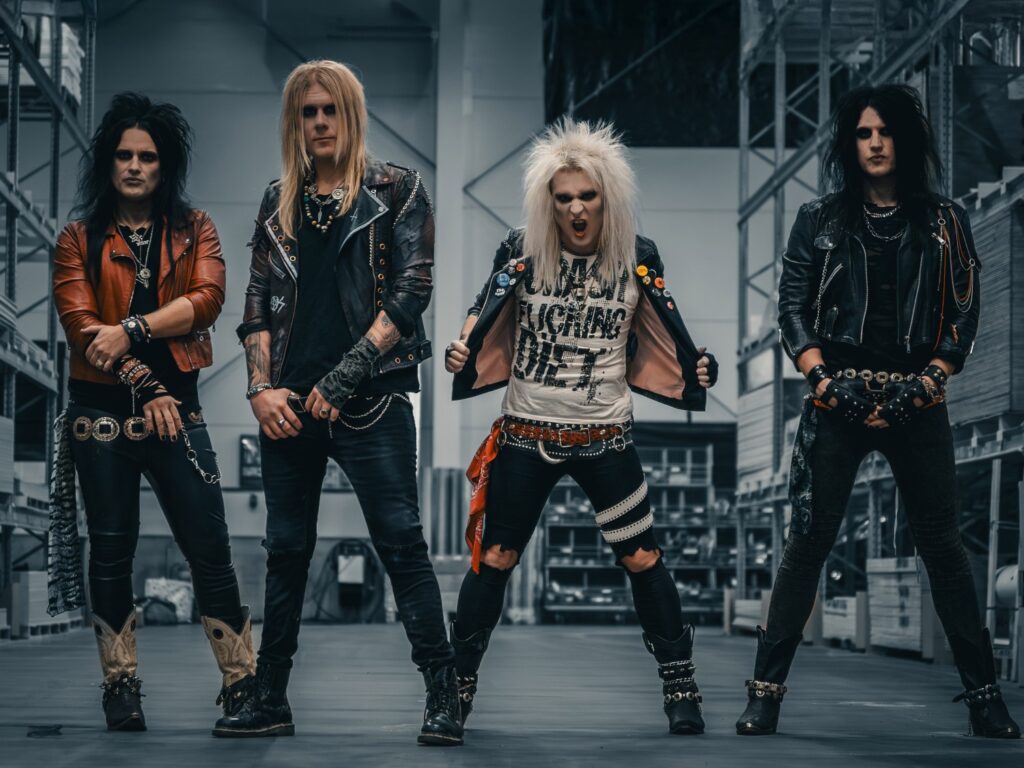
What’s it like to sing in this band, which had so many previous singers?
John: I think with every new singer in Crashdïet, it’s not like you’re taking over the torch, so to speak. It’s more like a reboot, a new era begins, and Crashdïet becomes something new. It has been like that with every singer. You know, we’re creating new history right now. I mean, of course I feel gratitude and respect for the old guys, but this is something else. This has very little to do with the previous guys, I’d say.
Will you now shake up the setlist a little bit and play more songs from the new album, or will you keep kind of the standard set that you used to have?
John: We are seven albums deep. We play goodies from every album. I mean, we have, like, standard songs that we play on every show. But I think we’ve been pretty good in the last couple of years picking maybe a little odd songs that haven’t been played for years.
Chris: I remember after Monsters Of Rock (Cruise) some people were like, “I can’t believe you guys played Bound To Fall.”.
Michael: But with a lot of songs that we have done that way, we’re asking ourselves after the show, “Is this more for us, or is this for the audience?”.
Martin: Exactly. They don’t always work.
Michael: We’ve done that a couple of times, and some of the songs are still in the set, and some of the songs are not. But it’s fun for us to have two or three songs that’s new.
Chris: We have a lot to play with. We have the main songs that are gonna be on the setlist forever. But we can always change from one show to another. There’s some really good albums, so we can always choose and make some changes.
John: We’re at a point right now where it becomes pretty hard. We have to sacrifice some songs, because other songs are more like, “We need to play this one, so we have to sacrifice that one.”.
By Tobbe – Published July 2nd, 2026

Metal Covenant met Masterplan guitarist Roland Grapow and keyboarder Axel Mackenrott to talk about the band’s new making Metalmorphosis.

Finally a new album arrives. It’s been 13 years, so it’s been quite a while since Novum Initium was out. What have you been up to for so long, and not coming out with a new album?
Roland: My normal answer is normally I was busy with studio work like engineering, mixing, and mastering stuff from the part I live in. You know, Slovakia, Czech Republic, and then also worldwide. I made more money from this kind of work. That’s why we had a big break. But we did the PumpKings album of course (2017). It’s not a real album. It’s just something special we made. And we made a live DVD in Czech Republic (Keep Your Dream Alive, 2015). And then three years ago we made a special DVD, from the first album. You know, Live In Gothenburg (2003). It was still the old lineup of course. So all these special, special albums, but not a real studio album. But the main reason why the break was so long was my absence from working for the band. But now I’m back, and I always say it, since three or four years I made a decision, “Let’s go back slowly to Masterplan again.”. And I’m at the age that I say, “Not many years left. I should continue now.”. Because people don’t remember me as a producer; they remember me as a guitar player and songwriter. That’s the key to Masterplan, and I think that’s what we should do now. You know, the new album is the first part, and hopefully we continue with other new, great stuff. I’m not waiting 13 years, for sure. I don’t have time for 13 years.
Axel: And also something that I know that you don’t like to talk about too much, but as a friend, there was quite some family stuff, moving on private stuff, that kept you from working close to the music. Everybody knows it. It was just something you had to do. We are at that age. We have to care about our parents. For us as a band, of course, we just had to be patient. And it was all right. It took quite a long time, but of course we had to wait. And Roland moved, and there was a lot of stuff going on that was beyond the music. I mean, like the fans, we were also waiting to take the next step. And there was a move from the label. We left AFM. We’re on Frontiers now. There was a lot going on.
Roland: Exactly, yeah. It’s all about something like coincidence and timing. I mean, AFM told me two years ago, “January (2025) is the last release. Are you finishing the new album?”, and I said, “The album is done, but we don’t have the lyrics and the vocal melodies done.”. The stuff you hear now on the new album was already recorded two years ago.
And when we talked two years ago, you also told me that you probably started working on the songs in 2021 or something like that. So the songs are pretty old already when they now come out.
Roland: Yeah, some songs are, like, four or five years old. Maybe six. And two or three songs are even from Axel, which are, not leftovers from Novum Initium, but at that time they were already co-written, but not finished.
Axel: We always have our playground. Every now and then, we were just, “I got a new song. What do you think about this?”. And that was going on for quite some years. It’s just like ping-pong. We’re like ping-pong brothers. We’re always playing the songs back and forth.
Roland: You see, it’s something that’s just developing in a natural way. You know, two and a half years ago, my first brother died. Then the second brother died just three or four months later. So, “Okay. How much time do I have left?”. And it’s kind of, I don’t know, hard to explain, just enjoy what you can do the best. I shouldn’t have continued with other amateur bands, recording them, and wasting my time for little money instead of making my own career, or our own career with Masterplan. You know, going a step further or whatever. How far we can get, I don’t know, because it’s the age stuff. You know, on the last tour we played 15 shows, in April, and I had back problems like hell. Now I’m fine. Today I’m fine. You know, it can always change. And I saw it also in Helloween a long time ago. There’s always health issues. You try your best. You’d support the people in the band. It’s a kind of family thing, you know. Now I’m the oldest guy. You never know. We’ll see. My wife, Julia, is much younger than me, and she says, “Don’t stop. Let’s continue.”. When I was 60, I said, “At 65 it’s over. That’s it.”. You know, I felt already, “I’m too old for this crap.”. You know, all my idols are like 78 or 80 or something, and I said, “Come on, guys. Why didn’t you stop early enough to keep the legacy a bit higher?”. And now they continue, and they get weaker, and not so good anymore. Some of them, not all. And I thought, “How will I do it now?”. Now I’m slowly approaching that age. But I feel quite nice on stage. Fuck it! If it works, it works.
How much younger is your wife?
Roland: Not much. 20 years. She will be 40 next month. (Roland is turning 67 in August, so make that 27 years.) You know, she was 27 when I met her, and my brother, who died, was 10 years older than me, and he said, I’ll say it in German now, “Roland. You fucking Kinderficker.”. It’s a really bad word in German. Really bad. (Laughs) But we have a really great relationship. Our age difference doesn’t matter, you know.

And really, really honestly, does a new album from you guys mean as much to you as it did when you were younger, 20 or 30 years ago?
Roland: I don’t know. It’s hard to compare it. It’s a different quality. It’s more relaxing. You know, I have to say, from the interviews, which I’ve been doing a lot of in the last three or four months, that people like it a lot, but I’m not sure how honest it is, because we’re talking face to face, or on the telephone, and sometimes I see the comments from fans on YouTube or Facebook, and it’s like, “How honest are people nowadays?”. Everything has changed so much, everybody has some negativity to show, and is not relaxing anymore, and not enjoying anymore. I don’t understand that. When I don’t like something, I’m not posting my message and say, “This sucks! This is bullshit!”. I just think, “I don’t like it.”. I don’t talk about it. I don’t need to post it. But this internet shit is so negative. And I try to ignore it. But then I see the result of the interviews, which is so positive, and I say, “What’s the difference? Everybody’s lying to me?”. I don’t know where I am now. I get confused. Some time ago, there was some guy writing, “I like the new song, but the solo sucks.”, and of course then, “My solo sucks?”, and I just wrote, “Idiot!”. My wife said, “Don’t write that.”. I erased it after two hours. I said, “Why did I write that?”. The guy was from Russia. A young guy, like 22 years old, “Why does he think my solo sucks?”. I thought it was the best solo I did, you know. But you can’t make everybody happy. That’s difficult.
Axel: And another perspective to that is you always remember your first kiss. There’s always something magic in every new thing. Of course, there’s something going on when you do it for the first time. And whatever you’re going to tell me, to always trying to be new, always trying to be fresh, always keeping the spirit on, there is nothing like a first time. I’m with my wife for 20 years now. Of course, there’s not a kiss like the first time. But when you’re in love with your band, and you love what you do, you keep doing it. And that’s what we did. We all put all those pieces of the puzzle together as we are used to. We get some influences from outside, we work together with other songwriters, and there’s an urge to do it. We are still excited about what we do. I can promise you that. And about the question, “Is it as important as it was on the first ones?”. Sometimes you don’t think, you’re not reflecting on things, you just do it. Things happen. And it was such a magic moment, the first albums from us.
Roland: We just did it. We can’t explain why it was so successful. There was no big plan behind it. It was just maybe the urge to survive, you know. Because we were fired from Helloween, Uli (Kusch) and me. Then we found some new guys, and the magic was there. Why do some bands, especially the first two albums, always have this? We can’t explain it. I had my moments 25 years ago with Uli and Jørn (Lande). Jørn came in later, to be honest. Everything was written. And then on the second album, we had a new lineup with Axel and Jan S. Eckert. In the songwriting process, it was equal, kind of, “Let’s see what we have, and we choose just the best of the best.”, and that was perfect, you know. But then the singer left again, and the bullshit starts, you know. And then the drummer, who started everything with me, left as well. Of course, it was a difficult thing. But we try to survive, and we do what we can.
Axel: Still following the passion.
Roland: Yeah, it’s the passion. It’s not about money. That way is over. If I give you an example, we play one show in June, and nobody can survive from that. But of course, we have different jobs. Each member of the band has different kinds of things to do. So, we survive. Don’t worry about us. But the fun part is the most beautiful part.

I wanna ask you about a couple of songs. The first single, Rise Again, which was out over two years ago. It’s about 30 seconds longer on the album than the single version is. So, why did you choose to make two versions of that song?
Roland: We had a tour planned as co-headline with Firewind two years ago, and we wanted to release something new. We didn’t want just to come out with the old songs. And we had the progress already of thinking about a new album. Everything was done, recorded, but the vocals were more or less done only on Rise Again. I mixed it quickly for the tour. That version was cool, but somehow later when we worked on the whole album on Frontiers, I said, “I think some solo part is missing.”. So I made the solo part, like, 30 seconds longer. That’s it. So it’s longer now, and I think now it’s more round sounding.
Did you spend a lot of time thinking about the choice to put your own vocals to the second half of the song The Call?
Roland: You know, on most of the songs, I think all of the songs, all the pre-production or demo tapes, I was singing the melodies for Rick. And when I was singing this part, I thought, “This is very special. It should be clean.”. Also, when I played it to my wife, she said, “This should be not distorted. It should be clean voice. You should sing it.”, and I said, “I’m not sure.”, because I always have a fear that people hate my voice, you know. Rick did one verse, and I said, “No, it doesn’t work.”.
Axel: I will add one thing from my perspective. We did the video with this super-great videographer (Patric Ullaeus), and he was very quick about what is happening in the song to put it in the picture. He was asking Roland, “What is it actually about?”. It’s very personal, very strong, and it belongs to Roland and his history, so for me it was kind of logical that Roland just put in his voice for that.
Roland: It was, like, about childhood, you know. I mean, it’s a theory. My mom would never sing melodies to me. It’s just a fantasy.
Is it? You’re destroying this, totally. Sorry for interrupting. But I thought it was so strong.
Roland: But that’s my job. It’s my job to make fantasy.
I mean, no lyrics in years have made me so emotional as when you sing, “I want to hear my mom’s lullaby one more time.”.
Axel: There you go.
Roland: I get these goosebumps all the time. And tears, and tears.
When I think about my mother and father, who are in their late 70s, both of them, “Yeah, I wanna hear my mom’s lullaby one more time.”. Continue, please.
Axel: Now, that’s the answer to your question, “Why did Roland do the singing for that?”. So, obviously, it’s very impressive. And isn’t it great? I mean, after all those years, we’re still pushing our borders in ways of songwriting. You know, we’re still growing as a band, and just take it as part of the process.
Roland: But the best part is when I make people emotional. And even if it’s just fantasy, because nobody in my family was singing lullabies to me. (Laughs) But my father was reading books, you know. It was, like, Grimms Märchen (Grimms’ Fairy Tales) and stuff. I remember that. But it was not my mom, who was the most beautiful person, but she never did that. (Laughs) But from my memory, this would be the perfect childhood. That’s how I made this lyric. You see it come? I have tears in my eyes. It’s emotional.

So, what was your vocalist Rick’s reaction to you singing in a different way than he does?
Roland: I’m not sure if he liked it, but somehow, yeah, he was okay with it.
Axel: But also it has a history inside of Masterplan, because on Heroes on the very first album we had a guest singer. And it wasn’t Jørn; it was Michael Kiske.
Roland: And Jørn didn’t like it. Jørn never liked it. So, “Why is this guy singing?”. I said, “He was in Helloween. He’s a legend.”, and he goes, “I don’t like it. I can sing it.”. But it works. You know, when I grew up in the ‘70s or ‘80s, so many bands which I loved, like Foreigner, Styx, Kansas, they had a lead singer, but they had side singers, you know. Why can’t you choose to make different parts? Why do you need one guy for 10 songs or 12 songs? It’s just a little moment. The same with Chase The Light; I just had a small moment. One guy wrote on YouTube, “The song was great ‘til the second Roland started singing.”. I said, “What the fuck?”. I was singing for 10 seconds, and the song is over for him? This is bullshit, you know. I mean, even Queen. Brian May can imitate the melodies of Freddie Mercury very nicely. It’s not the same voice. But it’s cool. Of course, not so strong, but you understand the melody, and why not? You get a charming kind of different perspective of different melodies. There are so many different singers on The Metal Opera. Avantasia is famous for having 5 singers or 10 singers. Why not? Even if I’m not as good as Rick. But after that, when I’m finished, Rick comes back, and people say, “Oh, this is cool.”. You know, fuck it!
You’re making most of the album yourself, Roland. Let’s face it. That’s just the truth. What is it like to work with people who are not living close to your home? You have to communicate via email or on the telephone, or whatever you do. When you were younger, you made albums in the studio, of course.
Roland: Oh, it’s totally different, of course. Nowadays, through the internet, it’s like I’m searching for the best part that inspires me, then I try to communicate it with Axel, “Can I use it?”, and then I rearrange it somehow. I mean, we have a couple of guest writers on the new album. Like two guys. But the original version is not what you’re hearing now. It’s always like there’s some quality of rearranging it to make it more Masterplan-ish. That’s a key, you know. But if I don’t feel the inspiration, I can’t use it. I feel, even sometimes within the band, that they don’t understand it, you know. And I have to say I’ve learned. And also in Helloween, some songs I never liked, and they were the most successful songs. So I have to rearrange my thinking, so I say, “Okay, keep your mind open.”, and don’t be so limited and say, “This is not my style.”. Some stuff is too happy. Masterplan is not so much happy. It’s positive, but it’s not this kind of children’s melodies, like “La la la la la la la”, you know. I mean, even Heroes is not so happy. But it’s cool; it’s positive. But I understand that fans have different opinions sometimes of me as a musician, and I have to open my mind a bit, and then I try to keep the borders not so closed.
Axel: Then again, as another addition maybe. We always meet for songwriting. At least Roland and I. We are going through the stuff, “What do we have already? There’s a melody here, there’s an arrangement there, there’s a riff here.”. And we always work on that. Always, as long as we’ve worked together. In that way, we keep that. But of course, these days it’s very convenient. Like with Kevin, the drummer. He’s so great. You just send him something, then you wait for 10 minutes, and then you get a perfect drum track back. You know, in the old days, we just did something. Like we translated all of our files. We had something in Logic. So, these days, we are not going to program something; we just ask our drummer, “Can you send us a drum file?”. But that’s still easier than meeting as a band because we come from Slovakia, Finland, Germany, and Sweden. We always have to pay, like, $5,000 for flights and hotels, so we try to avoid that.

And about Helloween. There’s only one song I can’t stand, and that’s the song Power.
Roland: And I had to play this song. After so many years, I had to relearn it. Oh, my God! (Singing) “We’ve got the power”. We played it in ’96 for the High Live video, and when you see the audience… You know, I was on stage, and I was like, “I hate this song, but I like it.”. That’s what I was talking about. Exactly that song.
Axel: When we play our own set, like when we are headlining, we play some of the songs that we were recording with the Helloween album. It’s always overlooked. Everybody says like, “Oh, your last album was 13 years ago.”. No, it wasn’t, because, you know, I put my keyboards to the Helloween songs, because we are playing it live now. And we are the only ones left playing those songs that so many Helloween fans love. We are the only ones who are playing it. And for that reason, I think it was right to do that record. And I think we are doing it pretty well, if I may say that.
Roland: We’ve played The Chance, The Time Of The Oath, and The Dark Ride.
Those are great songs.
Axel: Yeah, they are. What a pity to not play it.
By Tobbe – Published June 26th, 2026

Evergrey var i Stockholm för ett 5-låtars akustiskt framträdande samt en meet & greet för inbjudna fans och samtidigt fick Metal Covenant då chansen att prata om nya plattan Architects Of A New Weave med gitarristen och sångaren Tom S. Englund, keyboardisten Rikard Zander och basisten Johan Niemann.
Liknande innan Theories Of Emptiness, då Jonas (Ekdahl) klev av bandet innan skivan kom ut, så har Henrik (Danhage) försvunnit från bandet nu ett tag innan ett skivsläpp.
Tom: Ja, Henrik försvann väl innan skivan började spelas in, så han är inte med på skivan. Nämen, så är det ju liksom. Man måste vara dedikerad till saken om man ska vara med i ett band. Om man har samma betalt, och alla gör så gott de kan, då behöver man också vara delaktig.
Rikard: Men det kändes som att det hade varit på gång ett tag liksom.
Tom: Ja, väldigt länge skulle jag säga egentligen. Äh, skit samma. Vi behöver inte dra ut på det så mycket, utan det är som det är liksom. Det är som ett fotbollslag. Är du inte med i laget och ger ditt bästa varje dag så får du sitta på bänken och sedan åker du ifrån bänken liksom. Så är det. Men han har ju varit otroligt givande som bandmedlem i många år, och sedan är det väl bra med det.
Men nu har ju Evergrey på bara ett par år blivit lite mer av ett internationellt band, för det är ju faktiskt bara ni tre som inte är internationella. (Trummisen Simen Sandnes är från Norge och nytillkomne gitarristen Stephen Platt, som inte medverkar på nya skivan, är från England.)
Rikard: Vi var ju göteborgare en gång i tiden. Det är bara jag som är det och jag är ju inte ens från Göteborg från början.
Tom: Och inte jag heller. Nä, så det säger vi inte längre, att vi är från Göteborg. Det är inte billigare, det är inte enklare, men det är bättre, kanske.
Och då mer till skivan. Utan att egentligen lägga någon vikt i det, eller kanske sagt på ett positivt sätt, berätta varför den här nya Evergrey-plattan inte bara skulle vara en platta i mängden av Evergrey-plattor.
Tom: Jag tänker fan att det inte finns en enda platta som är någon platta i mängden. I alla fall inte som vi har gjort, utan det är ju, för mig i alla fall, med livet som insats. Så viktigt är det för mig liksom. Om inte annat då, så kom och lyssna hur Evergrey låter med en ny medlem. Bara det är väl värt besöket, tänker jag. Och sedan har alla vi i bandet steppat upp. När vi fick klart för oss att Henrik inte skulle vara med på skivan så fick ju vi bära det oket med allt vad det innebar. Men definitivt med Johan som spelade hälften av gitarrsolona då istället. Och vi hade ju jävligt dåligt med tid. Vi skulle ju mixa om en vecka.
Rikard: Ja, vi fick ju liksom dividera hur vi skulle göra, och då var liksom tankarna då ”Ska vi plocka in gästgitarrister? Hur ska vi göra?”. Sedan bara ”Nämen, va fan, du kan väl göra det, Johan.” och ”Javisst” och så tog det väl några dagar så var alla solona gjorda.
Tom: Alltså, det var ju viktigt för mig också att vi inte skulle plocka in någon. Vi kunde ju ringt alla polare i världen och så kunde alla ha gjort varsitt solo, men jag menar ”Hur coolt är det?”. Det här är ju en bandinsats nu istället. Det är Evergrey som har gjort den här plattan liksom.
Johan: Det blir lite lökigt om man plockar in folk, ”Det här är nya Evergrey-skivan. De här är med.”. Det tar ifrån liksom.
Tom: Vi kunde ju ringt Johans brorsa (Kristian) liksom. Då hade vi haft en svinbra gitarrist. Va fan gjorde vi inte det för? Varför ringde vi inte honom? Han kunde väl ha slutat i Sorcerer. (Skrattar) Nämen, du vet. Nä, det var absolut den bästa lösningen, och jag är övertygad om att ingen kommer att tycka att kvaliteten på solona gått ner.
Fanns det något snack någon gång, överhuvudtaget, att Johan skulle ta över gitarrspelandet, alltså sologitarren i bandet, och ta in en annan basist istället?
Johan: Nej, nej, nej.
Tom: Aldrig. Då ska vi hitta världens bästa basist. Hur lätt är det?
Rikard: Jag tror fan vi slängde ut den också. Det tror jag vi gjorde. Men den försvann väldigt fort.
Tom: Ja, den slängde du ut i så fall.
Rikard: Jomen, det var så här: ”Men va fan, då måste vi hitta en ny basist.” – ”Ja, men det är väl inga problem.”. (Skrattar)
Tom: Nämen, det är mycket svårare att hitta en bra basist.
Johan: Alla kan spela gitarr, mer eller mindre bra. Eller, det finns fler jävligt bra gitarrister. Det är bara att slå upp Instagram och där är de allihopa.
Tom: Ja, det är inte så svårt att hitta en ny gitarrist. Det är inte det som är det svåra, alltså att hitta någon som kan spela, utan det är svårare att hitta någon som funkar i bandet. Speciellt med sådana gamla rävar som oss. Vi vet ju vad vi behöver ha för dynamik i bandet när vi är ute och turnerar, och det visade sig ju med Stephen att det var väl hur enkelt som helst bara. Alltså, det kändes bara. Vi gjorde en ganska lång turné med Katatonia och när vi hade gjort klart den så kändes det bara som att…
Rikard: Det var världens bästa provspelning, kan man väl kalla det.
Tom: Och med superkort varsel. Superproffsig, supertrevlig, lågmäld, duktig även på teknik och produktion. Så det är en jävla tillgång. Både han och Simen, för helt plötsligt så har vi ett jävla dreamteam inom bandet som löser sådana här grejer hur lätt som helst och bara smäcker ihop. Så det är ett fynd i båda två. Det är som att Simen får oväntat lite uppmärksamhet nu, för han har ju varit med i bandet i två år, men han har ju inte gjort någon platta innan den här. Personligen i alla fall känns det rofyllt.

Jag tänkte fråga om någon specifik låt. Och då tänker jag, Leaving The Emptiness, den känns ganska poppig. Var det någonting som var klart från början, att ni skulle göra en sådan låt på något sätt?
Tom: Absolut inte. När jag spelade upp demos på de här grejerna, då var jag ju tveksam själv till om det där skulle flyga i Evergrey-världen eller om det skulle anses vara för extremt på något sätt. På förra plattan Theories också, och även någon platta innan det, så har vi någon eller några låtar som har varit lite och sneglat åt modern AOR på något sätt. Liksom gammal hårdrock på sjusträngad gitarr är det ju ändå, så det är ju ett jävla ställ.
Rikard: Jag kommer ihåg att du ringde mig och i telefonen ”Fan, jag tror fan vi har en hit nu alltså.” och så spelade du upp den och jag bara ”Ja, jag tror fan du har rätt.”. Och så var det liksom ”Men funkar det här? Ja, det gör det fan. Det funkar liksom.”. Och det tycker jag verkligen att det gör alltså även om det är lite udda så där. Andra kanske inte tycker det, men jag tycker fan det funkar.
Tom: Vi förväntade ju oss en rejäl skopa med skit, men den har fan helt uteblivit. Det kanske är någon liksom. Och så är det ju liksom den bästa starten på någon låt vi har haft rent streaming-mässigt. Det verkade som att det även fanns en hunger i vår fanbase för liksom ett nytt perspektiv då. Det välkomnades istället för att man skulle hacka på det, ”Fan va gött. Nu klev ni ett steg.”. Det kommer ju givetvis inte vara så att på nästa platta så är det åtta sådana här låtar och sedan så är det två i moll liksom. Så kommer det inte vara. Men det öppnar ju ändå möjligheter för att göra mer grejer.
Rikard: Ja precis, det öppnar ju dörrarna för lite andra möjligheter om hur man kan tänka med låtstrukturer och, ja, allt.
Det var bara det att när jag hörde låten första gången så reagerade jag på det och så tänkte jag ”Alltså, det kanske inte är alla som hör det här.”, men jag tyckte att jag hörde det ganska tydligt.
Rikard: Jamen, den är ju i dur. Vi har ju aldrig haft en låt i dur förut. Ingångsackordet är liksom dur. Det har vi aldrig haft förut, så visst är det annorlunda.
Johan: Ja, inte på det sättet. Upptempo. Liksom glad. Jag var väl kanske inte helt övertygad. Men grejen är att den är ju så jävla bra. Den går inte att parera liksom. Den sticker ju ut, men den är ju så jävla bra. Ja, det är bara att köra liksom.
Rikard: Man märker det nu när vi spelar live, och så kommer den, då känns det stor skillnad. Man har kört det här lite deppiga liksom och så bara ”Va fan hände nu?”.
Tänker ni på fler idéer, vad det än må vara, som ni egentligen bara skrotar för att det blir en låt för långt ifrån Evergrey?
Tom: Det tänker jag att man gör det individuellt redan på demostadiet, att ”Ja, det här är inte en Evergrey-låt.”. Men jag tycker inte bara att det är den låten som är liksom utåtsträvande eller framåtsträvande på den här plattan. Jag tycker det om The Script och The World Is On Fire och så kanske Architects (Of The New Weave). Architects-låten i sig är ju en mycket mer klassisk hårdrockslåt än vad Evergrey har gjort någonsin, fast den är i moll då liksom.
Rikard: Just på demostadiet, det hände ju mycket också. Jag menar, de låtarna som Tom och Vikram (Shankar) hade tyckte jag kändes mycket mer off än Leaving The Emptiness. Så där var jag jävligt tveksam i början. Men det var sådana där låtar som kanske inte var för Evergrey från början heller. Men sedan utvecklades ju dem mer och mer och det ändrades lite och så där och till slut så landade ju de också liksom.
Tom: För man liksom klämmer in dem i Evergrey-skon på något sätt. Eller klämmer… Alltså, man arbetar med det tills det låter rätt. Och det kanske är svårare för Rikard att höra då från en låt som jag är övertygad om att jag kommer att kunna få till Evergrey-formatet liksom. Men där, återigen, det är ju precis som Call Out The Dark på förrförra plattan (A Heartless Portrait (The Orphean Testament)) som Rikard skrev grunderna till. Där var ju inte jag övertygad liksom. Är det viktigt för dig, då får du ju övertyga, och det får du ju göra genom att spela in skiten tills den låter som alla tycker att den ska låta.
Och sedan en annan låt då. Oxygen!, som släpptes i november förra året. Det är bara ett drygt halvår sedan. Den är bara med som något sorts bonusspår nu. Förklara.
Tom: Jamen, dels så behövde vi en låt till turnén, eller tyckte vi, och så var ju plattan klar liksom. Men sedan så var det också för att vi skulle skona fansen från att köpa en dubbelvinyl, för om vi hade knöat in Oxygen! också på originalplattan, då hade den blivit för lång för att ha på en singelvinyl. Och nu har vi den på en dubbelvinyl, så då kan man i alla fall välja det om man vill.
Rikard: Vi hade ju ett snack om att vi skulle släppa en låt för turnén där. Det var jävligt långt fram till den riktiga plattan. Det var liksom lite för långt. Så vi bestämde ju ”Vilken låt ska vi ta? För den tar vi inte med på plattan.”. Så det var ju väldigt svårt.
Tom: Ja, det var ju väldebatterat. Alltså, det var ju verkligen ”Om vi tar den så kommer den inte med på plattan.”. Och sedan finns det ju mycket människor som är jävligt anala med det där. Jag är ju inte det liksom. Jag anser att är en låt släppt så är den ju släppt. Om den är med på skivan eller på en singel eller på bara streaming idag, det är inte så jävla noga för mig. Men för andra verkar det mycket viktigare, så då är det väl schysst. Vi hade ju så jävla mycket musik också. Vi har ju en låt som heter Heights som inte heller kom med på originalplattan, som jag tyckte absolut skulle kunna vara med på skivan. Som också sträckte sig åt ett nytt håll egentligen. Lite friare form på något sätt. I och med att vi har tillåtit oss själva att göra den här skivan, och med de nya medlemmarna, så känns det som att allt kan vara tillåtet.
Rikard: Alltså, så länge vi gör det bara för att vi tycker att det är bra, och att vi gillar det och tycker själva att det är spännande, så kommer det funka, tror jag.
Tom: Det är klart att det är en utmaning med en femtonde skiva. Det är ju jävligt få band som har gjort 15 plattor, om man bara börjar i den änden, och sedan att fortfarande kunna förnya sig själv och hålla sig själv nutida, men också behålla det gamla som man är, det är ju konsten idag för oss tycker jag. Men jag tycker att det är precis lika roligt, om inte roligare, att skriva en skiva idag, och lika viktigt och lika jobbigt som den första skivan. Där har ingenting ändrats. Och det har väl vi kanske vår brist på succé att tacka för. Alltså, om vi hade varit ett superframgångsrikt band på nivå av att man spelar 5000 pers per kväll…
Rikard: Men hade vi breakat ordentligt på tredje eller fjärde plattan och sedan varit där och sedan kanske känt att man började tappa, det är väl då det blir jobbigt liksom.
Tom: Jamen, det ser man väl egentligen, alltså utan att klanka på någon. Man ser ju att för band som det går jävligt bra för, jag säger att det här är en teori som jag kanske tror på, så verkar det i alla fall som att det är svårare att upprätthålla liksom en hunger då.
Rikard: Med tanke på Operation: Mindcrime III, vi hade ju inte gjort In Search Of Truth II liksom. Det hade ju inte behövts riktigt, eller vad man säger.
Nu lirar ni låtar live från 2014 och nyare, på den senaste listan jag kollade på, och om bandet hade blivit stora tidigt, fattar ni hur er setlist hade sett ut då istället? Då hade ni stått och tragglat de här låtarna från 1999–2001.
Tom: Ja. Men det hade väl varit nice om vi hade haft en sådan låt såklart. Vi har ju några låtar som är större än andra såklart, men som vi också idag inte väljer att spela, som A Touch Of Blessing, till exempel, som är en av våra största låtar. Men det väljer ju vi för att de andra låtarna går så bra liksom. Som med den här nya plattan, jag tänker att folk säger så hela tiden, men det är ju sant, de nya låtarna har ju mycket mer streams efter kort tid än vad någon av de tidigare albumen har. Och jag vet inte om det handlar om att man blir större för att man släpper musik liksom. Så kanske det är. Men också mottagandet. Jamen, kolla recensionerna. Det är ju 10/10, 10/10, 9/10, 14/15. Vi börjar ju bli bortskämda med det. Men det är absolut ingenting vi tar för givet någon gång.

Omslaget till Theories Of Emptiness var ju lite i ett eget fack för att vara Evergrey. Det var ju ett litet nytänk där. Hur gick funderingarna nu då med omslaget till den nya skivan? Som känns mer Evergrey igen.
Tom: Och det är så roligt, för att han som gjorde Theories Of Emptiness, Mattias Norén, har ju gjort Recreation Day och In Search Of Truth, till exempel, och alla bara ”Fy fan. Vad är det för en ny jävla artist som ska komma in och modernisera?”. Och han har ju även gjort den nya då. Folk är så jävla trångsynta med vissa saker. För mig är det ett svinsnyggt skivomslag. Och det som vi baserade hela simpelheten på, jag och Mattias när vi snackade om det, det var att du kan ha världens snyggaste omslag, med en massa jävla plotter och skit, men du ser inte vad det är om du öppnar Spotify på en telefon. Medan det här var ett svart huvud och det syntes direkt liksom. Jag tycker det var otroligt stilrent och snyggt, och det tycker jag fortfarande. Men jag fattar ju givetvis att om man vill ha ett omslag som ser ut som Live After Death, så är det klart att det där var en oerhörd besvikelse. (Skrattar) Men det tillhör ju en känsla, tänker jag. Jag blev ju sne när Iron Maiden digitaliserade Eddie, ”Jaha, va fan är det här? Vad gör ni med min Eddie?”.
Jag säger det absolut inte ur något negativt. Jag gillade det. Det kan jag lugnt säga. Men min fråga var ju faktiskt: Hur funderade ni nu inför omslaget till den nya skivan?
Tom: Jag sa att jag skulle vilja att det skulle bli hans magnum opus. När vi snackade sa jag ”Jag vill att det ska vara som Powerslave.”. Alltså, att du ska kunna sitta och titta efter detaljer och godbitar i timmar. Och det finns verkligen dolda grejer i det här omslaget. Om man inte är tråkig och sätter sig och förstorar upp allting och så bara ”Okej, där är den, där är den.”. Och han är ju fantastisk. Han var där när vi spelade i Göteborg och fick sina skivor och tröjor och grejer. Han tycker själv att det är det bästa han har gjort, så det är roligt.
Plattans titel. Berätta om den. Varför blev det den här titeln?
Tom: Jag tänker att det ramar in allting som skivan egentligen handlar om, att man får ta ansvar för sin tillvaro på något sätt. Alltså, det finns ju folk som givetvis har mycket sämre förutsättningar än andra och de kanske inte har lika lätt att skapa den tillvaron som vi andra privilegierade har här i väst. Det är klart att om du föds med något hinder eller någon mental funktion som inte är likadan som hos andra så är det klart att det är tuffare. Men det finns ändå liksom en agenda att kunna styra skeppet, så mycket du kan i alla fall, åt det hållet som du vill. Och det är det det handlar om för mig och det handlar nog de flesta låtarna om också, liksom ”Okej, nu har jag tagit det här beslutet. Nu lämnar jag tomheten bakom mig och nu går jag framåt.”. The World Is On Fire är liksom inte ett betraktande av världen med en acceptans, utan snarare tvärtom. Den handlar om ”Det här kan jag säga att jag inte accepterar.”. Och Architects, den handlar exakt om att du är din egen kapten på din egen båt och det är du som skapar dina förutsättningar. Och jag förstod det själv i mitt eget vuxna liv, det är ganska sent, att man måste vara dirigent liksom. Jag förstod det i bandet, men inte i det vanliga livet. Det är du som behöver gå. Du kan ha stöd av alla andra runt omkring, men det är du som behöver ta stegen, och gör man inte det så blir man oftast kvar där man står. Och Oxygen! handlar ju om att ta sig ur en depression, att finna syre där det inte tidigare fanns något.
Leaving The Emptiness. Är det samma tema som Oxygen! då?
Tom: Jamen, det är det väl på ett sätt. Ja, det handlar ju egentligen också om en depression. När man är deprimerad eller lider av någon slags brist på någonting så… Ja, hur fan ska jag formulera det här? Igen, du behöver ta stegen för att liksom komma därifrån. Det största medlet mot förändring är att göra någonting. Man kan sitta och prata med terapeuter och älta saker, men oavsett vad så är det största botemedlet mot, vad det än må vara, stillasittande, innesittande, depression, att du tar ett steg och går utanför dörren. Du måste börja göra det själv. Det är ingen som kommer att gå åt dig liksom. Och sedan så är det ju givetvis en flört med tidigare album, ”Leaving The Emptiness. Nu är det nästa platta. Nu har vi avhandlat den och nu befinner vi oss här.”.
Hur svårt eller enkelt är det att bestämma en plattas titel, med tanke på att den alltid kommer att sitta kvar?
Tom: Det är någonting som jag tycker är kul. Sedan har ju jag givetvis tänkt på det väldigt länge. I och med att jag skriver texterna så har den liksom världen formats i mitt huvud innan jag droppar det på de andra. Ingen har någonsin protesterat liksom.
Johan: Eftersom du skriver texterna och man vet att det brukar komma något bra där till slut så har man inte brytt sig riktigt. Inte jag i alla fall. Jag har lämnat det med säker hand.
Rikard: Det brukar vara att Tom säger ”Jag har skrivit texterna och det handlar om i runda slängar det här och då tänker jag att då är titeln på skivan det här, för det sammanfattar.”. Så vi bara ”Okej, perfekt, jättebra.”. Man behöver inte vara där och rota i någonting som funkar.
Tom: Det är klart att man hade väl reagerat om det hade varit ”Nä, det här låter ju fan inte klokt liksom.”. Men där är vi ju inte. Vi är ju tänkande allihop i bandet. Jag gillar när skivan har en egen titel som inte är en låt på ett sätt. Nu blev det ju nästan en låt, men ja, nu fick jag trixa till det lite.
Rikard: Den här låten som blir titulerad skivtiteln får ofta mycket press på sig. Den förväntas ju vara lite extra bra kanske.
Johan: Ja, skivans höjdpunkt.
Texterna på den här plattan. Om man bortser från de här riktigt inbitna Evergrey-fansen, får man ut dem till generella fans nu för tiden?
Rikard: Jag tror att det beror på hur intresserad man är. Jag är relativt ointresserad. Jag vill att ord ska låta coolt till musiken liksom. Det är typ det jag alltid brytt mig om. Sedan vet jag andra som liksom ”Åh, vilken bra text det är här.”. Gillar man lyrik, då lyssnar man och tar reda på det, tror jag. Gör man det inte så skiter man nog i det bara.
Tom: Jag har faktiskt sett i flera recensioner nu att texterna får väldigt mycket kredd. Och det händer inte alltid. Alltså, det kan ju passera obemärkt liksom. Men det känns som att folk låser sig in på samma tema, på något sätt, och att ”Okej, det här verkar viktigt.”. Det talar till dem på något sätt, tror jag. Men det finns ju massa låtar som jag inte kan texterna på såklart, men de plattorna där jag kan texterna på, och plattor som jag älskar, de blir dubbelt så bra för mig om jag vet vad de sjunger.

Förutom er i bandet, det kan vara vem som helst, vilka viktiga personer kan göra så att en Evergrey-skiva kan bli bättre?
Tom: Jamen, givetvis producenterna, eller ljudteknikerna och så. Alltså, vi har ju jävligt mycket åsikter i bandet. Det är ju fem i bandet som tycker till. Ja, fyra på denna skiva då. Och så Vikram som är co-producent. Och även när man spelar upp någonting för någon som inte alls är ett musikfan, som min fru till exempel, ”Inte en reaktion på den låten. Inte en reaktion på den låten. Den låten, där var det en reaktion.”. Hon skulle lika gärna kunna lyssna på RIX FM liksom. Och när de personerna reagerar på en låt, så som Leaving The Emptiness till exempel, då fattar man att ”Okej, det här kommer nog nästan alla tycka är bra.”. Och det glömde jag säga förut med Leaving The Emptiness, att den är för bra för att du ska kunna liksom förneka den, oavsett vad du tycker om Evergrey, eller vilket band den än är med i. Den går inte att bortse ifrån på något vis.
Rikard: Man lyssnar ju ändå på kritik, vare sig det är bra eller dåligt. Det gör man ju liksom. Sedan får man ju bestämma själv vad man tycker är värt att ta till sig, och man märker ju ganska snabbt att det ju finns folk som bara älskar att kasta skit över en. Men man ser ju det rätt snabbt att det är någon gammal fördom, eller vad man ska säga. Man märker ju vad man kan ta till sig. Men jag lyssnar på alla som är beredda att ha en åsikt om våra musik, för det vill man ju lära sig liksom. Det är ju som vilket företag som helst. Man vill ha lite kundundersökningar liksom för att veta vad man håller på med. (Skrattar)
Tom: Men annars är man ju ignorant på något sätt. Sedan så kanske man inte behöver tugga i sig och ta allt vad alla säger på allvar. Eller nödvändigtvis heller sitta och traggla igenom vad alla tycker. Det är väl också inte relevant.
Rikard: När man släpper grejer och så får man jättemycket kommentarer, och så bara ”Ja, alla är ju positiva.” och så är det några som är negativa, så ”Ja ja, det är väl som det är.”. Men så tänker vi ”Fan, vi borde ju ha fler negativa.”, för har du jättemycket negativa, då betyder det att du har vuxit som band liksom. Kolla på de stora banden. Det bara kryllar ju av dem. Man får liksom inte haka upp sig på det negativa. Om folk tycker det är värdelöst, då betyder det att man har berört dem också. Man tar ju hellre ytterligheterna. Beröm eller skit. Att det är någon som verkligen tycker att det är helt värdelöst än det här i mitten. Då har man inte kommit fram.
Tom: Det är också paradoxalt för mig, för jag skriver inte för att du ska tycka det är bra. Jag skriver för att jag ska tycka det är bra, och om vi tycker att det är bra spelar det ingen roll vad någon annan tycker. Jag menar, jag har svårt att se att vi får mer spelningar för att vi har fått en 10/10 i någon tidning. Jag tror inte ens det är relevant för det jobbet. Möjligtvis för att någon ska få upp ögonen. Jag tror inte recensioner idag har den inverkan de hade när de fanns i dagspressen. Det var ju förr för att liksom få allmänna Börje från Boråsingfors att åka till Statoil och köpa plattan. Då kanske 5/5 i tidningen betydde någonting. Idag sprids det på andra sätt liksom, både på gott och ont då.
En sista fråga. Blir det något mer Silent Skies?
Tom: Absolut. Ja ja, för fan. Vi har nog en full platta nästan. Vi ska bara få tid att göra det. Nu är det Evergrey-koncentration så länge som det bara går såklart, och Vikram proddar ju andra band och det är mycket Within Temptation nu också, och har gjort den plattan, så den kommer väl ut snart.
Av Tobbe – Publicerad 22:a juni 2026

Metal Covenant satt tillsammans med trumslagaren Mikkey Dee och gitarristen Pete Blakk från Lex Legion för att prata om bandets självbetitlade debutplatta.
Jag har bara sett ett enda gig utannonserat, den 28:e november i Göteborg. Det känns lite torftigt tycker jag med ett enda.
Mikkey: Nä, det tycker jag inte du ska tycka för att du får ju höra nu vad planen är. Jag är ju fullt upptagen med Scorpions och vi får inte ihop det helt enkelt och sedan är det ju så att vi har inget headline-material att åka ut på en full turné med nu. Vi tar det här året att göra det vi gör nu. Press, sätta oss på kartan, och så håller vi faktiskt på och skriver och försöker få klart, till slutet av året i alla fall, nästa platta och att släppa den till våren nästa år. Då sitter vi i en helt annan sits. Men framför allt är det att jag är i princip ute nu tills vi spelar det här, så det går ju inte då. Men nästa år ska vi ut. Då har vi mer material, och då får vi se vad Skorporna hittar på, och så ska vi nog pilla ihop en del bra grejer tror jag.
Så på det här gigget, eftersom plattan är strax under 35 minuter, och jag misstänker att ni kommer spela längre än 35 minuter på det gigget, vad fyller ni på extra med då?
Pete: Det blir ju ett par låtar från den kommande plattan. Sedan blir det väl någon King Diamond-låt och någon Motörhead-låt som vi lägger in, för fansen kommer ju säkert vilja höra någon King Diamond-låt. Så är det ju.
Mikkey: Vi kommer ju att ha en bra öppningsakt också, till att göra kvällen liksom spektakulär på alla sätt. Dels är det vårt premiärgig och samtidigt någon väldigt bra, uppskattad öppningsakt som också kanske kan köra en timme eller så. Så det blir nog bra. Och sedan kör vi nog ett par King-låtar och någon eller ett par Motörhead. Ja, kanske två låtar från nya plattan för att introducera den. Men det återstår att se. Vi har mycket jobb framför oss här under tiden som jag ligger ute. Men det kan vi få till. Vi fick erbjudanden nu, bland annat Sweden Rock och andra stora festivaler i Europa. Men hade jag inte åkt ut med Skorporna, då hade vi vetat det långt innan och planerat för en hyfsad festivalsommar, till exempel, och ligga kanske trea på billen och lira kanske 50 minuter eller så. Det tror jag hade funkat.
När ni då väljer att spela andra låtar, säger vi King Diamond och Motörhead, som ni nämnde, är det väldigt lätt att välja de mest populära låtarna och de mest klassiska låtarna, eller gör ni tvärtom, som Killers, till exempel?
Mikkey: Ja, Killers är ett kanonlåt. En av mina favoriter. När det gäller King Diamond-grejen så väljer vi självklart något som vi spelat tillsammans, från ”Them” eller Conspiracy, och kanske inte det här typiska som Welcome Home liksom, utan någonting som vi skrev också då och var mer involverade i. Men det återstår att se. Det finns så jävla mycket, så jag vill inte ens börja tänka i det där. (Skrattar) Vi har en låtskatt som ändå finns och väljer vi Motörhead så ska vi inte ens börja. Men det är ju det jag väljer med Mikkey Dee And Friends. (Mikkey säger klart och tydligt ’And’ och inte ’With’ som jag tror att de flesta är bekanta med.) Där har vi plockat låtar som vi bara spelade på någon turné här och där. Det tycker jag är viktigt. Jag menar, Another Perfect Day, vi spelade nästan aldrig någonting därifrån. Vi lirade Shine någon gång, och I Got Mine på någon turné, och Back At The Funny Farm liksom. Det är svinbra låtar.
Så, första skivan, självbetitlad…
Mikkey: Har du lyssnat på den?
Ja, ja. Många gånger.
Mikkey: Vad tycker du då?
Det är klart jag tycker den är bra. Och vet ni varför? Alltså, man känner ju igen sig direkt. Det är ju det som är grejen. Man känner igen musikerna och man känner igen musikstilen direkt. Det finns ingen inkörningsperiod för mig. Första gången man lyssnar på den så bara ”Va fan, det här känner jag ju igen lite.”. Det är en stor fördel, som jag skulle säga det i alla fall.
Mikkey: Jo, i alla fall för en viss generation är det ju det. Sedan hoppas vi då att den yngre generationen, som inte växte upp med King Diamond och så vidare, hittar något i den här musiken, att de fattar grejen med liksom hur vi har skrivit det här och hur låtarna är skapade. Det här är inte traditionellt låtskriveri med vers, refräng, vers, refräng, solo, vers, dubbelrefräng, slut. Det var jättemycket positivt från yngre som hör någonting bara genom de här två låtarna som vi släppte. (Sleep Eternally och Gypsy Tears.) Sådant där har de inte riktigt hört förut. Så det återstår ju att se. Men vi tycker ju ändå att vi har fått till en jävligt bra platta faktiskt.
Och på vad andra har sagt, som då kanske har hört hela plattan, eller om de nu bara har hört de två låtarna som är släppta, alltså de som inte är med i bandet, de som inte är inom kretsen, hör de mer King Diamond än vad ni i bandet gör?
Mikkey: Ja, det tror jag. Grejen är ju så här, och vi sa det här i Motörhead också, vi gillar inte att kalla folk fans och musikälskare, men folk som gillar musik och gillar hårdrock, och fans, om man nu vill kalla det det, är alla så benägna att sätta band i fack liksom, annars är de inte bekväma. Det måste vara ett fack, och vi hamnar ju i det facket, och det fattar vi med, för vi var ju de som skrev det här. (Skrattar) Så det är ju självklart. Det enda vi däremot har sagt är att vi vill ha mer flöde, less is more, mer groove, gärna en och annan modern krydda i det. Och jag tycker verkligen att vi nailar det till hundra procent där. Inte så många taktändringar och backbeats, och trumfills i weirda takter, och konstiga gitarrgrejer. Det kommer en och annan sådan här skön läckerbit här och där som man får spola tillbaka och säga ”Åh, vad fan gjorde de där?”, och det tycker jag är bra. Men generellt så är det ju ett flöde och groove i de här låtarna, mer än vad vi hade under King-tiden. Tar man en låt, Charon, till exempel, liksom riffet där, det är tungt, va? Men så hoppar det till något helt annat. Och det var svinbra. Missförstå mig rätt. Det var kanon. Och det var då och där. Men det vi gör idag är ju inte det. Men det är klart när du hör Petta och Andy köra sina gitarrstämmor, du har Nils som kan gå upp i toner som King inte ens kan drömma om, och så är det fyra originalmedlemmar från ”Them”, så det vore ju konstigt om de tyckte att vi lät som Aerosmith liksom.

Nu när ni inte har spelat just den här typen av låtar på jäkligt många år, ni kanske har provspelat någon gång, det vet ju inte jag, men behövdes det någon form av lätt träning för er, som etablerade musiker, för att komma in i en lite annan spelstil?
Pete: Nä. Alltså, jag tror att man gör det till mer än vad det är liksom, för att om jag sätter mig ner och skriver någonting så tänker ju inte jag ”Ja, nu ska jag skriva det här.”. Speciellt inte om det är metal, utan då blir det som det låter på skivan. Man gör det man tycker, liksom ”Jamen, det här är ballt.”. Man har en grej i huvudet och så sätter man ner det på gitarren. Lite är det så här, att det har funnits ett tomrum efter den här typen av musik liksom, så när vi började snacka ihop oss och vi skulle göra någonting så var det ju inte så att vi satte oss ner och sa ”Nu ska vi bilda ett band.”, utan det var ju att det kom bakvägen. Jag och Micke satt och fikade, och jag spelade upp lite låtidéer för honom, och han sa ”Fy fasen. Det här låter ballt. Ska vi göra någonting?”. Alltså, det var där det började. Ja, det blir vad det blir. Jag tror att när det kommer från hjärtat, då blir det ärligt, och då känner folk när de lyssnar, att ”Fan, det här är på riktigt.”. Det är inte något tillgjort, eller ”Nu ska vi låta så. Nu ska vi göra det här.”, utan det blir en ärlig grej. Därför låter det bra, tror jag.
Några år med King Diamond, ett par år med Don Dokken, drygt ett par decennier i Motörhead, och sedan 10 år i Scorpions. Det är ändå fyra olika trumstilar. Gick du bara rätt in i den här stilen igen nu?
Mikkey: Ja, det är inte lätt. Det var lite därför jag lämnade King också. Det var ju för att jag kände mig väldigt smal som trummis. Vi flyttade till Los Angeles och helt plötsligt så jammar man med, om man får kalla det, vanliga musiker. Och jag satt där med stress i hjärtat och tyckte att min taktkänsla, tempomässigt, stadighet och groove saknade en del alltså. Men jag kunde däremot sitta och spela trumsolo över varenda låt egentligen (Skrattar) och komma på grejer. Så jag har ju försökt att bli så bred som möjligt. Och det har jag ju tvingats till under dessa år med olika band. Nä, så det tycker jag bara är en fördel. Jag vill inte vara bäst på någonting. Jag vill vara en bra 7:a över hela bänken liksom.
Pete: Men så här är det också: När Micke lämnade King så försvann en bit av King Diamond, och sedan några år senare lämnade jag och Hal och då försvann en annan bit av King Diamond. Och nu är vi tillsammans igen, så jag menar, när Micke lade trummorna till det här som vi har skapat så satt jag bara och njöt, för det var liksom bara ”Holy shit. Vi är tillbaks!”. Liksom ’88, för det som Micke gör, det gör ingen annan. Det är Micke som gör det. Och lite grann det som jag och Andy gör, det gör ingen annan, eller på det sättet i alla fall. Och jag tror inte att vi låter som någon annan heller, utan vi låter som vi gör, och det är det vi vill göra. Jag har ju längtat till att spela med Micke ända sedan han slutade därför att jag gillar Micke som person och vi har varit vänner så länge. Hal, likadant. Fantastisk människa och grym basist. Och jag och Andy, vi har sådan synergi så att det liksom blir helt sjukt. När vi sitter i studion, vi behöver inte prata. Du vet, han och jag ”Ja, just det.” och så bara fyller vi på. Den kemin kan du inte forcera fram. Det är det som kommer på den här plattan, och på kommande plattor. Det är vår kemi.
Det var ödmjukt av dig att säga att du inte vill vara bäst på någonting, men sedan så är du ju ändå det typ.
Pete: Ja, så är han det. (Skrattar)
Mikkey: Jag är ödmjuk över den grejen egentligen.
Pete: Han är ju bäst på att vara Mikkey Dee.
Mikkey: Ja, det är väl det man kan säga. Att man försöker att vara bred, för att du läser musik på ett annat sätt. Jag vill ju spela musik med mina trummor idag. När man var 15 eller 20 år, då ville man vara världsmästare i trumfills liksom, och man jämförde sig med andra, och så vidare. Allt det där är ju borta idag liksom. Du har rutin, du har erfarenhet, du har en karriär bakom dig.
Pete: Vi gjorde någonting som man inte fattade då vad det skulle bli. För det har ju blivit kultstatus. Jag såg på det här svenska programmet. Micke var ju med där. Det var det här som handlade om metal-exporten från Sverige (Hård Rock På Export). Typ 70 procent av dem som satt där hade King Diamond-T-shirts på sig eller sa att ”Them” var deras bästa platta och de var inspirerade av det. Och likadant, jag flyttade till USA 2006, det var då jag liksom fick första fröet i min hjärna vad vi hade gjort. Mitt flyttlass kom med grejerna, och jag hade lite musikgrejer, och jag spelade ju inte musik alls då, utan jag gjorde helt andra grejer. Så började flyttgubben lasta av och så sa han ”Spelar du musik?”. Du vet, amerikaner, där är man ju liksom ”Once a champ, always a champ.”. Och jag bara ”Nej, inte längre. Jag gjorde det förut.”. Sedan när han började packa ut så såg han någon King Diamond-grej med mig. Jag trodde han skulle dö. Han var ett sådant King Diamond-fan så han bara ”Holy shit!”. Då förstod jag liksom ”Wow! Shit. Vi har gjort ett avtryck.”. Och sedan har det ju bara växt. Om du tittar idag på sociala medier, där Mike Portnoy sitter med en ”Them”-T-shirt nästan hela tiden. Vi gjorde någonting som gav ett avtryck, och nu är man här och jag tycker vi har gjort en fantastisk platta som jag kan stå för hundra procent. Jag backar inte en sekund. Och det är nog enda gången jag har känt så i hela min musikkarriär. Alltså, det här är leverans, inte en dålig låt, hela grejen äger.
Mikkey: Sedan var det medvetet där att hålla den kort. Vi ville att den skulle smälla ordentligt. Vi har hållit på så jävla länge nu, så vi sa ”Det är dags att trycka på knappen nu. Nu har vi material här. Nu släpper vi den.”. Jag hörde av mig till Scott Givens på MNRK och spelade två låtar över telefon till honom för drygt två år sedan och han bara hörde direkt ”Det här är något vi vill ha. Det här ska vi ha. Ta er tid.” och jag sa ”Ja, nu har jag ett helt år. Vi ska ut med Skorporna nu och jag kommer inte hem på tolv månader så jag hinner inte göra så mycket.” och ”Nej, nej, nej. Gör det när ni är redo. Tänk på oss först.”. Och det har vi gjort. De högg ju den direkt. Vi skickade över det färdiga materialet. Vi har gett dem låtarna efterhand, men sedan hela plattan liksom och då sa vi ”Nu vill vi trycka på knappen. Nu vill vi gå ut. Nu måste vi ta nästa steg eller så är det risk för att det här rinner ut i sanden.”. Tiden går och alla är liksom upptagna på lite olika sätt. Jag spelade ju färdiga låtar för folk som man kunde lita på runt om i världen. Så, nu håller vi det kort och rejält, och jag menar, släpper vi nu en platta till våren, då har vi släppt två plattor inom ett år. Då är det ingen som kan gnälla. För många band är det fyra, fem, sex år mellan plattorna. Det är 18 år nu mellan Kings plattor.
Pete: 20 år.
Mikkey: Är det 20 år? Jag trodde det var 18.
Pete: Ja, 19 år är det nu, men det blir nog 20.
Mikkey: Om det nu kommer en någonsin. Det kan bli 21 eller 22 kanske.
Pete: Det kan bli 25. (Skrattar)
Mikkey: Så det tycker jag vi inte ens behöver tänka på. Utan det var medvetet. Vi håller den kort och trycker på knappen för att ta nästa steg. Många släpper ju bara en EP. Fyra låtar liksom, och så dröjer det ett och ett halvt år innan plattan kommer. Så vi ligger bra till där.
En sak du var inne på. Du spelade upp grejer för folk du kan lita på. Alltså, musiker, skivbolag, management och så vidare är ju jäkligt duktiga på att hålla saker hemliga.
Mikkey: Det ska vi ha en guldmedalj för, ska jag säga. För det är svårt. Och jag har spelat för många. Men jag har klargjort ”Inte ett pip. Vet jag att det kommer ut så är det du.”. Så det tycker jag vi gjorde bra. Det får jag nog säga.
Var det enkelt för er att välja folk runt bandet?
Mikkey: Jag har ju tagit in det jag kallar för Motörhead-familjen. Vi hade handplockade människor, pojkar och flickor, män och kvinnor under de sista 25 åren med mig. Handplockade folk på rätt position som har varit med oss hela vägen, och dem har jag hört av mig till. Vi har Todd Singerman, och Alex Adamson som manager, på Singerman Entertainment i Kalifornien. Vi har Neil Warnock på Agency Group som bokar oss. Vi har rätt personer överallt. Steffan Chirazi, Laurie Gorman. Vi har rätt människor, och bland annat då, en av de första jag ville prata med var Scott Givens, som har jobbat jättemycket för oss i Motörhead också.
Pete: Todd var egentligen den första.
Mikkey: Och Scott jobbade för oss ’86 i King Diamond, så han visste ju hela grejen, eller vad vi är för några. Det är inte bara fyra namn som hävdar att vi har någon slags kultstatus liksom. Ja, de andra kanske hade känt igen mitt namn i alla fall sedan Motörhead och med Scorpions. Så där har vi gått och nu har vi rätt gubbar och tjejer på rätt plats liksom. Och det är superviktigt, för det kan ta flera år att få ihop ett team som man kan kalla sin familj. Det är alltid någon jävel, du vet, som ställer till det och så hittar man inte rätt person, och den personen gör något skit som tar ett halvår att städa upp, och så vidare och så vidare. Den här branschen är full av cowboys och cowgirls liksom, så där har vi en liten fördel med att försöka gå den här lilla genvägen förbi det värsta. Och det hoppas ju vi att vi kan göra liksom, för jag tycker vi förtjänar det. Det är något man måste förtjäna, så att säga.
Ni behöver ju heller inte åka runt i en trång van alltför ofta och spela som första band mitt på dagen i ett tält. Det är klart att ni har en fördel.
Mikkey: Ja, där måste vi ta den grejen, liksom ”Nä, vi gör inte det.”. Men sedan får vi se. Jag menar, det här bådar gott. det är lovande, vi vet vad vi har, vi vet vad vi kan göra. Inte på långa vägar sitter vi här och tar saker för givet, men det ser jävligt bra ut och förhoppningsvis tar folk emot plattan på det sättet som vi tror och hoppas att folk gör. De två första låtarna vi släppte har ju liksom fått väldigt, väldigt bra lyft för att vara ett gammalt gubbgäng som drar igång igen efter 40 år.

Från en sak till en annan. Plattans framsida, den är ju ganska enkel, om man säger så. Det är en logga, det är ni som är lite utsmetade, eller vad jag ska kalla det för. Fanns det några djupare tankar, eller vanliga tankar, om hur framsidan skulle bli?
Mikkey: Ja, det var väl jag som kom upp med den också, och idén är så här, förstår du, att när du ser baksidan på skivan så ser du oss bakifrån och spegelvänt, och loggan kommer sticka ut på framsidan en bit, du vet, på skivkonvolutet, och på baksidan går den in, så det ser ut som att du har tryckt igenom loggan genom LP-fodralet. Nä, vi ville göra det rätt simpelt och så gillar vi det här.
Pete: Det är Patric Ullaeus som har fotat oss och som är grym. Han har ju tagit Mickes grundidé och gjort någonting, och när han gjorde det, för han är så jäkla skön och sådant proffs, då kunde vi andra bara säga ”Ja, fy fasen. Det där ser ju grymt ut.”.
Mikkey: Och där har du också lite enkelhetsgrejen med, som vi vill återskapa i musiken. Jag kan säga så här ”Vi vill inte ha slott, vi vill inte ha riddare, vi vill inte ha svärd, vi vill inte ha vikingar eller några båtar, vi vill inte ha kyrkogårdar. Allt det där resonerade jag om med Patric Ullaeus, vår video- och filmskapare. Så vi kommer ta mycket hjälp av Patric när det gäller produktion och sådant. Han har en bra vision. Vi ger honom idéerna och han omvandlar det till det visuella, kan man säga. Så får vi se var det tar oss liksom. Men vi vill ju dra ifrån. Jag menar, vi vill inte vara något vikingaband, vi vill inte vara något Judas Priest-metal/nit-band, vi vill inte vara King Diamond kyrkogårds-/ockultgrej, vi vill inte vara HammerFall med nitar, och vi vill inte vara Sabaton med någon krigsmaterielsimage. Det är inget fel på det, men det är gjort. De är klara. Vi måste hitta någon liten jävla mask mellan det. Någonting som vi kan stå för.
Också lite enkelt. Skivan är självbetitlad. Ingen riktig titel, om man säger så. Vad hade ni för tanke bakom det då?
Pete: Jag tror det var jag som pushade för det, att Lex Legion – Lex Legion. Vi bollade lite och sa ”Självbetitlad, det är ju klockrent.”.
Mikkey: Vi hade jävligt svårt att hitta namn till att börja med. Vi ville heta Lost Legion, men det finns ett band i Chicago. Jag tycker om X i skrift. Ser bra ut och det låter bra. Så jag bara föreslog Lex, för vi ville behålla Legion. Vi kände oss som en legion liksom. Antingen Legion någonting, eller någonting Legion. Jag låg hemma en kväll och lekte med bokstäver och så ”Lex Legion. Jamen, det låter coolt.”. Så skrev jag det i vår grupp och alla bara ”Ja fan, det är kanon.
Har ni någon bra koll på texterna på plattan? Eller har någon annan skött mycket av textskrivandet?
Pete: Nämen, det är ju Nils som skriver texter. Men jag har ganska bra koll. Jag har frågat honom också, för jag gillar ju det. Musik, det är ju skapande, det är något konstnärligt, och det får inte vara platt liksom. Jag har frågat vad låtarna handlar om och han har det där sköna, som jag gillar, att en låt kan ha flera betydelser. Alltså, ett djup i det. Det kan vara en kärlekssång, som en låt, exempelvis, är till någon kompis som gick bort tidigt. En annan låt handlar om mental ohälsa, fast samtidigt kan det ha en annan betydelse. Nämen, han är så rätt, Nils. Det var svårt att hitta sådana människor när vi letade sångare. Micke hade lite namn på mer namnkunniga människor, både från USA och England. Men vi skickade upp två låtar till Nils och sa ”Jamen, lägg då, så får vi höra hur det låter.” och när det kom tillbaka, för mig var det bara ”Han är det.”. Han gav en dimension till grejerna som jag älskar liksom som musiker och låtskrivare, just att det ska vara mystik, det ska vara djupt, det ska vara ärligt och komma från hjärtat.
Mikkey: Men sedan vet man inte personligheten heller. Vi andra fyra har hängt i alla år och hållit kontakten. Sedan kan det komma in ett rövhål också, men det var precis tvärtom. Här har vi en kille som är djup, sansad, intelligent, snäll, trevlig, och skriver annat än ”Hey baby, I met you at McDonald’s.”. Du vet, har lite mer tyngd i texterna.
Då kan man också säga att ni sökte någon som ändå är en hyfsat rutinerad sångare och han kanske inte heller skulle vara för ung.
Mikkey: Nä, vi kan inte ta in en ung person liksom.
Pete: Lite rutin, annars går det inte. Om du tar in en ung person, du vet, då hade det inte funkat. Man måste ha lite rutin och varit med lite i matchen.
Mikkey: Jag tror inte en ung person skulle gått med i det här heller. Jag menar, för den personen så startar ju allt det här. Vi har ju redan gått igenom allt det här. Det är precis samma som när Lemmy gick bort och när man har lämnat de här banden jag har spelat med så bygger man ju på sina ränder på axlarna hela tiden liksom. Man tänker ”Ska jag sätta mig i en jävla van igen och jaga strippor och köra samma resa igen? – Nej, fy fan, jag orkar inte gå igenom det här.”. Det är det jag säger, vi försöker förbigå den här transportsträckan med allt det där liksom. Så jag tror inte en sådan ung kille eller tjej ens hade tänkt på att börja i ett sådant här band.
Pete: Sedan är det ju en annan grej med Nils. Han var ju liksom tonåring och var ett fan när vi gjorde de här plattorna. Alltså, ”Them” är hans absoluta favoritplatta någonsin. Så han vet ju lite grann hur vi tänker och hur det låter. Andy har ju haft honom i sin studio för en herrans massa år sedan och så hade han sagt till Andy ”Om ni någon gång återförenar, du, Mikkey, Pete och Hal, ring mig då.”. Det kom han inte ens ihåg själv nu. Men Andy kom ihåg det.
Frågade han er någon gång om ni ville ha en mer konceptliknande platta eller fristående texter?
Mikkey: Ja, det var ju det. Jag tror, och jag vet, han har ju berättat det själv. Han stod ju lite på ostadiga ben i början, för han visste ju inte riktigt ”Vad vill de här gubbarna? Vill de att jag ska sjunga liknande King? Vill de att jag ska growla? Vill de att jag ska sjunga mer mörkt eller ljust? Vad vill de?”. Det vi sedan pushade stenhårt på var ”Gör din egen grej. Kör ditt race, Nils. Hur läser du vår musik? Du får de här låtarna serverade, läs dem, känn dem och lägg det du tycker. Skriv den text du tycker passar till det här. Alla har puttat in sin lilla frukostpåse till köksbordet. Gör du det också och tänk inte på vad vi har gjort innan. Tänk inte på vad vi skulle kunna tycka.”. Det är väl klart att om han kom och sjöng om djävulen eller något liksom, så ”Nä, fy fan, det är redan gjort.”. Vi ska ju alla gilla och stå för det han förmedlar på scen också. Jag kan ju inte sitta där och spela trummor om någon står och sjunger om någonting som bara ”Oj, vad fan svamlar han om?”. Du vet, självklart inte. Men det är det som är så otroligt. Han träffar ju rätt liksom. Det var ju hammaren på spiken direkt. Det var inte mycket snack om det. Och ju längre den här processen pågick med att vi skickade låtar så har liksom de här små vobbliga benen stabiliserats så att han har hittat sin roll i det här bandet. Litegrann, i alla fall. Jag tror inte han är där än. Det kommer ju ta något års turnerande innan han står och tänker ”Jag är Nils i Lex Legion och jag står för det här.”. Ja, det gör han ju nu med, men liksom att han verkligen vet vad sin roll är. Vi har ju fan känt varandra i 45–50 år liksom. Jag och Andy växte upp på samma gata liksom. Så det är självklart att vi vet precis varandra. Men det gör ju inte han än. Men än så länge så har han hamrat ner första tolvtumsspiken och det var med bara några slag, så han har ju verkligen träffat rätt.
Apropå sång, eller ska jag säga avsaknad av sång? Far Away, sista låten, är instrumental. Hur kommer det sig att det blev en låt utan sång?
Pete: Jo, det var en kombination. Det gjorde ju vi i King också, där vi hade en instrumental…
Mikkey: Ett outro liksom.
Pete: …men också det att den låten skrev jag och Andy 2008 när vi började. Den låg i arkivet, så han plockade fram den, och sedan så bara jobbade vi på den, och när vi var färdiga, då säger Andy också att ”Är det okej att vi dedikerar den till Tobias?”. Det var hans grabb som dog för några år sedan. Så då blir den ännu vackrare. För mig blev det liksom bara… (Andas ut). Och det är en fin låt.
Mikkey: Sedan la vi skivans snabbaste låt (Life Eternal) före den. Jag tycker den här plattan är ganska bred liksom. Den innehåller något snabbt, lite mer tekniskt, den har flöde, den har lite gammalt King-go egentligen också. Ja, den är ganska bred. Och så ligger det ändå en röd tråd mellan alla låtar. Det tycker jag är bra. Jag tror att en sådan här platta är det man hoppas på, att den slår, folk gillar det de hör, men fan vad den kommer att växa när du spelar den några gånger. Det är de plattorna som håller längst. Du vet, vissa plattor tar dig direkt, men sedan sätter du inte ens på den efter några månader liksom, för den är färdig. Men vissa plattor är bara ett gift som du måste höra hela tiden. Operation: Mindcrime med Queensrÿche är en sådan platta för mig. Många Rush-plattor är ett gift för mig. Deep Purple: jag måste bara höra vissa plattor. Några Toto-plattor som jag måste bara höra om och om. Jag har hört dem så mycket. Alltså, jag skulle kunna sova och spela igenom de låtarna. Men det är ett gift och de blir bara bättre varje gång jag lyssnar på dem. Sedan har jag favoritplattor, eller som jag trodde var favoritplattor, som dog ut ganska snabbt. Men jag hoppas att vår platta är någonstans åt det hållet där den växer. Har du hört den hundra gånger så tycker du ”Fan, jag tyckte den var jävligt bra, men nu är den ju bortom bra.”.

Många band, eller projekt, om man vill kalla det så, som dras ihop av etablerade musiker som har varit med i andra band och kan vara kända eller ganska kända, efter en eller två plattor, som ni nu har utlovat, då blir det inga fler plattor. Så, övertyga mig nu att Lex Legion fan inte är ett av de banden.
Mikkey: Ja, det är ganska enkelt. Den kamratskapen som vi innehar… Jag vet inte ett enda exempel ute i världen som kan jämföra oss med det vi gör just nu. Sedan förstår jag vad du säger med de här supergrupperna, om man får kalla det så, som sätts ihop. Alla blir helt tokiga över det, de har en bra succé, de kommer till Europa och gör festivaler hela sommaren, man ser dem på varenda jävla festival. Men sedan då? Som du säger, vad fan hände? Men vi har någonting som är långt, långt ovanför det. Det är inte så att vi nu efter 30 eller 40 år ringer upp varandra och säger ”Fan, jag har inte snackat med Hal på 20 år.” eller ”Andy. Jag har inte sett dig på 15 år. Fan vad kul att se dig.”, utan vi har ju verkligen hängt ihop. Det enda vi inte har gjort är att spela ihop sedan vi la av. Jag lirade med Hal Patino då i Nordic Beast, Andy har varit superupptagen med King Diamond, jag har ju haft min karriär gående i 180, Petta la ner sitt gitarrspelande och började med helt andra grejer.
Pete: Och var på väg in i Motörhead. (Skrattar)
Mikkey: Ja, faktiskt. Men, vi har ändå hela tiden varit tillsammans. Om du googlar och AI:ar sönder dig resten av dagen så hittar du inte ett band i världen som kommer tillbaka efter 38 år. Så det är väl en liten del av övertygelsen, skulle jag vilja säga. Och därför är det ju extremt viktigt att den femte medlemmen, som nu Nils är, inte är ett rövhål. Han behöver inte vara just ett rövhål, men att han inte är en udda figur som inte passar in med oss på något sätt. Det kan jag inte garantera, men det jag har sett tills nu under den tiden vi har arbetat ihop så är han en fantastisk kille. Han är en lugn, fin, mogen och extremt skicklig kille, och artistisk i tänkandet. En kanontribut till oss fyra. Och då kan man bara hoppas att alla får hålla sig friska och att alla tycker det är lika kul som jag vet att jag, Andy, Pete och Hal i alla fall tycker. Sedan kan det ju bli att det blir för mycket för någon och att någon säger ”Äh, vet du vad? Jag vill inte turnera. Jag älskar vad vi gör, men jag pallar inte att åka på turné längre.”. Ingen aning. För jag har varit med om två sådana fall: Würzel i Motörhead och Michael Denner i King Diamond. Två stycken som från en dag till den andra säger att ”Jag vill inte åka ut längre. Jag vill inte göra det här.”. Pang! ”Va? Var kom det ifrån?”. Würzel bara på en turné, helt plötsligt. Lemmy, jag och Phil (Campbell) sitter och ”Va fan, vad är det med Würz?”. Liksom från en vecka till den andra. Och jag hade långa snack med Würzel liksom, och han sa ”You know what, Mick? I think I’m done with this shit. I don’t think it’s fun anymore.”.
Pete: Men vi har en grej också som är unik, och det är därför vi sitter här, och det är att jag och Andy trivs ihop, jag och Micke trivs ihop, och Hal, alltså alla. Vi har den här grejen som inte många har. Många är där för pengarna eller många är där för att de måste vara det.
Mikkey: Kamratskapet, som vi säger, går långt bortom musiken. Det är inte bara att vi samlats för det här bandet, utan, va fan, vi har ju hängt liksom. Vi är ute och festar och träffas. Man kan aldrig garantera allting. Jag menar, som du vet, pang, bom, två dagar så låg jag i sepsis. Jag var ju nära att förlora hela benet och då vete fan om man hade pallat att starta om och köra liksom. Eller bara trillat av pinnen. Men peppar, peppar, ta i trä, om man talar om att alla får vara friska. Vilket är den enda turen man kan ha. Resten skapar vi själva. Så jag tror att vi kan hålla uppe tills någon säger ”Öh, nu pallar jag inte mer.”. Det är väl den enda garanti vi kan ge.
Så, hur nära var du att komma med i Motörhead?
Pete: Två gånger faktiskt. När Würz skulle sluta, då ringde Micke mig och sa ”Du får göra dig redo nu.” och jag bara ”För fasen.”. Och då sa Micke ”Jag ringer om två veckor, då är det klart. Du är med i bandet. Du har snackat med Todd och allting.”. Sedan ringer han och säger ”Nä, det blir inget. Vi ska köra som trio.”. Det var första gången. Andra gången: De var på turné. Jag är i Florida. Telefonen ringer och jag sa till min fru ”Va fan. Låt den ringa. Jag orkar inte. Det är någon idiot från Europa.”. (Skrattar) Och han bara fortsatte att ringa, ”Du måste sätta dig på ett plan. Phil är sjuk.” och jag bara ”Okej, jag kommer.”. Sedan sa Micke ”Och sedan måste vi snacka. Phil är nog inte frisk. Vi kan nog inte fortsätta.”. Så vi träffades i mellandagarna. Vi satt och käkade lunch. Då säger Micke ”Ja, du är med i bandet.”. Vi hade Todd på telefonen. Då dör Lemmy.
Mikkey: Men när vi pratade om en fjärde medlem efter Würzel, då bönade och bad Phil ”Jag har väntat på det här. Ge mig chansen.”. För Phil var ju den musikaliska hjärnan egentligen. Jag och Phil skrev ju 12 plattor. Würzel var ju mer live-killen på scen. Och när Würzel sedan då slutade och inte var med längre så ville Phil få chansen.
Pete: Jag trodde det var Lemmy som ville ha en trio.
Mikkey: Nä, Phil ville testa som trio. Lemmy tyckte väl också det, men Phil sa ”Ge mig en jävla chans här.” och jag sa ”Fattar du hur du ska få springa? Det måste vara ett jävla drag.” och Phil säger ”Men jag har väntat på det här.”. Så på första giget vi gjorde var han helt slut, så jag sa ”Så mycket behöver du inte springa. Det är inget maratonlopp, Phil.”. (Skrattar) Så han var väldigt glad. Jamen, så var det i alla fall.
Av Tobbe – Publicerad 15:e juni 2026

Metal Covenant met Canadian rocker Danko Jones at a Stockholm hotel to talk about his participation on Rachel Bolan’s solo stuff, the last Danko Jones album Leo Rising, the band’s sound, making albums in general, and if he’s eager to write another book.
You’re making a guest appearance on Rachel Bolan’s single, At War With Myself. Tell me about that participation there.
I mean, we all have mutual friends, so I think Rachel got my number and texted me. I think that’s how it went down. Anyways, I recorded my vocals in Toronto. He was working with Nick Raskulinecz, who’s the producer of his album (Gargoyle Of The Garden State), but he also produced an older album of ours, Never Too Loud. So I knew Nick. I’m a fan of Rachel. You know, with Skid Row, of course I’m a fan. And I was a fan of Rachel in Skid Row. I thought he was the coolest guy in the band. And he was the punk rock guy in the band too, so that made him even cooler to me. So when he reached out, and he’s working on the solo album, I was like, “Hell yeah.”. He’s out in (New) Jersey, I’m in Toronto, Nick is in Nashville. I don’t know if they got together, they probably did, but I recorded my vocals in Toronto. He sent me the song, and I was like, “Yeah, this is in my wheelhouse, so I can do this.”. So we recorded it last summer, and then it came out about a month ago (March 25th). But leading up to it, he was like, “I think that the label’s saying it’s gonna be the single.”, and I was like, “Oh, what does that mean?”, and he said, “Well, can you come down to Jersey and do the video?”. So I did that in February. And I got to hang out with Rachel Bolan for a whole day. For me, that was kind of like… Yeah, I was working, but I also felt like I kind of won some contest that I get to hang out with Rachel. (Laughs) ‘Cause we played with them three or four years ago at a festival, and I met the three guys from the first album who are still there, like Scotty (Hill), Snake (Sabo), and Rachel, and they were so cool to meet. We didn’t hang out, but we chatted a bit, and they were really cool, so it left a great impression on me. So when Rachel asked, I was like, “Yeah, man. Where do you want me? What do you want me to do?”. And it made it even better because I really, really liked the song a lot. It’s such a killer song. It’s in my wheelhouse too, like if we flipped vocals, we could do that live, you know? Yeah, I was really happy with it. It was a lot of fun. I’m glad I did it. It’s very special to me. I love guesting on other people’s records. When you like the song, and you’re a fan of the people behind it… Like a lot of it are my friends, and that’s always great, and I always wanna do it, and then when you’re on someone’s album that you kind of got into music with, that’s even cooler.
Skid Row happens to be one of my all-time favorite bands. Especially the Slave To The Grind album.
Well, Sebastian (Bach) is, not just from my hometown, but he’s from my borough. He’s from my neighborhood. So when we toured with Guns N’ Roses and Sebastian in 2010, the first thing I started asking him was like, “Hey. I heard you were from Willowdale.”, and he’s like, “Yeah, man.”. Then we started talking about streets. I think, if I remember correctly, I could be wrong, but I think he said he lived off Van Horne (Avenue). I know that street ‘cause I grew up on Seneca Hill (Drive). And then, I’d say in a two-kilometer radius, there was me, Sebastian Bach, Alex Mitchell from Circus Of Power, and Garth Richardson, who’s the producer of the first Rage Against The Machine album. We were all living in, like, a two-kilometer radius of each other. It’s kind of cool. And, well, I didn’t know them at the time ‘cause they’re older than me, but Geddy (Lee) and Alex (Lifeson) from Rush were also from Willowdale, so Rush is connected to Willowdale, but that’s another story.

Leo Rising was out in November. Tell me your feelings about that album now.
My feelings haven’t changed. I really like that album a lot. I’m glad we were able to do it. We’re 12 albums in, and I always say this every night, “Not a lot of bands get to album number 12.”. You know, some of the biggest bands in the world have only put out three albums, and you don’t realize that because their presence takes over so much. Guns N’ Roses only put out… One of them was a covers album, right? (The Spaghetti Incident?) And then there was like the double album (Use Your Illusion I and II), and then Appetite (For Destruction), and there’s an EP (GN’R Lies), and then there is one with some of the members (Chinese Democracy). And they take up so much space, ‘cause those songs are so amazing, like November Rain, Welcome To The Jungle, and Paradise City are instant classics. So I get it. But we’re 12 albums in, and we’re not selling 10 million albums per release, so we got to keep churning them out. And that’s kind of a catch-22, you know. But the good thing is the well doesn’t run dry if you listen to a lot of music, and enough music, and you genuinely like the music. Oftentimes I think bands or just regular people sometimes just burn out. It’s natural, like you get tired of playing it in and out. Even listening to music, like all the time, I have to take a break. I can’t listen to one kind of music all day long, every day. Imagine playing it. Luckily, I love the music we play so much that I don’t really ever get tired of wanting to come up with songs. I relish it, because I’m waiting for the moment we come up with a song that just, like, “Yeah, that’s the song that I would pay good money to watch, and see and listen to all day long.”.
Is it also a challenge for you to live up to the reputation to put out a couple of, like, hit singles on every record?
It would be if I thought about it more, but I try not to think about it. You know, we’re in a groove, we’ve done this for so long, and we have so many, and we kind of know the process. And usually what the process is, is when I start writing and JC starts arranging, we kind of know now the first probably five ideas or songs that we write, even though we thought they were good enough to give, they’re not gonna make the album. And then eventually, I don’t know, by the 10th idea, 10th song, you get in the groove and you’re like, “No, that’s the song.”. So you end up writing about, I don’t know, 40 songs. It takes a while to get back on track.
And about your sound, where does the groove of your music originate from?
The groove of the music, that I don’t know. It’s like whatever. I can’t even hear it. I just know what sounds good to my ears. And it’s only music that I would listen to as well. I don’t know if other people do this, but I have to assume they do, “Who were the people who bought the last record? What were they like?”, and as time goes on, depending on the success of the band, that way of looking at it, you become more and more detached from the people that you were… When you started your band, you were one of them. And you just get more and more detached because you’re like, “Why did they like that last album? Let’s try and write another song like that.”. I’m just trying to always write a song that kicks my own ass. I’m just trying to kick my own ass. And when we come into a groove, we’re like, “Fuck yeah!”. When I start writing songs, there’s about 20 or 30 albums that I always go to for ideas, inspiration, to get in the mood, everything like that. And I don’t usually listen to them when I’m not in the songwriting mode. When the album’s done, the songs are gonna be recorded, I don’t listen to those albums anymore.

At this point, would it be kind of risky or maybe even stupid to experiment too much with what you’re doing?
I personally think it’s not my cup of tea. I know bands do that, and it’s a mixture of having the comfort to do that because you’re probably already successful so you can rest on your five hit songs you got for the rest of your life. But I come from the school of Motörhead, and AC/DC, and The Ramones, and Slayer. But it only works if you like the formula. If I genuinely like our formula. And I say that almost facetiously because really when you look at album to album, from the outside it sounds like, “Oh yeah, they’re just putting out another 11 songs.”. But I can tell you personally, almost every album has different influences on it. Like this album there was one song that was very, very, very influenced by Creedence Clearwater Revival. We’ve never had a song that CCR influenced us on. On the last album, Electric Sounds, there was a song that was, like, influenced by Sparks. So on every album I can tell you what parts were influenced and what was referenced. If you line up all our albums, there’s different influences on every single one. And that comes from listening to a wide range of music, and a lot of it. All the rock bands that sound stock, they have all the trimmings of the genre, they look the part, they sound the part, they have the right tone, they have the right choruses, everything, but something’s off. Like there’s nothing fresh. The freshness comes from listening to a lot of different kinds of music, and a lot of it. My lyric ideas, and sometimes phrasing comes from, like, rap music. Sometimes a run can come from, like, a jazz album. There’s a lot of Kiss in there, and a lot of (Thin) Lizzy in there, but then there’s also The Cars, you know.
Isn’t it kind of healthy to have a slow progress so that the fans know what they get?
Yeah, I mean, you only can appreciate that change if you listen to it in chronological order and you listen to it methodically. Most people would just like go, “Where is that song? Oh, it’s on that album.”, and they go straight to it. I’m guilty of that too. But I only say that to counter a lot of people’s impression of us which is, “Oh, all the albums sound the same.”. It’s like, “No, not really, but I’m not gonna argue you on it because you say the same thing about Motörhead and The Ramones, and that’s good company. I love those bands, so if you’re gonna put us in that category, I’m very happy to be part of it. You’re wrong, but I’ll take it as a right.”.
But has it become harder for the fans nowadays to accept new music from the band, and they still shout for the classic songs?
Well, we’re in a weird position. We’ve been around for so long, we’ve put out X amount of records, we tour constantly and people come to our show, but we’ve never had an old platinum album or a number 1 song. We had a number 1 song in Germany, but we’ve never had that Ace Of Spades, Welcome To The Jungle, Blitzkrieg Bop, or Highway To Hell so you can latch onto it and go, “Play that song! Play that song!”. We don’t have any standout songs. Except in Canada, we had one kind of ”hit”. It’s called Bounce. We don’t even play it here. But we have to quickly learn it at soundcheck when we play Canada. We’re like, “Oh shoot, we’ve got to learn how to play that.”. And so we get a version of that at home where people are waiting for that song. And the way we found out, the hard way, was we would tour Europe and we would never play that song ‘cause nobody cared, and nobody bothered. It’s not on any studio album. And then we would come back home, and we would play the same set without that song and people back home would go, “You didn’t play the song that I came to see you for. What the hell was this?”. My whole thing was like, “Well, we have better songs.”. But I get it. If I go to see Motörhead, I wanna hear Overkill, and they did play that. But everyone going there wants to hear Enter Sandman, Ace Of Spades, Welcome To The Jungle, Highway To Hell. Not that our song is on that level, but that’s what drew people to the show.
When you start working on an album, even though you’re making 40 songs, do you still have some kind of clear vision of what you wanna come out with?
Me, no. It’s like whatever catches catches. I’m not really thinking. The only thing we wanna do is have a rounded album. Let’s say two fast songs make it onto the album one after the other, like, “Oh, that’s gonna be on it, and that’s gonna be on it.”. – “Well, maybe we should work on a mid-tempo one.”, and then, “Oh, maybe we should do more of a punk rock one.”, or, “Oh, this one needs more of a group sing-along one.”. We know our kinds of songs, and I love writing like that. So that’s just how we do it.

And when you choose the order of songs on the album, do you deliberately try to put the best songs on the first half of the album?
I don’t sequence the albums. JC sequences them. I think I’ve only sequenced one album ever, which was We Sweat Blood. I sequenced 10 of the 11 songs. But yeah, JC has sequenced most of the more recent albums, for sure, and there’s been the odd time the producers suggested their sequence and I’ve gone with that.
Because if I look at the last albums and which songs you play live, it’s from the first half.
Right. Well, that’s JC. I mean, chances are he did that deliberately because… But he also sequences it like when you flip over an album. So the first song on the B-side should be like mirroring the first song on the A-side in terms of, like, tempo. But he’s also aware that people listen to records differently these days. So they have a tendency to just hit the first two or three and if nothing’s grabbing them, then they’re out. So in order to grab them, you have to hit them with the song that was released as a single up at the top. I don’t necessarily would do that myself, but I also can see that times are changing and people listen to music differently now. Including myself, you know. Like I don’t really buy records anymore, like vinyl. I buy only records of certain bands and then records that have eluded me for 25 years or something. We all have our little ways of doing things. I don’t know what I do now. It’s weird. Because of streaming, I’m kind of inundated by a mountain of music and it’s hard. I wanna listen to all the good stuff. It’s kind of like you’re trying to catch all the dollar bills that are coming in, but inevitably, you can’t catch everything. So we’re just glad that people actually come when we play, and then they know the choruses, not only of our old songs, but people are singing Everyday Is Saturday Night now. That’s the first single off the new album. It usually takes about five or six months ‘cause we started playing that last summer. Yeah, we’ve noticed on this tour that people sing the chorus.
You and JC started playing together about 30 years ago, and is it, honestly, still easy to kind of keep the same level of focus and intensity on what you’re doing?
Yeah, absolutely. There’s never been a question of that. For me, no. The only thing that’s waned in the last few years is I don’t collect records anymore. That’s it. But if there’s a record store that’s nearby the club, I’ll go check it out on the off chance that I’ll find the record that I’ve been looking for for 10 years or 20 years. But that’s the only thing that’s changed for me, ‘cause I sold my record collection almost three years ago. Not all of it. But after that I was like, “I don’t think I’m gonna buy them anymore unless it’s something I’ve been looking for since I was 15.”.
When most bands start, they’re young, but as time passes, people build families and stuff, and is the Danko Jones band always the top priority for you guys today?
That’s like catch-22 because you do this band in hopes that you can make it your job or your career, whatever you wanna call it, and then it happens, but you also have a life outside of it, and so if you prioritize one over the other, the other is gonna suffer, and they’re both important. This band is important to me because it’s my income. So what people are proposing would be, “So don’t show up to work on Monday, and Tuesday, and Wednesday. Just work Thursday and Friday.”. That’s basically the equivalent of it if I was not on the road. So I have to do this. I can’t just be a part-time, like whatever, and then do this on the side. It’s not that one has to suffer over the other. It’s just this is part of my life. In order for me to pay the rent, I got to go on tour, and if I don’t go on tour and I stay home and I spend time, then the rent doesn’t get paid and then we’re out on the streets. So it’s like, “What am I gonna do?”. And it’s funny, I was saying this to someone who is in a band today, and we were both talking about the same thing, and I go, “Well, we sold our souls. Like we literally did. We did do a version of signing a contract with the devil. So this is the price.”. That’s how I see it. It’s like the whole be careful what you wish for thing, like, “What am I gonna do now?”. I’ve been doing this band for 30 years of my adult life, and basically this is all I’ve been doing, and if I was to not do it anymore, I don’t have any other skills. This is my skill. The only problem is this skill isn’t needed at all. (Laughs) Nobody actually needs this skill. So I’m very lucky to use a skill that I have that nobody needs and that most people don’t even want because it’s not as if we’re filling three nights at the Globe. So we have a very niche group of people who wanna hear this skill. So I’m just grateful that I can actually live off it and support people I need to support. So it’s a really weird position to be in because really all the bands everybody loved, they either became zillionaires or broke up. Like there’s no more Stooges or Beatles, but The Stones are like almost billionaires. So it’s an interesting point to be in anyone’s life, and nobody’s experienced it except us. We’re kind of in uncharted territory here. So I don’t know what to do. We don’t know what to do. We are just making the decisions that we think are the best. Nobody can really give us any advice because I don’t think too many people have been here before. I feel constantly for the past. I don’t know how many years, I’m just kind of like, “All right, we’re gonna do this, we’re gonna do this. Okay.”. And sometimes it works and sometimes it doesn’t. But when we look at the big picture and see how many bands are out there that failed, we’re lucky. I feel lucky to be doing this. Sometimes those bands that fail, those guys are doing way better now than they were when they were in a band. (Laughs) And then you look on the other side, and the other guys who didn’t do well in their bands, they’re just looking on in envy and regret. So I just concede to the fact that I get to do what I wanted to do since I was six, still. I’m happy with that. (Laughs)

It’s been 30 years now and that’s about half time of your career, I would say. Let’s say that you have 25 more years to go. Can you even see yourselves being on stage when you’re 75?
Yeah. Motörhead were in uncharted territory, and they did it ‘til they couldn’t anymore. You know, hopefully I’m banking on the fact that we were never the biggest band, we never exploded, we always just stayed in the race, we’re always just there. There’s bands who have gotten way bigger than us, who started after us and got so huge, and then they’re not around anymore. You never hear from them. But we just keep going. As we go on in years, I look at Motörhead more and more. They’ve become not just a band I listen to, but like a band that I’m watching and using as an example.
And to a different thing. You put out a book about eight years ago. Will you do something like that ever again?
Yeah, I’ve tried to. The thing that fueled that book was I was writing for a lot of magazines at the time. You know, in different countries, so nobody really read it if you weren’t in that country. I was able to call them all in and compile them all into a book. Problem is all those magazines are gone. Close-Up is gone, Rockstar is gone, Burning Guitars is gone. At one point I was writing for five or six magazines a month, and I think only one or two are left standing. But that helped me come up with the material for it ‘cause I just had so much I was writing. These days I’m not writing that much anymore, but I still wanna do another book, of course. But we’ll see. I really do. I think about it every single day.
It’s called I’ve Got Something To Say, and in today’s social media world, doesn’t everyone have something to say?
Yeah, that’s true. Maybe that’s also a little bit of the reason why I don’t really have anything to say. I look at some of the people who open their mouth and I go, “God, is that me? I don’t wanna be like that.”. So I’ve actually closed shop a little bit, you know. One of the things that spurred on some of those articles was just like hanging out with other friends and talking about rock, and getting very animated or getting very either emotional or very excited about whatever subject we were talking about. But I have ideas. Life’s going a little bit too fast right now for me to slow down and start working on it. But every now and then I do start. A year and a half ago, I started working on it again. So we’ll see.
Are you a person that if you don’t have so much to do, you bring on the whole thing and you get flooded by things to do?
Yeah, that was me. Especially around the time that the book was being compiled, or a few years before the book came out. In recent years, I’d say the last three years, I’ve learned to just work on the band and just one thing.
Which was the most difficult album for you guys to make?
Rock And Roll Is Black And Blue was the most difficult. Without saying too much, the chemistry and the dynamics in the band weren’t really up to par. So the result of that was the songs were sub-par, I think. I think that’s our weakest album. And so it suffered that way. I do like some songs. I listened to it recently and I’m like, “Oh wow!”. It’s got about three, or four, maybe even five songs that I actually like. But when that was done, me and JC, we didn’t really listen to it because it was just too hard to make. There was so much happening there. Yeah, the band was kind of like caving in on itself in the studio. Then there’s other times, like an album like Sleep Is The Enemy. If I remember correctly, we went into the studio with five or six songs. That was it. And then we walked out of there and when the album was done, I’m like, “Holy shit. We just pulled a rabbit out of our hat. This is not how it originated.”. I remember freaking out in my living room at six in the morning, playing anything on the guitar to come up with something. Like I was just playing. There was nothing coming. I was freaking out. And then slowly Baby Hates Me came out, and The Finger, and She’s Drugs. They’re all written in the studio. I know most of She’s Drugs was, and most of Baby Hates Me was. The reason why we went in there with nothing and came out with that album is because in the middle of the session there was a tour. That tour saved that album because that allowed me to work on some song ideas. And I remember Baby Hates Me. We were in, I think, Bielefeld in Germany, and I was like, “I can’t come up with a chorus for this fucking part. All I have is the verses.”, and then I remember walking around the parking lot, just singing it to myself, and then I was like, (Snaps his fingers) “I got the chorus.”. I’ll never forget that. And that happened in the tour in the middle of recording an album, which is crazy. You shouldn’t do that. And thank God we did because when we came back, we finished the record properly. So that was good, but Rock And Roll Is Black And Blue, I remember those writing sessions were torture.
By Tobbe – Published June 10th, 2026
