

AI

From Sync APIs to support for the GPT-5 model series and agentic workflows: What’s new in Azure Content Understanding – August 2026


Enterprise content is no longer just something people read. AI apps and agents are only as useful as the information they can understand, yet much of the world’s enterprise knowledge is locked in documents, forms, tables, images, audio, and video. The latest Azure Content Understanding updates help developers turn that content into structured, grounded data with less custom processing. This release brings broader support for the GPT-5 model series, lower token usage, improved confidence scoring, new synchronous APIs for Read and Layout, advanced contextualization for higher-quality extraction, new tax-focused pre...
Azure Content Understanding GPT-5 Series Guide: Model Selection, Grounding Improvements, and Confidence Enhancements
Enterprise content is no longer just something people consume. As organizations increasingly rely on AI to extract and act on information from documents, images, audio, and video, Azure Content Understanding is expanding support for the GPT-5 series and improving grounding and confidence to deliver greater flexibility, efficiency, and quality. This expanded model catalog enables organizations to choose the right level of intelligence for each workload, helping reduce costs for high-volume processing while preserving access to advanced reasoning capabilities where needed. It also provides optimized pipelines tu...
Instructions Hygiene – What Frontier Models Still Need You to Say

Get the most out of the latest models by providing the right level of instructions
Build Locally, Ship to Cloud for $0: Azure SQL for Modern App Developers


As app developers, our primary focus is building great user experiences, designing APIs, and shipping features quickly. What we don't want is database friction—wasting hours configuring local DB instances, writing verbose migration scripts by hand, or worrying about unexpected cloud bills while prototyping. Today, we are making database development fast, intelligent, and completely free. By combining the Azure SQL Developer Container for local offline development, AI Agent Skills to automate your ORM and data layer, and the Azure SQL Database Free Tier, you can build locally and ship to production in minutes f...
Beyond Chat: live Speech-to-Text with Foundry Local and C#

Build a live speech-to-text app in C# with Foundry Local, a compact Nemotron model, and local model lifecycle management.
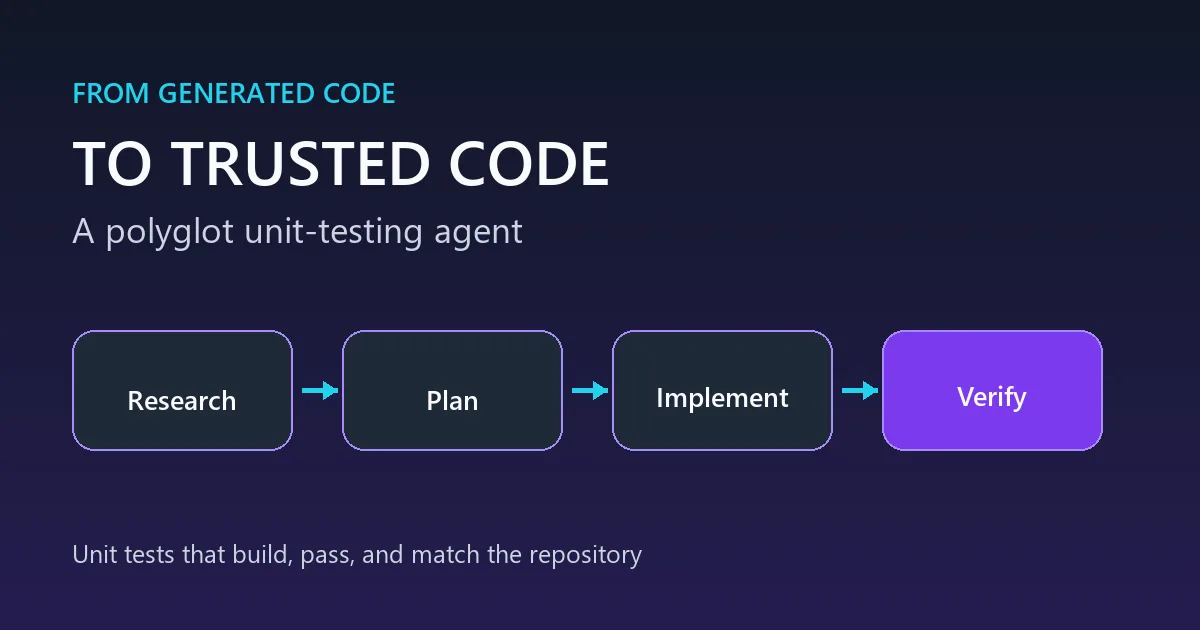
From generated code to trusted code with a unit-test agent

Meet the open-source polyglot testing agent that learns from a repository, writes unit tests, and checks that they build and pass.
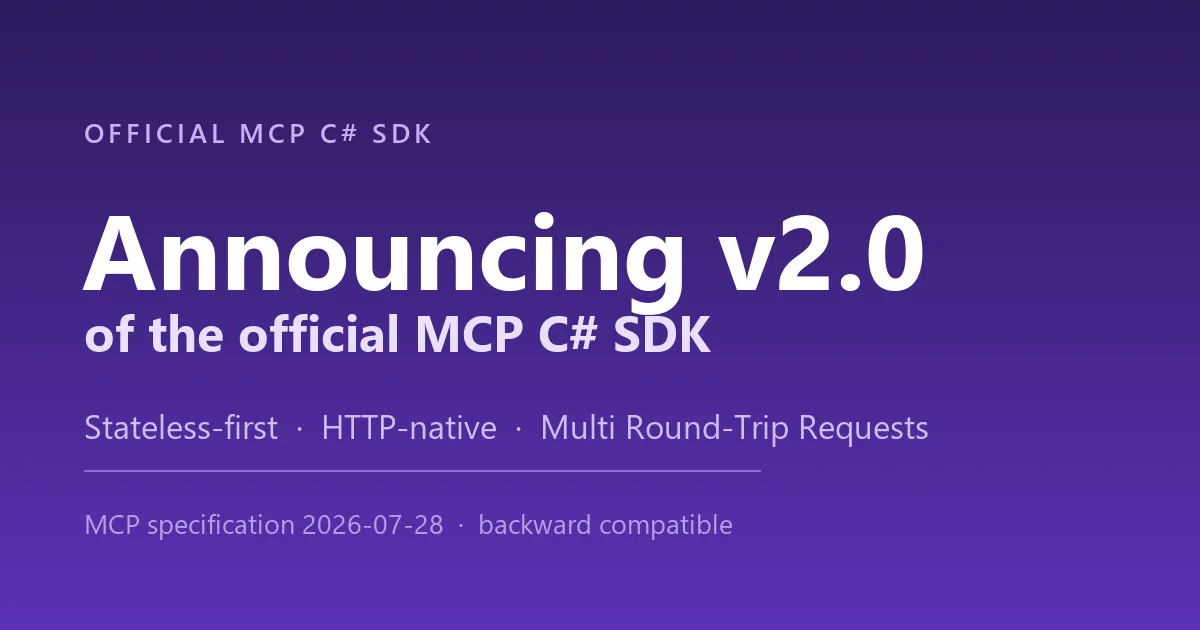
Announcing v2.0 of the official MCP C# SDK

MCP C# SDK v2.0 implements the 2026-07-28 specification with a stateless-first protocol, standardized HTTP headers, and Multi Round-Trip Requests for interactive tools, all while staying backward compatible.
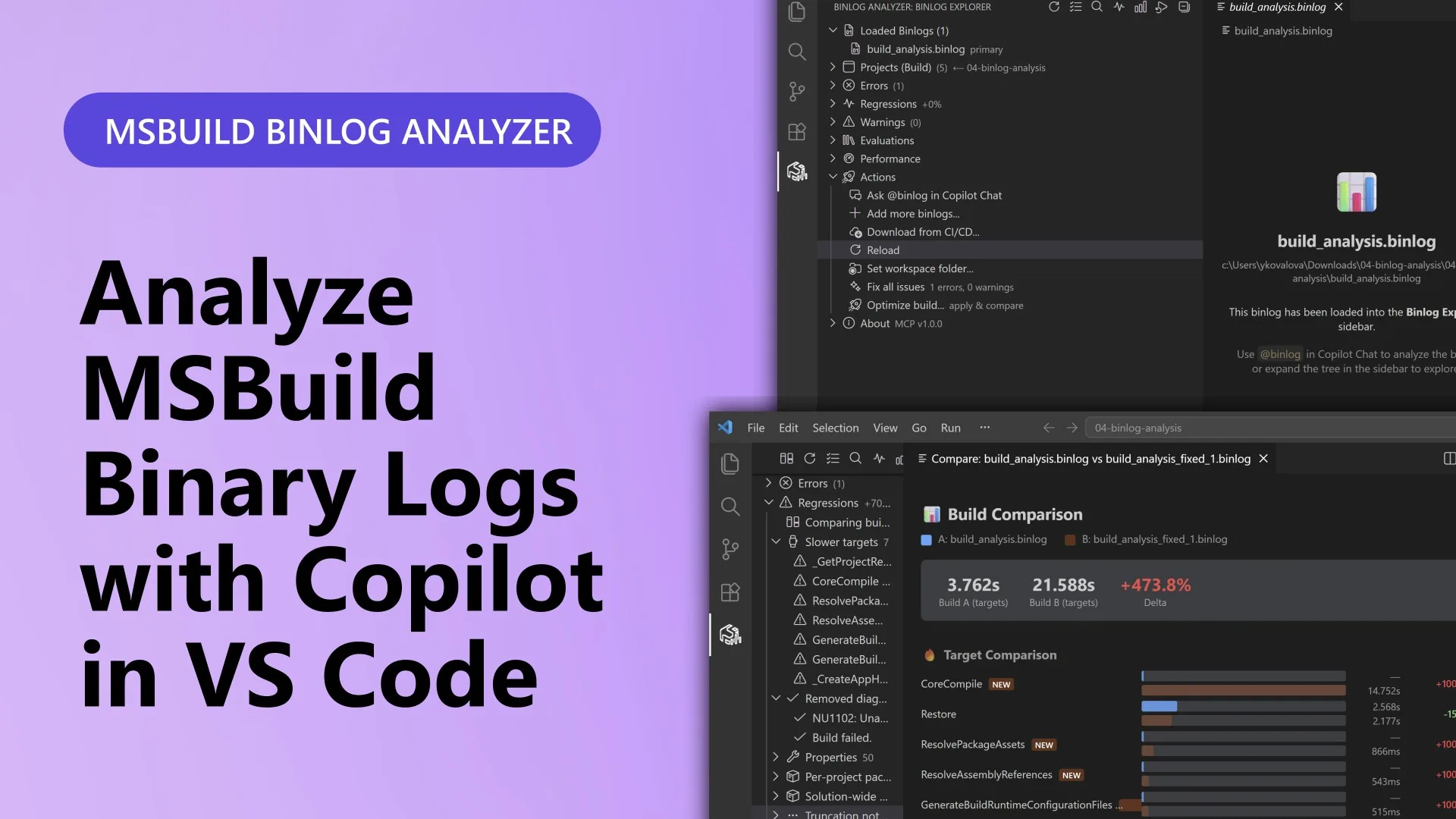
Analyze MSBuild Binary Logs with Copilot in VS Code


Meet the MSBuild Binlog Analyzer for VS Code - a Copilot-powered way to read MSBuild binary logs, explain and fix build failures with one click, compare builds, and catch regressions, backed by the Microsoft.AITools.BinlogMcp MCP server.
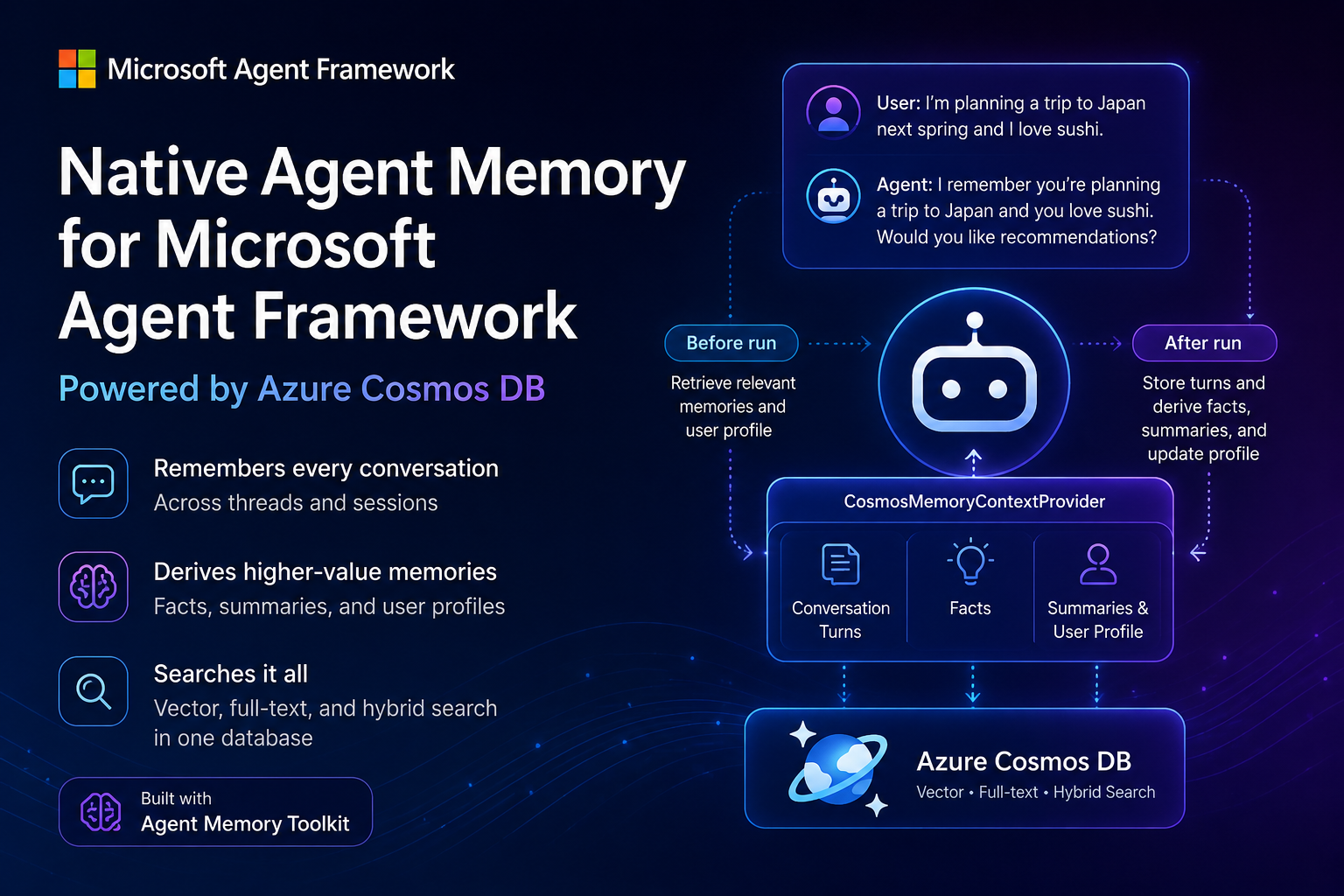
Native Agent Memory for Microsoft Agent Framework, Powered by Azure Cosmos DB

Recently we introduced the Agent Memory Toolkit and the Agentic Retrieval Toolkit for Azure Cosmos DB. The Agent Memory Toolkit gives your agents durable, Cosmos-backed memory: it stores raw conversation turns and then distills them into higher-value derived memories (thread summaries, extracted facts, and cross-thread user profiles), all searchable with vector, full-text, and hybrid search in the one database you already use. Today we're taking the next step. With the latest release of Microsoft Agent Framework, you can now drop that memory into an agent with a single object: the , shipped in the new package f...
Introducing the ETW MCP: AI-assisted ETL trace analysis, headless and in your terminal

If you’ve ever opened an ETL trace with hundreds of data tables and wondered “where do I even start?” This post is for you. We’re releasing an early preview of the ETW MCP, a Model Context Protocol server that lets GitHub Copilot, or any MCP-aware AI assistant, read, query, and reason over Event Tracing for Windows (ETW) traces the same way an experienced engineer would. No UI required. This is a companion to the WPA MCP, which brings the same AI-assisted experience inside Windows Performance Analyzer. The ETW MCP server is the headless sibling, same data layer, no WPA needed, works anywhere you can run Copilo...
